
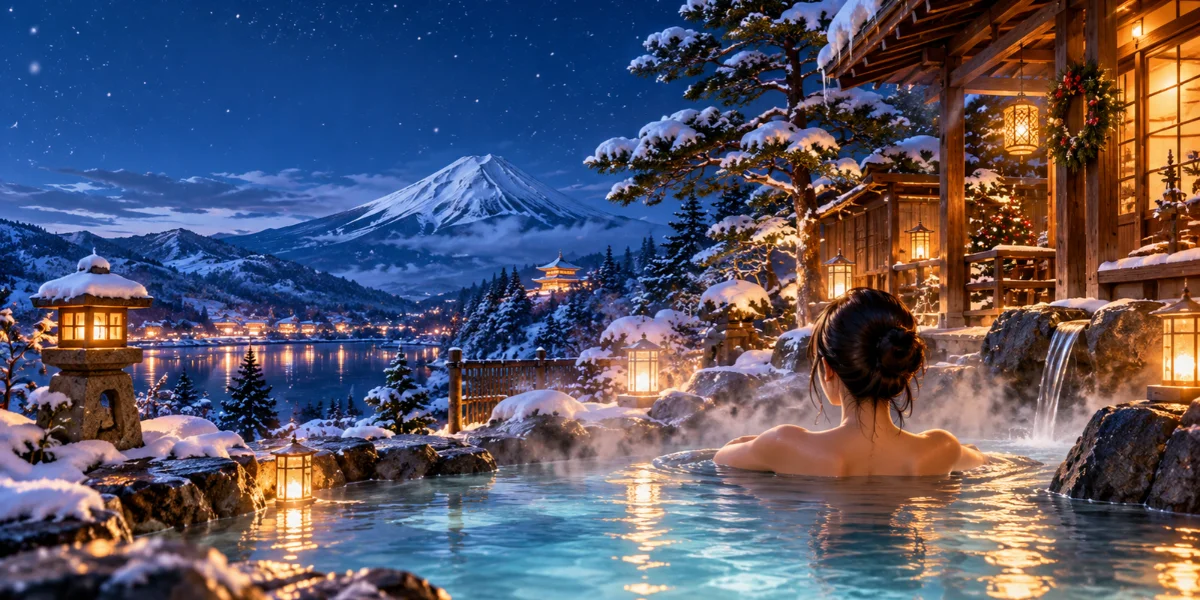
Japanese Onsen Ritual, Step by Step: What Actually Happens (First-Timer’s Guide)
The Japanese Onsen ritual runs in a fixed order. You wash sitting down, pour water over yourself, ease into the bath, soak for a few minutes, climb out, rest, and go again if you like. The towel on your head, the quiet, the cold milk people drink afterward: all of it hangs off that sequence.
One thing before the steps. I have never soaked in an Onsen. I’m writing this from India, and I’m not going to invent a first-time story to earn your trust. What I can do is show you where every step comes from. The soak times and health cautions below come from the Japan Onsen Association and Japan’s Ministry of the Environment. The etiquette comes from the Japan National Tourism Organization (JNTO) and from ryokan owners and tour companies that host foreign guests. Where they disagree, I say so.
Two things in this guide you won’t find in most Onsen articles. Some popular guides say you can soak for up to 30 minutes, while the association’s own guidance is much shorter. And travel sites give opposite answers on whether to rinse off afterward, so I’ve laid out what the official guidance says and why.
Also Read :- https://kheltechie.in/japanese-slow-living-at-home-guide/
The Japanese Onsen ritual in 8 steps
- Drink a glass of water and read the notice at the entrance.
- Undress in the changing room and take only the small towel into the baths.
- Wash sitting down at a shower station until no soap is left.
- Pour water over your body, starting with your arms and legs.
- Ease into the bath slowly. Keep the towel out of the water.
- Soak for 3 to 10 minutes, then climb out slowly.
- Rest, and go back in for another round if you want one.
- Dry off with the small towel before returning to the changing room, skip the final rinse in most springs, rest for about 30 minutes, and drink water.
Each step has a reason behind it, and I explain them below. Knowing the reason is what stops you from freezing in the middle of the bath wondering whether you’re doing it wrong.
The numbers that matter, in one place:
| What | Number | Source |
|---|---|---|
| One soak | 3 to 10 minutes (15 to 20 once you’re used to it) | Japan Onsen Association |
| Baths per day | At most 1 to 2 (2 to 3 once used to it) | Japan Onsen Association |
| Rest after bathing | About 30 minutes, with water | Japan Onsen Association |
| Wait after exercise | 30 minutes | Japan Onsen Association |
| Water before bathing | One glass | Japan Onsen Association |
| Heat caution (high blood pressure or heart disease) | Avoid water above 42°C (about 108°F) | Japan Onsen Association |
| Typical bath temperature | About 37 to 42°C (99 to 108°F) | The Natural Adventure |
What an Onsen Is, and How it Differs From a Sento or a Hot tub
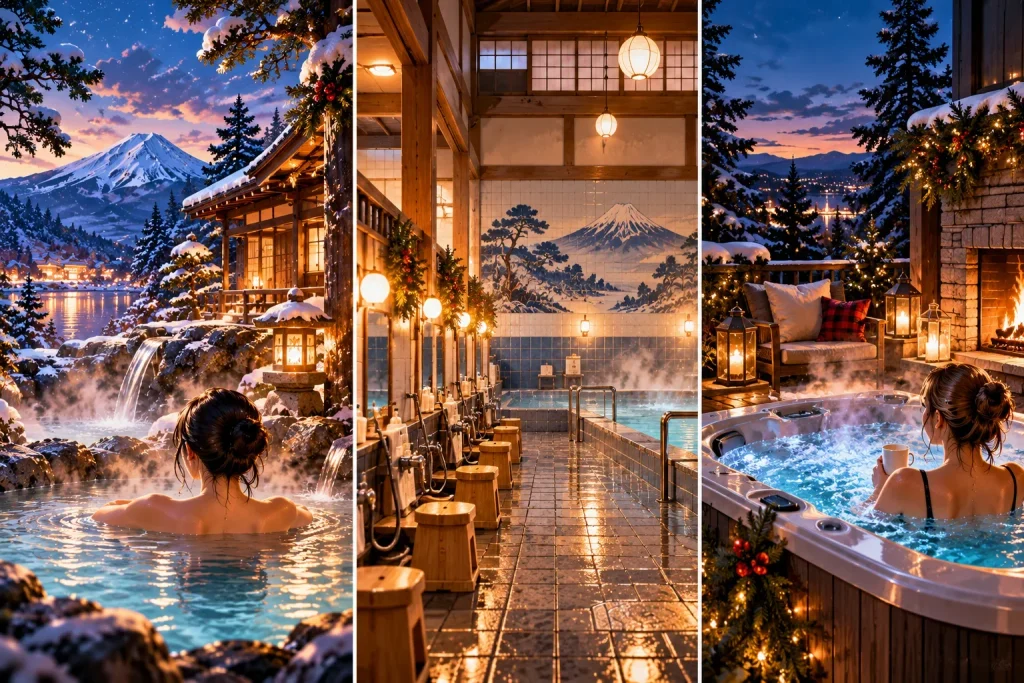
Onsen is the Japanese word for hot spring, and in Japan the word has a legal meaning. The Hot Springs Act decides what qualifies, and the Ministry of the Environment publishes the contraindications and cautions for bathing that go with it. Facilities that serve onsen to the public are expected to post that information, so the sheet on the wall near the bath tells you which minerals are in the water and who should be careful in it. It’s worth reading even if you need a translation app to do it.
A sento is something different: a neighborhood public bathhouse where the water is heated but doesn’t come from a geothermal source, according to the tour company The Natural Adventure. A ryokan is a traditional inn. Many have their own onsen baths, and some offer private open-air baths attached to guest rooms, as Japan Experience points out.
| Type | Water | Who you bathe with |
|---|---|---|
| Onsen | Natural geothermal spring water, with a posted analysis | People of your gender, usually strangers |
| Sento | Heated water, not geothermal | Locals, separated by gender |
| Ryokan private bath | Often spring water, at a ryokan that has onsen | Only your own group |
| US hot tub | Treated tap water with a chemical sanitizer | Friends or family, in swimsuits |
At the Door: What to Expect Before you Reach the Water
Shoes come off at the entrance, and you’re usually handed slippers for the tatami floors (JNTO). Clothes and belongings go in a locker in the changing room. Japan Experience suggests carrying coins for the lockers and cash in general, since many places in Japan still don’t take cards.
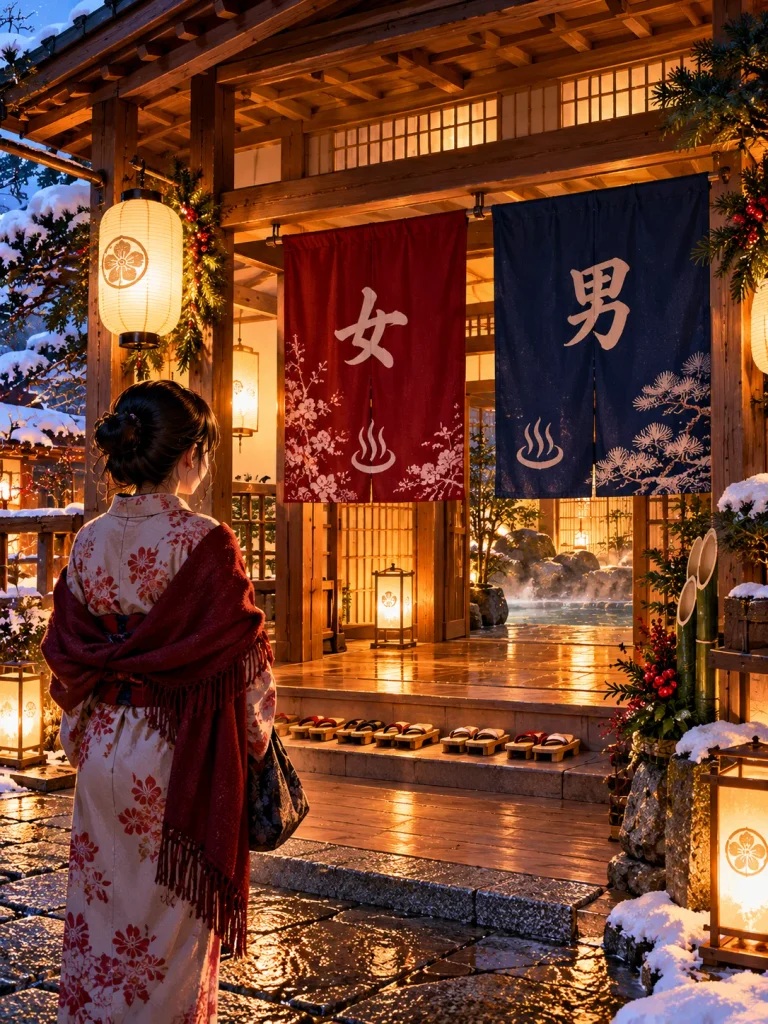
Finding the right door matters more than you’d think. Curtains called noren are red for women and blue for men, but JNTO says the safer check is the kanji: 女 for women and 男 for men. Learn those two characters before you go.
Inside, you bring one thing into the bathing area: a small towel, often called a tenugui. At most places it’s provided or sold, and it’s the only cloth allowed in. You carry it for modesty on the walk to the bath, then it stays out of the water. A short checklist:
- A small towel (check whether the facility supplies one) and a larger towel for afterward if they don’t rent one
- A hair tie or clip if your hair is long
- Coins and some cash
- A plastic bottle for the rest area afterward (Kashiwaya Ryokan asks that glass stay out of the bathing area)
- Nothing metal that you care about: Japan Experience advises removing jewelry because some minerals can damage certain metals
- Your phone stays in the locker
How to Use an Onsen, Step by Step
➣ Step 1: Drink water and read the notice
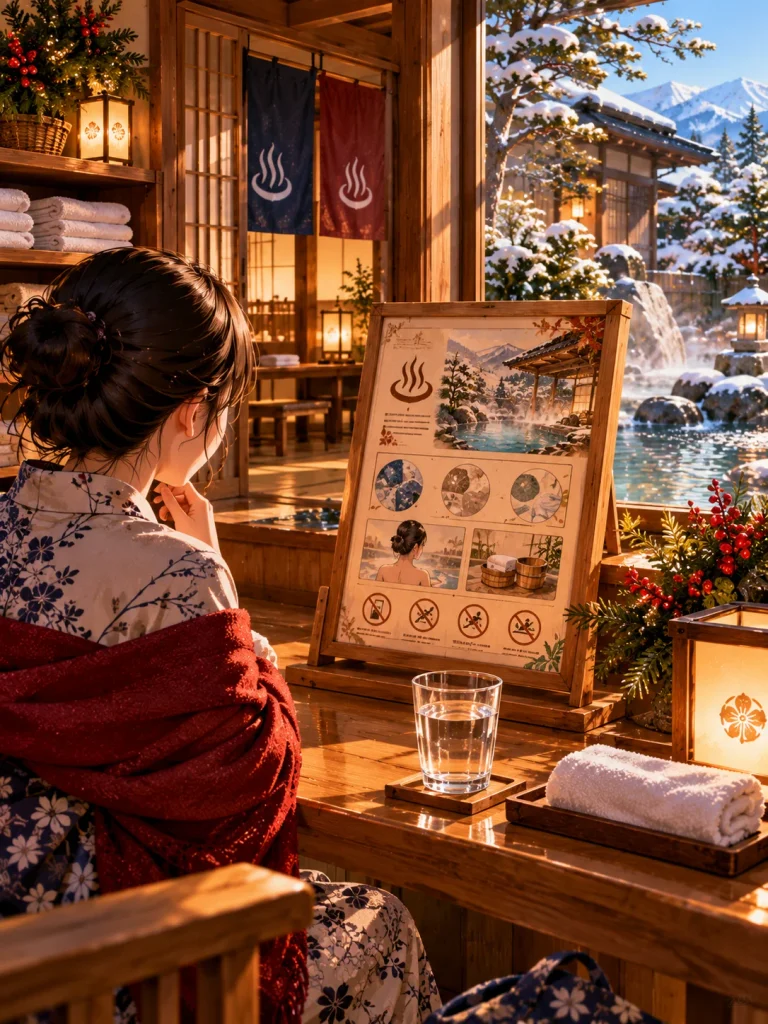
The Japan Onsen Association, which publishes bathing precautions in English, recommends one glass of water before bathing to head off dehydration, especially first thing after waking up. It also says to avoid bathing right before or after a meal, and that includes drinking alcohol. If you’re tired, rest instead, and wait 30 minutes after exercise.
Then read the notice on the wall. Even a quick scan for the spring type and any caution symbols tells you more than most travel blogs will.
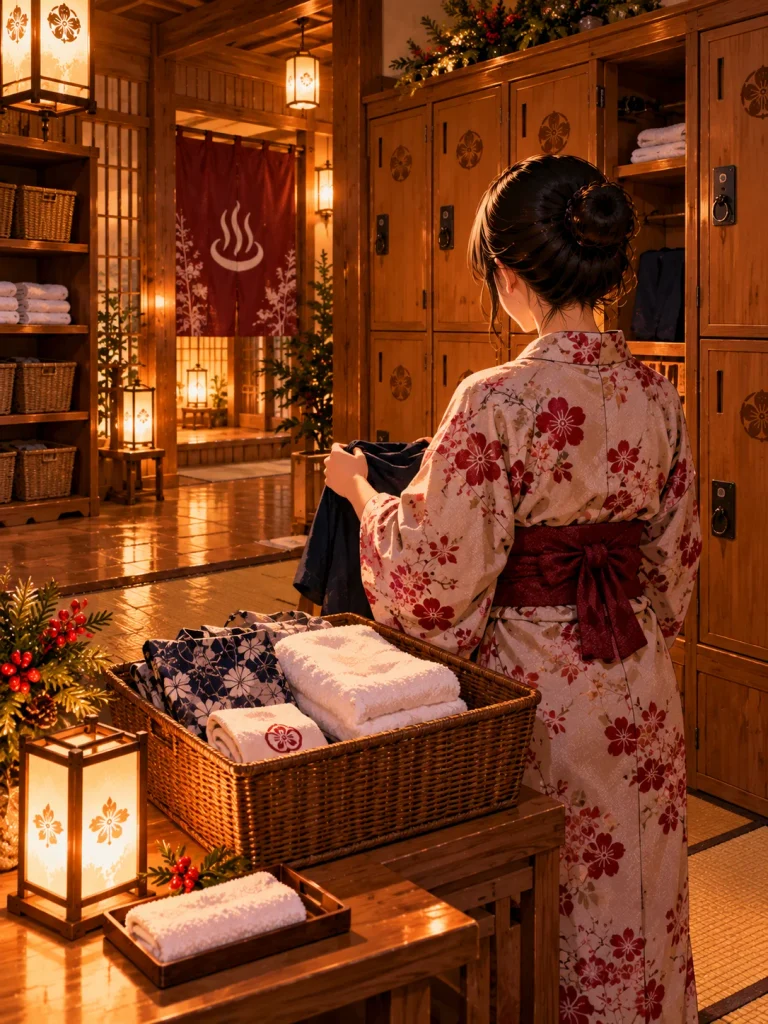
➣ Step 2: Undress and take the small towel
You bathe completely nude. Swimwear isn’t allowed in traditional onsen, and Kashiwaya Ryokan’s etiquette guide says the same about underwear. Put your clothes in the locker and carry only the small towel. Tie up long hair so it doesn’t touch the water.
If nudity is the part you’re dreading, you’re in good company. Japan Experience describes the practice as hadaka no tsukiai, roughly “naked fellowship,” and says people tend to drop their pretensions along with their clothes. In practice, everyone is washing, soaking, and minding their own business.
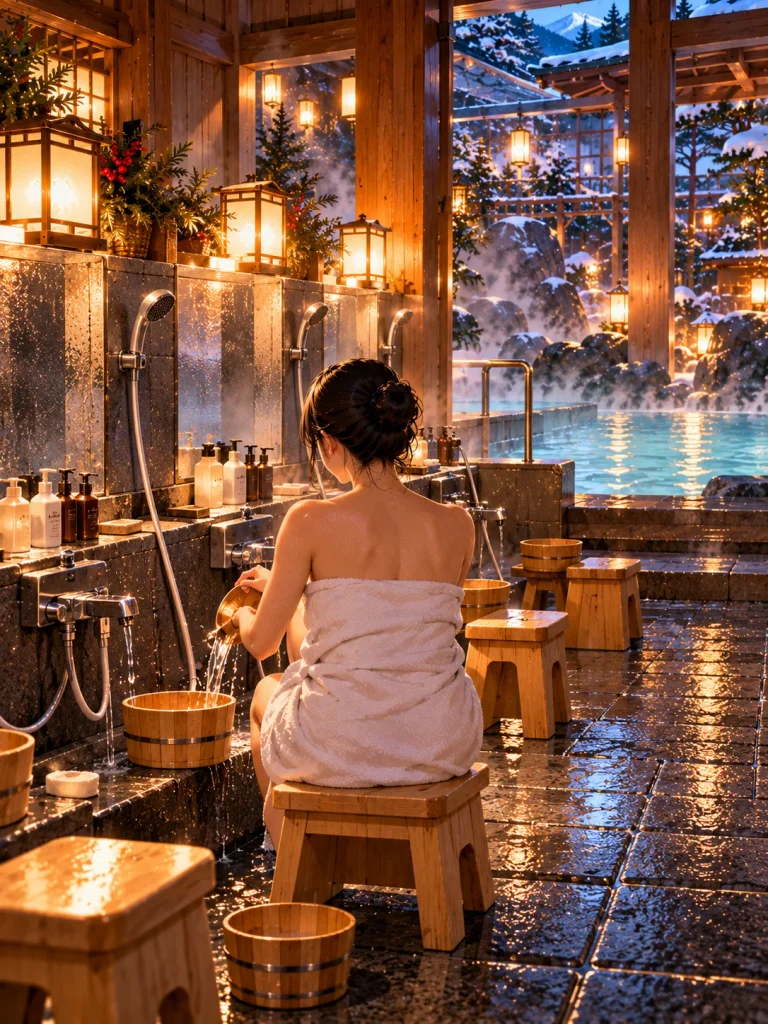
➣ Step 3: Wash sitting down
Between the changing room and the bath you’ll find a row of low stools, each with a shower and a bucket. Sit, and scrub everything, hair included, until no soap remains (JNTO). The bath is shared water, so it only gets used clean. Kashiwaya Ryokan is explicit that washing your body or hair inside the bath is not allowed.
Sitting also keeps the splashing down, which the people on the next stool will appreciate.
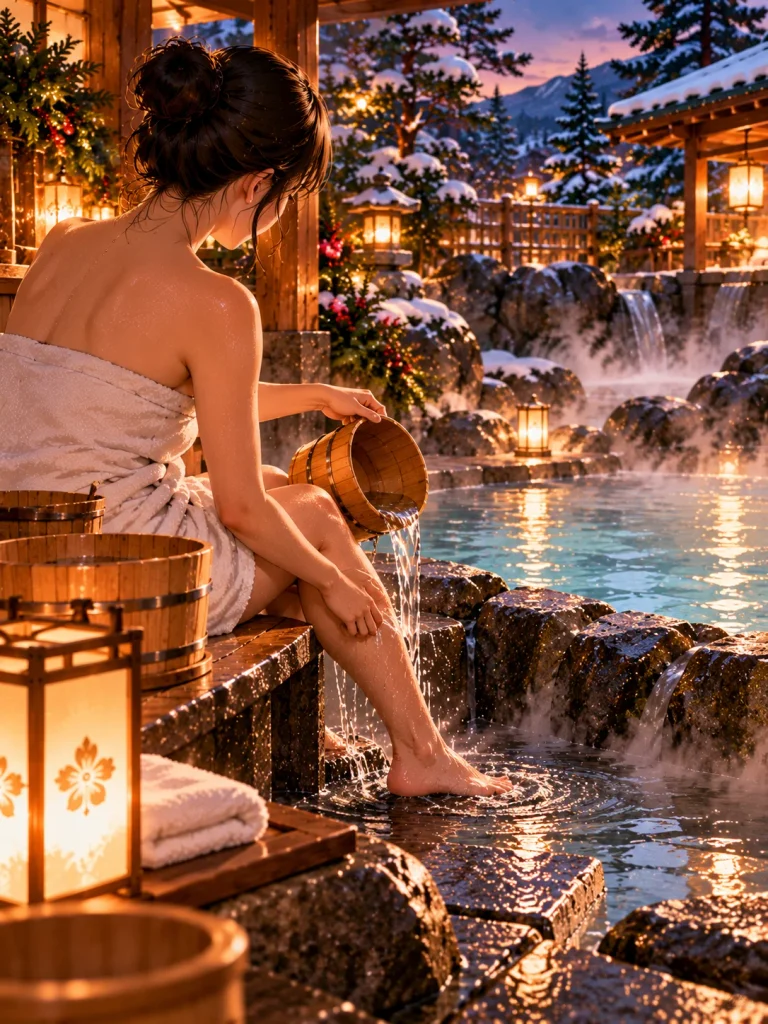
➣ Step 4: Pour water over yourself
This is the step that first-timers skip because nobody mentions it. The Japan Onsen Association says it’s preferable to pour water over your body before getting into the tub, starting from the extremities, so your body adjusts to the heat. Use the bucket or scoop at the edge of the bath and begin with your arms and legs, then work inward. It’s often called kakeyu.
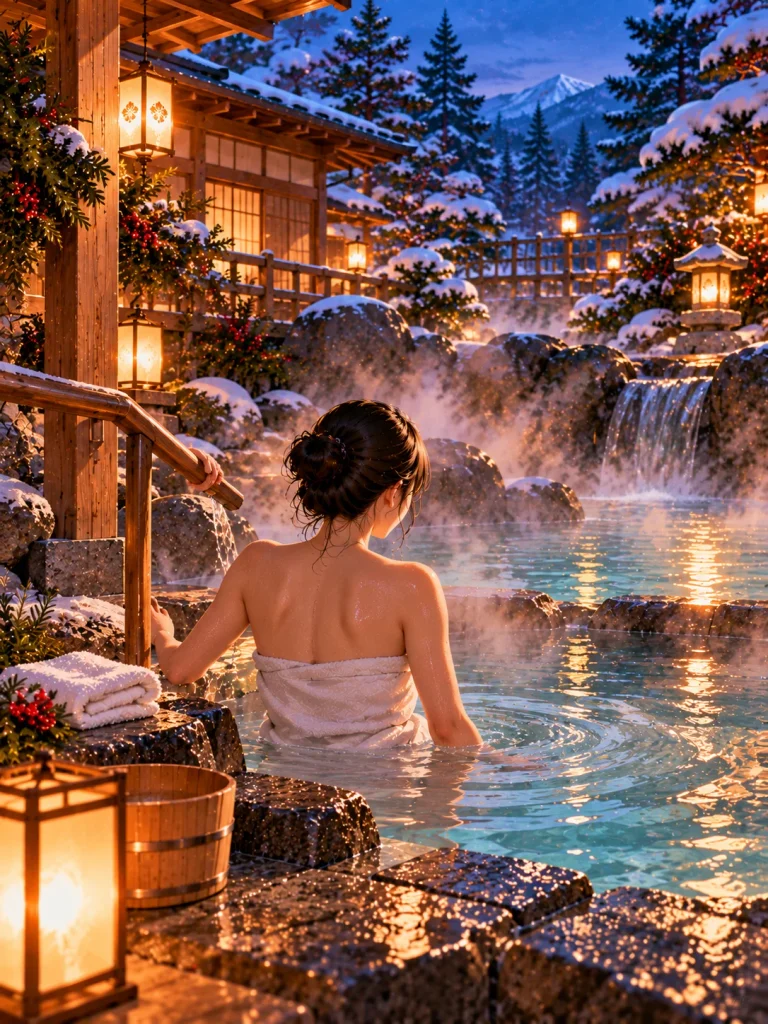
➣ Step 5: Ease in
Don’t jump in. A tourism-ministry notice written for visitors to Hakuba points out that the tubs are shallow and jumping disturbs other bathers. Japan Experience adds that you should enter gradually and keep your head above water.
Your towel stays dry. Fold it and rest it on the edge of the bath, or do what regulars do and balance it on your head. It never goes in the water, and it shouldn’t be wrung out into it either.
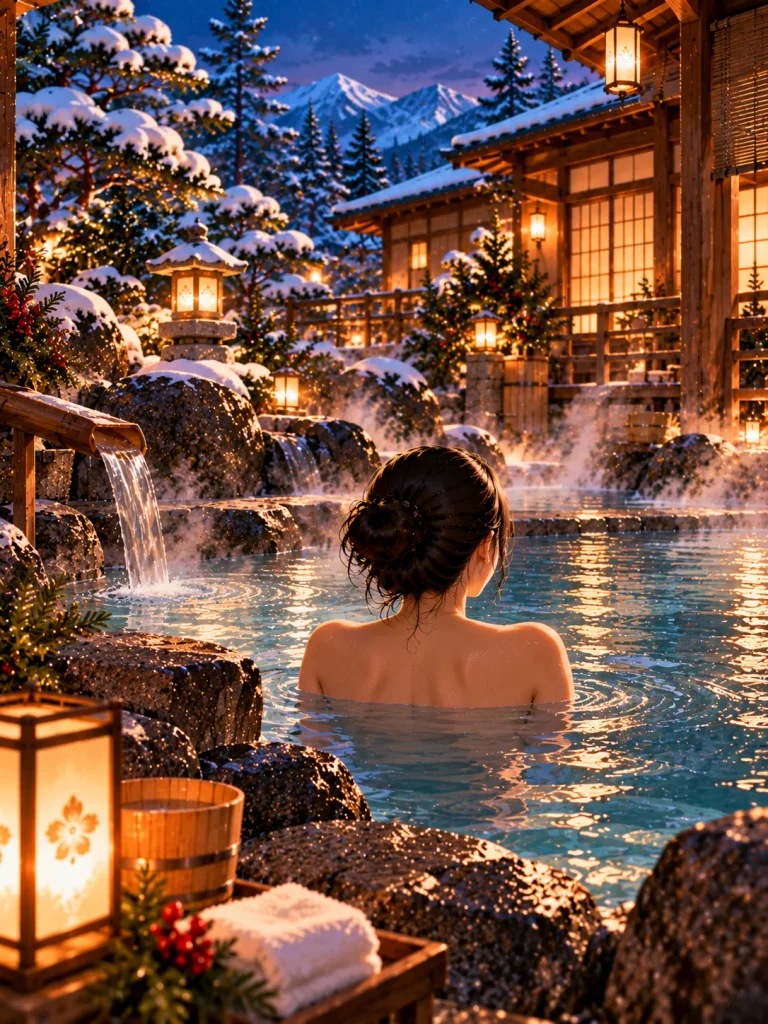
➣ Step 6: Soak for 3 to 10 minutes
The Japan Onsen Association puts a single soak at around 3 to 10 minutes, stretching to 15 or 20 minutes once you’re used to it. That’s shorter than what you’ll read elsewhere. The Natural Adventure calls 30 minutes the maximum and 15 plenty for most people. I’d follow the association, since it’s the body that writes the official bathing guidance, and I’d treat 30 minutes as a ceiling you don’t need to approach.
Water temperature depends on the bath. The Natural Adventure gives a range of roughly 37 to 42°C, which is about 99 to 108°F. The association says people with high blood pressure or heart disease should avoid water above 42°C (about 108°F). It also says people with cardiopulmonary conditions should choose hip bathing, meaning sitting waist-deep, over full-body soaking. That waist-deep style has a name, hanshin-yoku.
While you’re in, move slowly and keep your voice down. This is soaking, not swimming.
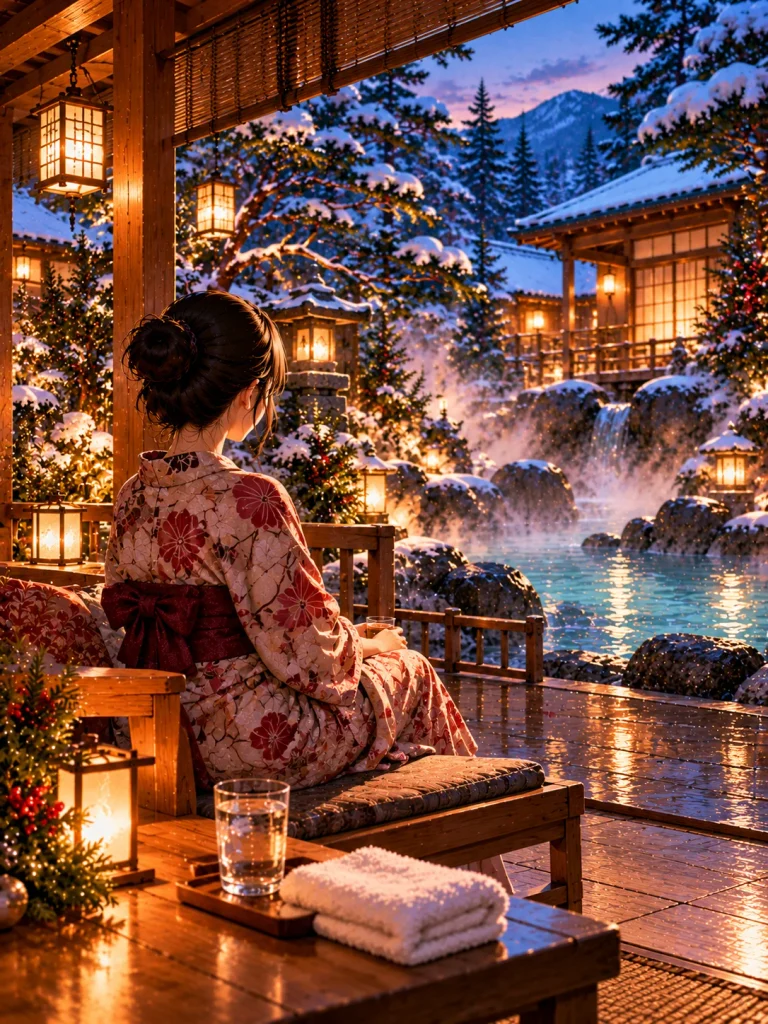
➣ Step 7: Climb out slowly, rest, repeat
Stand up slowly. The association warns that moving too fast can make you dizzy, and if you feel faint or sick it says to leave the bath slowly with your head lowered and ask the people around you for help.
Sit on the edge or on a bench to cool off, then go back for another round if you want to. The association suggests at most one or two baths a day, rising to two or three once you’re used to it. In an outdoor bath (rotenburo) the cool air makes this easy, and The Natural Adventure notes that outdoor baths suit cooler weather because you don’t overheat as quickly.
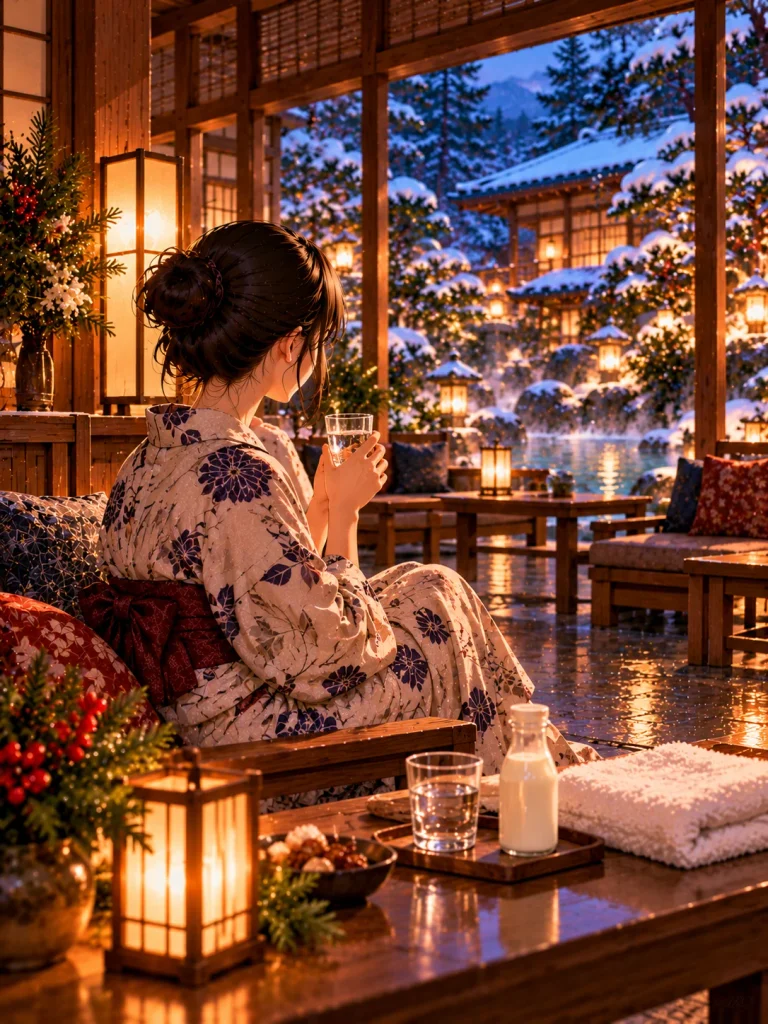
➣ Step 8: Dry off, rest, drink water
Use your small towel to wipe off as much water as you can before going back to the changing room, so the floor stays dry (Kashiwaya Ryokan). Then rest. The association recommends keeping warm and resting for about 30 minutes, and drinking water.
Many Onsen sell cold milk, fruit milk, or coffee milk in the rest area, according to The Natural Adventure. At a ryokan you’ll often change into a yukata, the light cotton robe the inn provides. Skip alcohol for now, per the association’s advice about bathing near meals and drinks.
Do the arithmetic and the ritual looks different. Three 8-minute soaks plus the 30-minute rest already comes to 54 minutes, before you count washing and the breaks between rounds. Most of an Onsen visit is not spent in the water.
Why the Japanese bathe this way
Onsen bathing goes back a long way. Advantour dates the culture to the Nara period (710 to 794), when springs were used for religious rituals as well as bathing. Japan Experience says families, couples, and friends still make weekend trips to onsen towns to get away from daily stress.
That helps explain the rules. Washing first keeps shared water usable for everyone. Quiet voices and no photography protect privacy in a place where everyone is nude. The short soaks and the long rest set a pace. You’re meant to slow down, and sitting in hotter water for longer doesn’t help with that.
The same slow-down logic shows up in other Japanese ideas, such as kintsugi, kaizen, and ikigai. The onsen is the version you can practice with a towel and a bath.
Should you Rinse off Afterward? Mostly no, With Exceptions
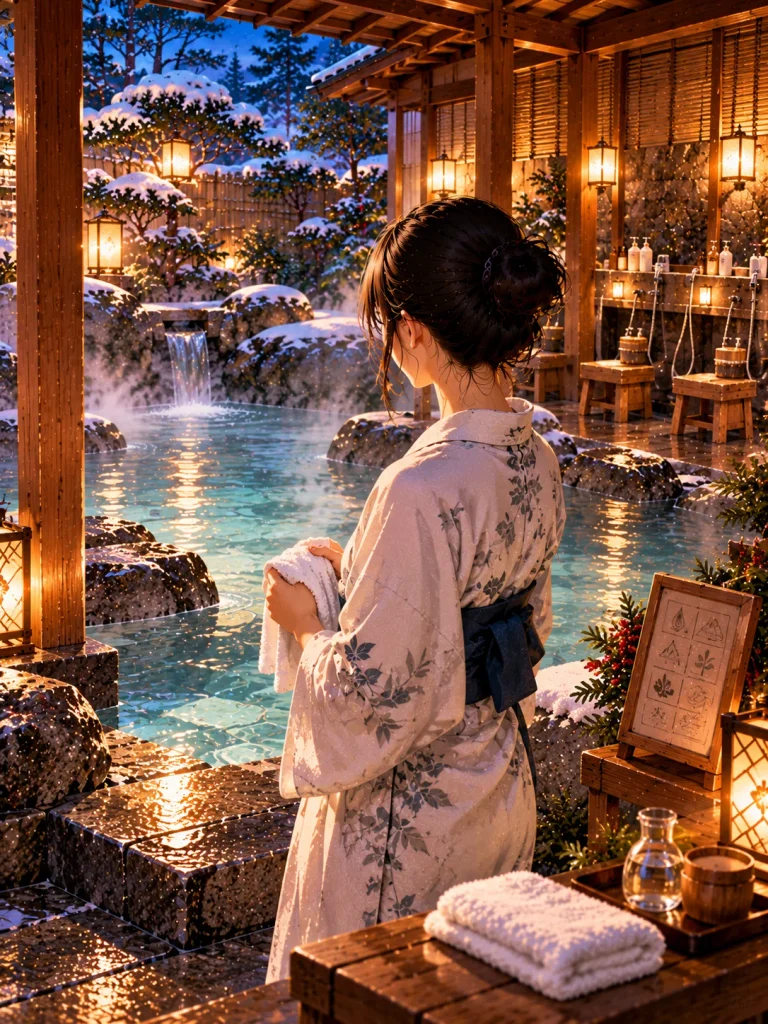
Mostly no, Japan’s official guidance says to leave the spring’s minerals on your skin and dry off with a towel. The exception is sensitive skin after acidic, sulfur, or chlorinated water, where a rinse is better.
This is where travel sites contradict each other. The Natural Adventure says most locals leave the minerals on and simply dry off. Japan Experience recommends a quick rinse for some mineral compositions, especially if you have sensitive skin.
Both are partly right. The Japan Onsen Association and the Ministry of the Environment each say it’s better not to wash the minerals off, and each makes the same exception: people with sensitive skin should rinse after acidic or sulfur springs and after chlorinated water, to avoid irritation.
So the answer depends on the spring. Japan Experience describes Kusatsu Onsen in Gunma as known for highly acidic water, so a rinse there is worth considering. At a mild spring, pat dry and carry on. When in doubt, check the posted notice or ask the front desk.
Staying Safe in very Hot Water
Hot water puts real load on your body, and most Onsen problems come from staying too long or arriving in the wrong state. The Japan Onsen Association’s precautions boil down to a short list:
- Don’t bathe right before or after a meal, and don’t drink alcohol around bathing.
- Skip it when you’re exhausted, and wait 30 minutes after exercise.
- Keep soaks short, especially at first, and limit yourself to one or two baths a day.
- If you have high blood pressure or heart disease, avoid water above 42°C (about 108°F) and use waist-deep bathing if you have cardiopulmonary issues.
- Stand up slowly, and if you feel faint, leave the bath with your head low and ask for help.
- Drink water before and after.
The association also warns that after a bath that was too long you can feel nausea or tiredness, and that those feelings can linger for a few days. If that happens, rest and cut back.
Dizziness, nausea, confusion, and fainting are also on the CDC’s list of heat-related illness signs. If you feel any of them, get out of the water, cool down in the rest area, and sip water. Fainting, confusion, or symptoms that keep getting worse mean you need help, not another round. In Japan the ambulance number is 119. The CDC’s plain-language summary is here: Heat-Related Illnesses: What to Look For and What to Do.
I’m a lifestyle writer, not a medical professional. If you have a heart condition, blood pressure problems, are pregnant, or take medication that affects how you handle heat, talk to your doctor before booking.
If Japan isn’t on Your Calendar Yet
I’m in the same position. A home bath is not an Onsen: it has no geothermal water and no minerals. But the order of the ritual travels fine, and the order is most of what makes it feel different from a rushed shower.
Wash first, fully, before you fill the tub. Pour water over your arms and legs before you step in. Use water you can sit in comfortably, since this is about pace, not heat. Drink a glass of water first, leave your phone in another room, soak for a short stretch, and sit for a while afterward before you do anything else. If you try it, treat it as a quiet evening habit, not a substitute for the real thing.
Also Read :- https://kheltechie.in/japanese-journaling-for-mindfulness-guide/
Picking Your First Onsen
Every place below comes from the guides I used for this article. Prices and opening details change, so check each official website before you plan around them.
| Place | Good for | What the source says |
|---|---|---|
| Hakone (Kanagawa) | An easy first try from Tokyo | Japan Experience says it’s accessible from Tokyo, with Mount Fuji views from many outdoor baths. |
| Kinosaki Onsen (Hyogo) | Trying several baths | A traditional town with seven public bathhouses, and passes for hopping between them (Japan Experience). |
| Kusatsu Onsen (Gunma) | Strong, acidic water | Known for highly acidic springs and the yubatake, where the water is cooled (Japan Experience). |
| Dogo Onsen (Ehime) | History | One of Japan’s oldest hot springs, with a three-story wooden bathhouse designated a National Important Cultural Property in 1994 (The Natural Adventure). |
| Shima Onsen (Gunma) | Tattoos and privacy | Kashiwaya Ryokan says all its baths are tattoo-friendly and it has three free private open-air baths. This is the ryokan’s own claim. |
| Ibusuki (Kagoshima) | Something different | Natural steam sand baths where you’re buried in warm beach sand up to the neck, followed by a soak (JNTO). |
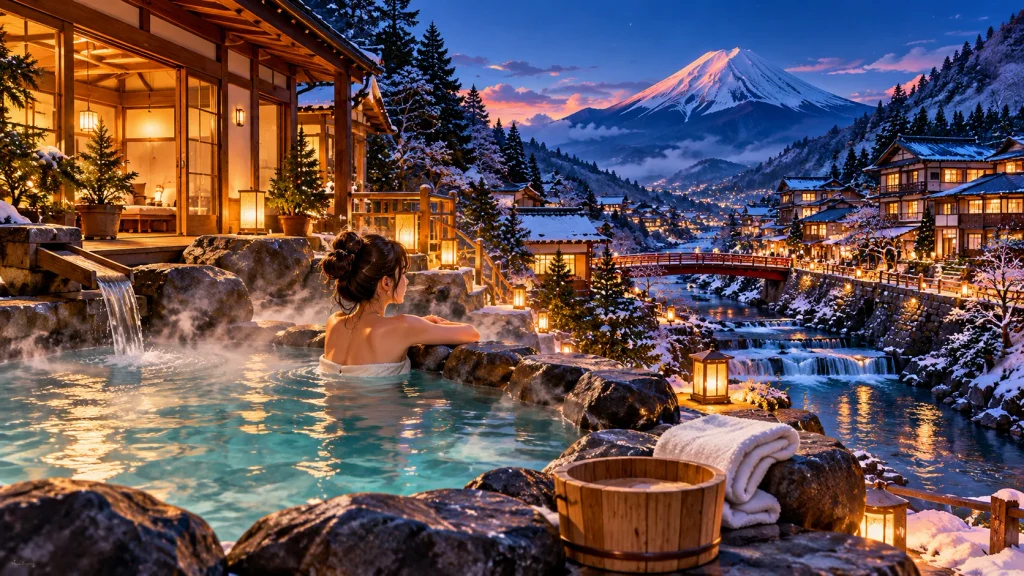
If this is your first time and you’re unsure, start somewhere small and book a ryokan that has a private bath. You’ll still learn the full ritual, without the part that makes most Americans hesitate. If you’re curious about public baths afterward, Kinosaki’s bath-hopping passes make a good second trip. And outdoor baths in cooler months, when the steam rises, are the version most people picture. JNTO’s page on Nyuto Onsenkyo notes that one of its baths, Kuroyu, is closed in winter, so check seasonal hours before you go.
Questions Americans Ask First
In traditional onsen, yes: swimsuits are not allowed in the bathing area. Baths are usually separated by gender. A few modern facilities that work more like water parks do require swimwear, which The Natural Adventure mentions, so the rules vary. If you’d prefer privacy, many places have private baths (more on that below).
Sometimes. Policies vary from one facility to the next. Japan Experience says many onsen refuse visitors with prominent tattoos, while others are more relaxed, particularly in big cities. A tourism notice for Hakuba says small tattoos may be covered with skin-colored waterproof stickers, and larger ones won’t be admitted. Check the facility’s website or ask in advance, and consider a private bath if you’re unsure.
Some bathhouses discourage it. The Natural Adventure describes a traditional taboo with roots in Shinto beliefs about blood, notes that younger generations increasingly debate it, and says it’s a personal choice for travelers, with a tampon or cup as the usual compromise. Read the facility’s notice, and book a private bath if you’d like to avoid the question altogether.
Ask your doctor before you go. Sources disagree: Japan Experience strongly advises against it because the water is often above 40°C. Japan’s Ministry of the Environment revised its contraindication list in 2014, and that list is what facilities post, so read the notice on the wall too. A private bath where you control how long you stay is a gentler place to start if your doctor approves.
No, not in shared bathing areas. Kashiwaya Ryokan says photography is generally not allowed because guests are nude, and a Japanese tourism-ministry notice calls it absolutely prohibited. If you want pictures, ask about a private bath or photograph the building and surroundings from outside.
I couldn’t find official guidance written for transgender or nonbinary visitors, and I won’t guess at policies I can’t verify. What I can say is that private baths exist at many ryokan and bathhouses. Kashiwaya Ryokan in Shima Onsen, for example, says it has three private open-air baths guests can use free of charge without a reservation, and The Natural Adventure notes that some onsen have private rooms for solo soaking. Contact the facility before you book and ask directly.
Yes, with care. The Japan Onsen Association says older adults, children, and people with physical disabilities should not bathe alone. For accessibility questions, JNTO publishes a separate guide on accessibility in Japan.
Sources and How this Guide was Checked
Written by Ashish B. Last updated October 22, 2026.
I haven’t visited an Onsen, so I built this guide from the sources below and checked where they disagree. Bathing times, temperature cautions, and the rinse advice come from Japan’s official bodies. Etiquette details come from the national tourism board and from operators who host foreign guests. If you’ve soaked in an onsen and spot something I got wrong, tell me in the comments or through the contact page and I’ll fix it.
This is lifestyle information, not medical advice.
- Japan Onsen Association: Caution for using onsen (for bathing)
- Ministry of the Environment, Japan: contraindications and cautions for bathing and drinking under the Hot Springs Act
- JNTO: A Beginner’s Guide to Onsen
- Japan Ministry of Land, Infrastructure, Transport and Tourism: onsen guidance for visitors (Hakuba)
- Kashiwaya Ryokan: Onsen Etiquette in Japan, 8 Rules
- Japan Experience: Onsen in Japan, A Cultural Guide
- The Natural Adventure: A guide to Japanese baths and onsen etiquette
- Advantour: Japanese Traditions, Onsen
- CDC: Heat-Related Illnesses, What to Look For and What to Do

