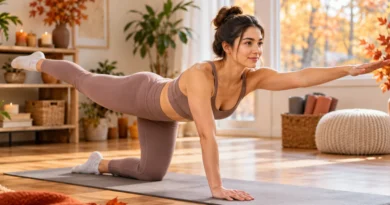
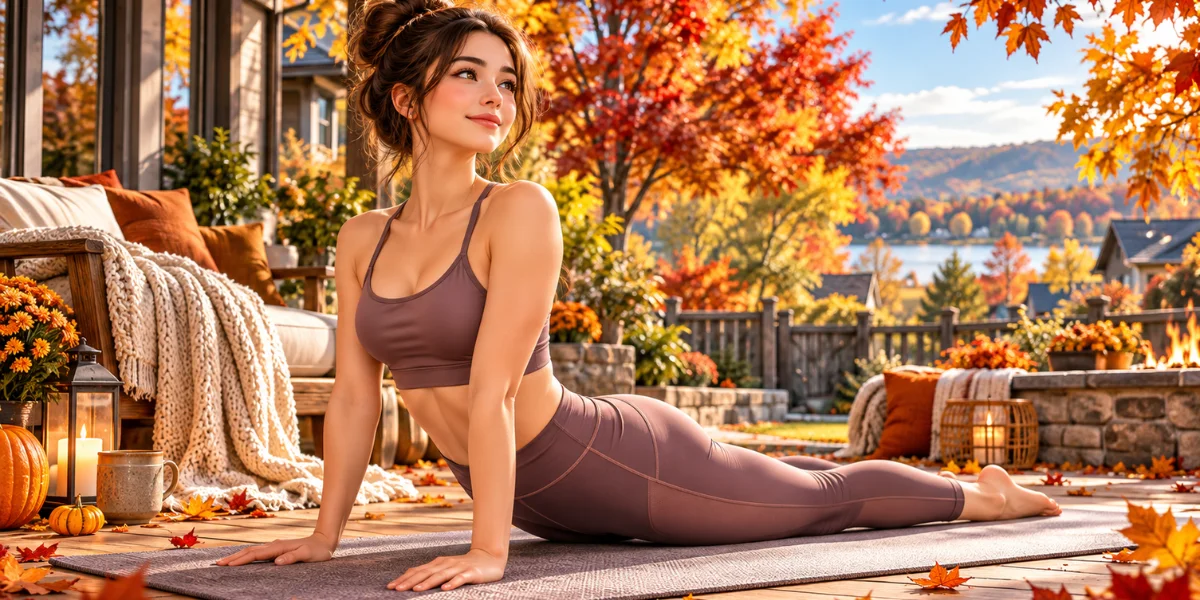
Fall Yoga Routine: Simple Poses for Strength, Mobility & Relaxation
Fall can be a great time to slow down and reconnect with your movement routine. As schedules become more structured and the weather changes, a simple yoga practice can provide an easy way to stay active while giving your body time to stretch, move, and recover.
You don’t need an advanced yoga practice to get started.
A beginner-friendly fall yoga routine can combine gentle strength, mobility, balance, stretching, and relaxation in one session.
The routine below uses simple poses that can be modified based on your experience and comfort level.
Also Read :- https://kheltechie.in/fall-wellness-checklist-15-small-healthy-habits-that-add-up/
Note: Yoga should feel controlled and comfortable rather than painful. If a movement causes sharp pain, stop and choose a gentler variation. People with injuries, medical conditions, or specific physical limitations should consider getting individualized guidance from an appropriate healthcare professional.
Why Add Yoga to Your Fall Routine?
Yoga can complement other forms of exercise because it combines movement with mobility, balance, flexibility, and mindful breathing.
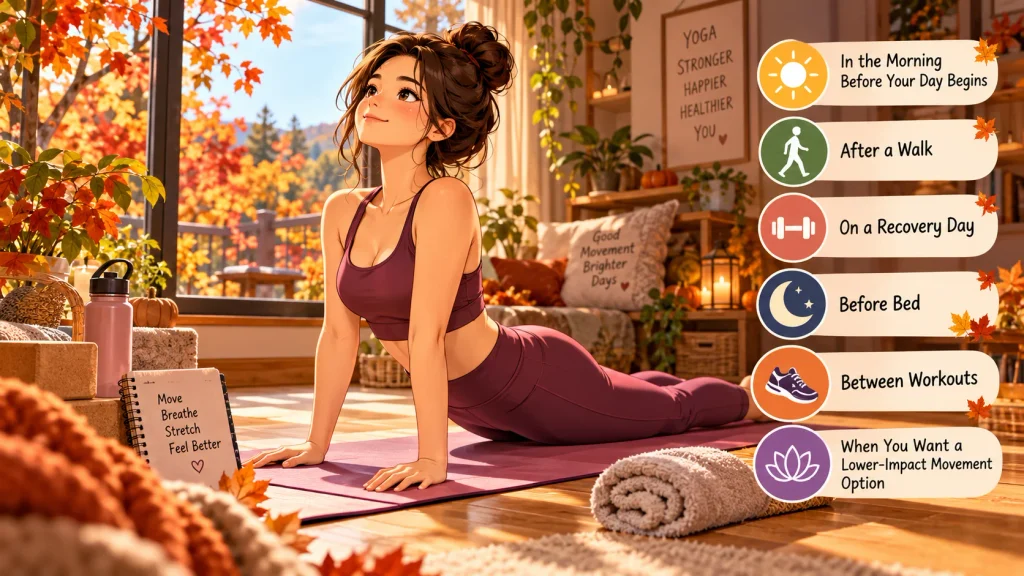
You can use a short yoga session:
- In the morning before your day begins
- After a walk
- On a recovery day
- Before bed
- Between workouts
- When you want a lower-impact movement option
The goal doesn’t have to be mastering difficult poses.
For many beginners, simply moving through a consistent routine can be a useful way to make mobility and recovery part of an active lifestyle.
A Simple Fall Yoga Routine
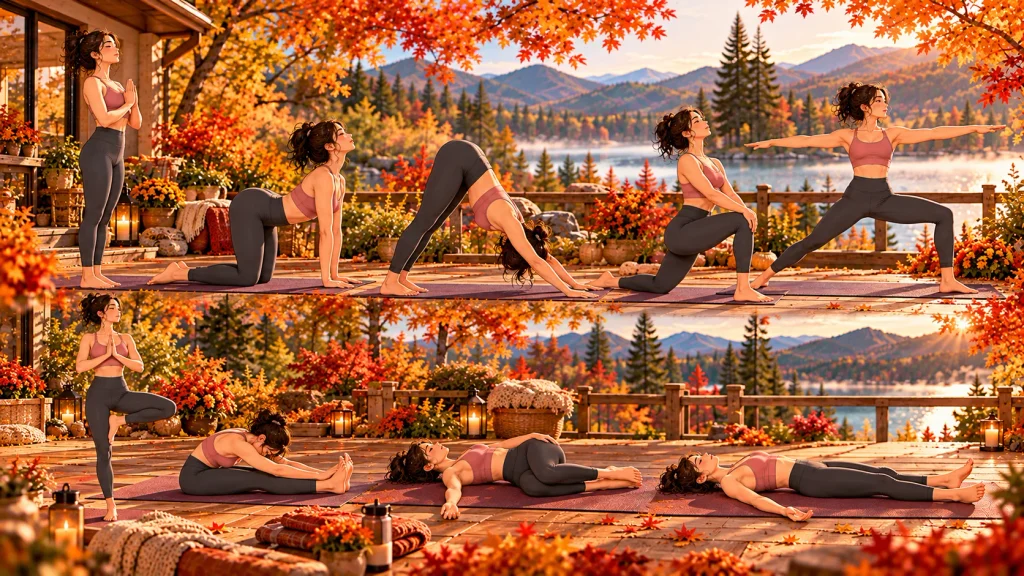
This sequence includes:
- Mountain Pose
- Cat-Cow
- Downward-Facing Dog
- Low Lunge
- Warrior II
- Chair Pose
- Tree Pose
- Seated Forward Fold
- Supine Twist
- Savasana
You can move slowly and spend more time in poses that feel particularly useful for your body.
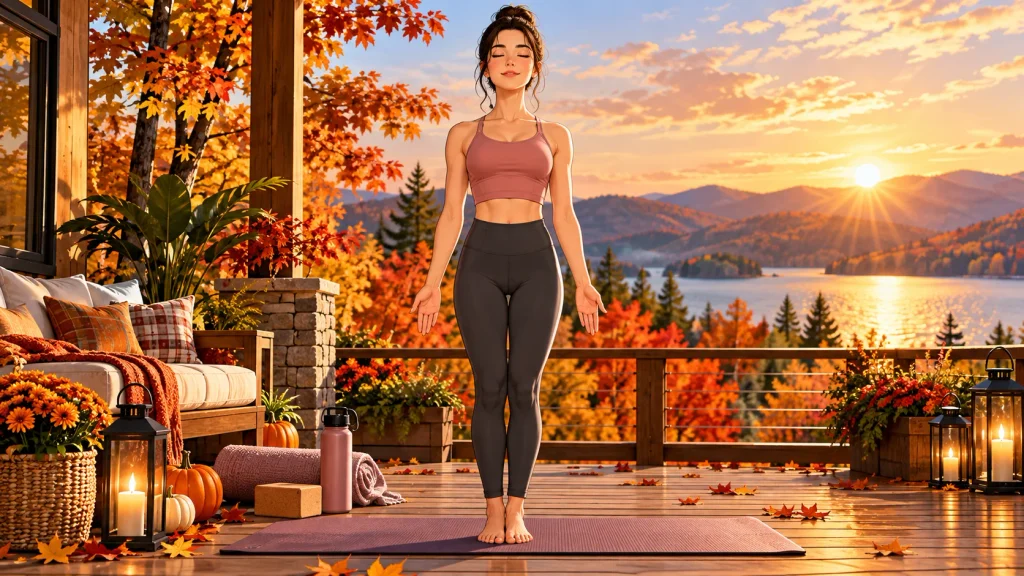
1. Mountain Pose
Mountain Pose is a simple starting position that helps you establish your posture and breathing.
How to do it:
- Stand with your feet comfortably positioned.
- Keep your spine tall.
- Relax your shoulders.
- Let your arms rest naturally.
- Take several slow breaths.
- Focus on maintaining a comfortable, upright posture.
Why include it?
It gives you a calm starting point and helps transition your attention toward the practice.
2. Cat-Cow
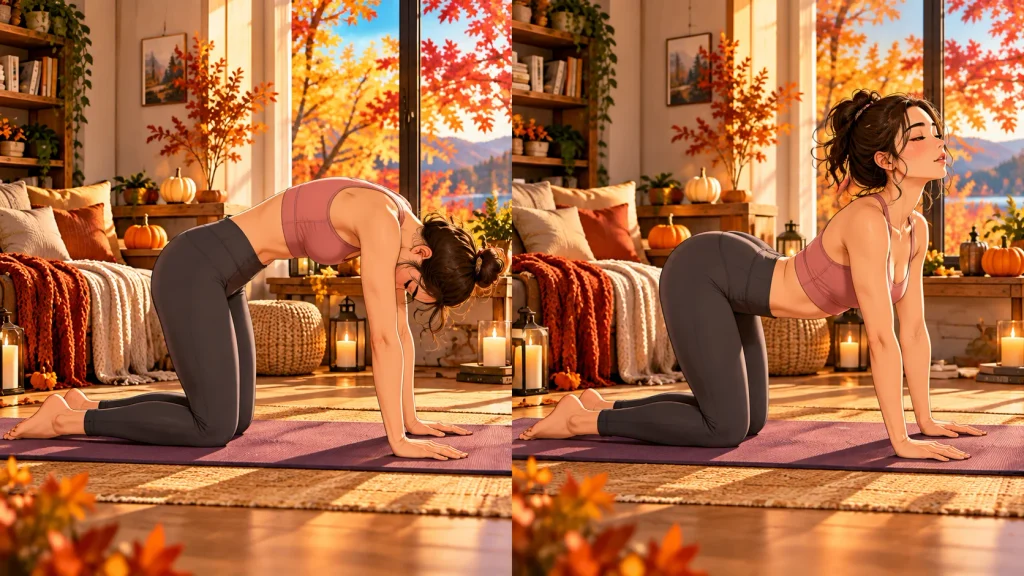
Cat-Cow is a gentle movement for the spine and can work well near the beginning of a yoga session.
How to do it:
- Start on your hands and knees.
- Place your hands under your shoulders.
- Place your knees under your hips.
- Slowly move between a gently rounded back and a gently extended position.
- Coordinate the movement with your breathing.
Move slowly rather than forcing your range of motion.
Focus:
Gentle spinal mobility + controlled movement
3. Downward-Facing Dog
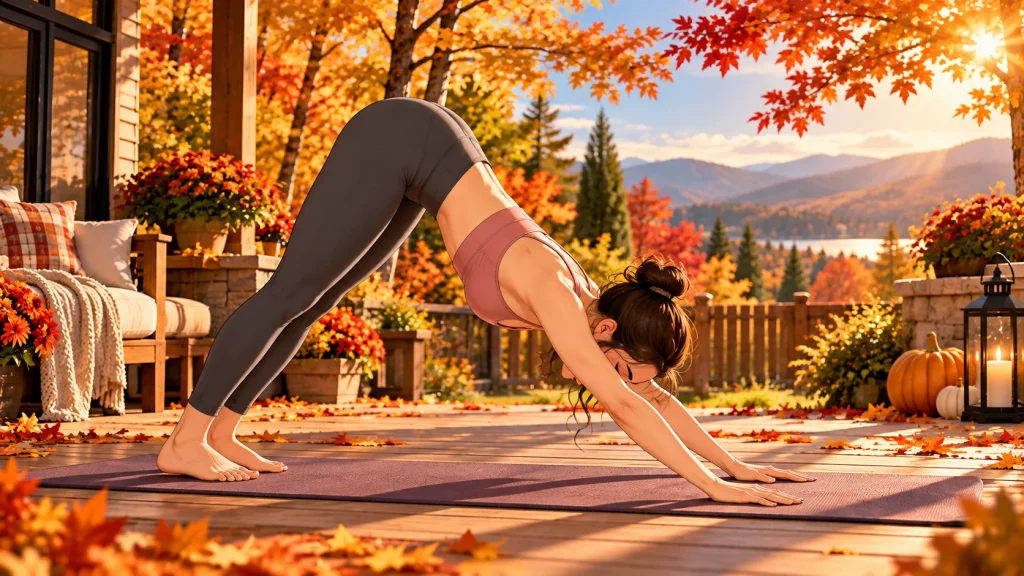
Downward-Facing Dog can combine upper-body support, lower-body stretching, and whole-body movement.
How to do it:
- Start on your hands and knees.
- Tuck your toes under.
- Lift your hips upward and backward.
- Keep your knees slightly bent if that feels more comfortable.
- Let your head remain relaxed between your arms.
- Hold briefly while breathing comfortably.
Beginners don’t need to force their heels toward the floor.
Focus:
Mobility + posterior-chain stretching + upper-body engagement
4. Low Lunge
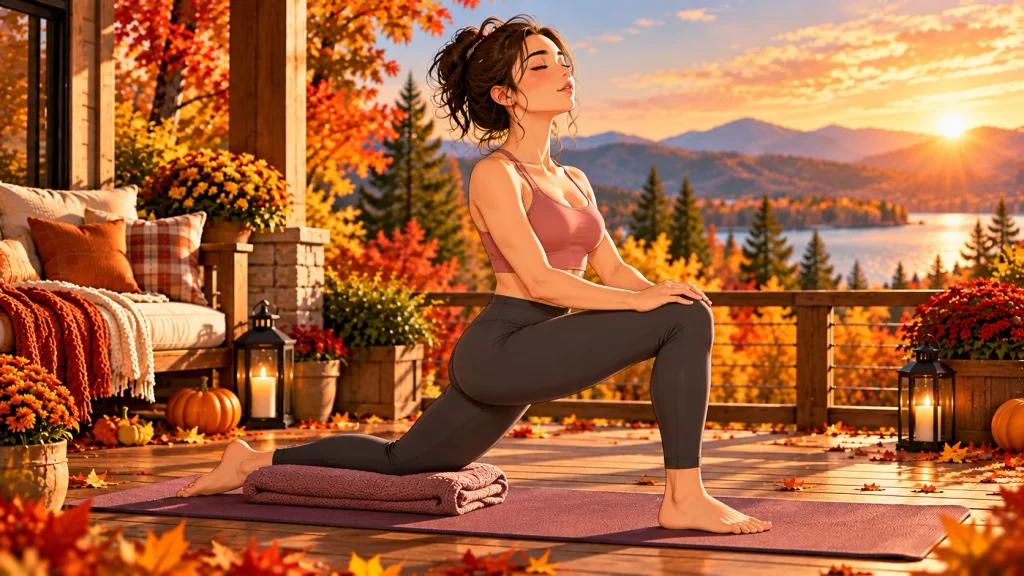
Low Lunge can be a useful mobility movement for the hips and lower body.
How to do it:
- Step one foot forward between your hands.
- Lower your back knee toward the mat.
- Keep the front foot stable.
- Maintain a comfortable upright position.
- Hold briefly, then switch sides.
Use a cushion or folded towel under the back knee if needed.
Focus:
Hip mobility + lower-body stretching
5. Warrior II
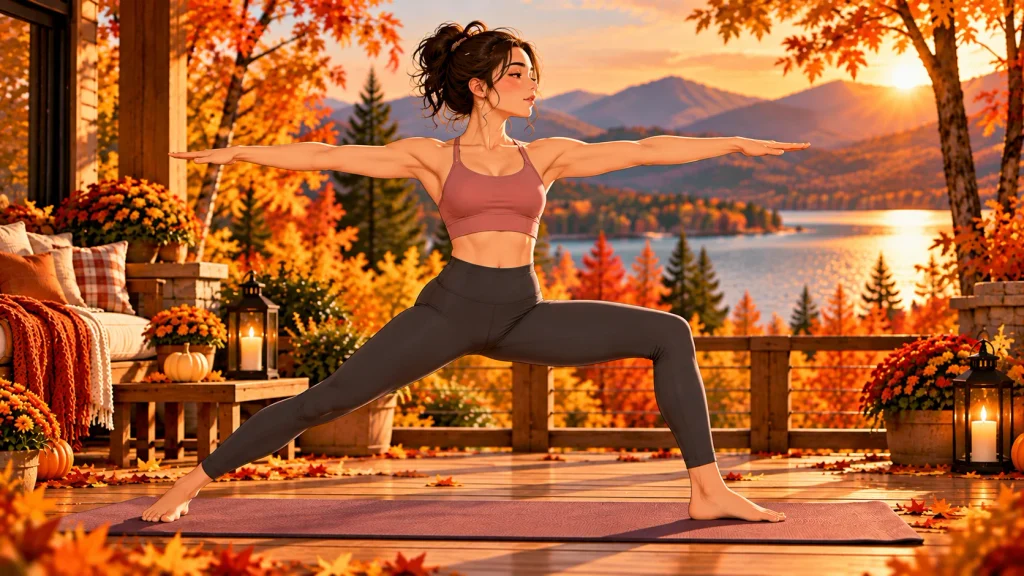
Warrior II adds a strength and balance component to the sequence.
How to do it:
- Step your feet wide.
- Turn one foot outward.
- Bend the front knee while keeping it aligned with the foot.
- Extend your arms in opposite directions.
- Keep your torso upright.
- Hold for several breaths.
- Repeat on the other side.
Don’t force the depth of the front knee bend.
Focus:
Leg strength + balance + controlled movement
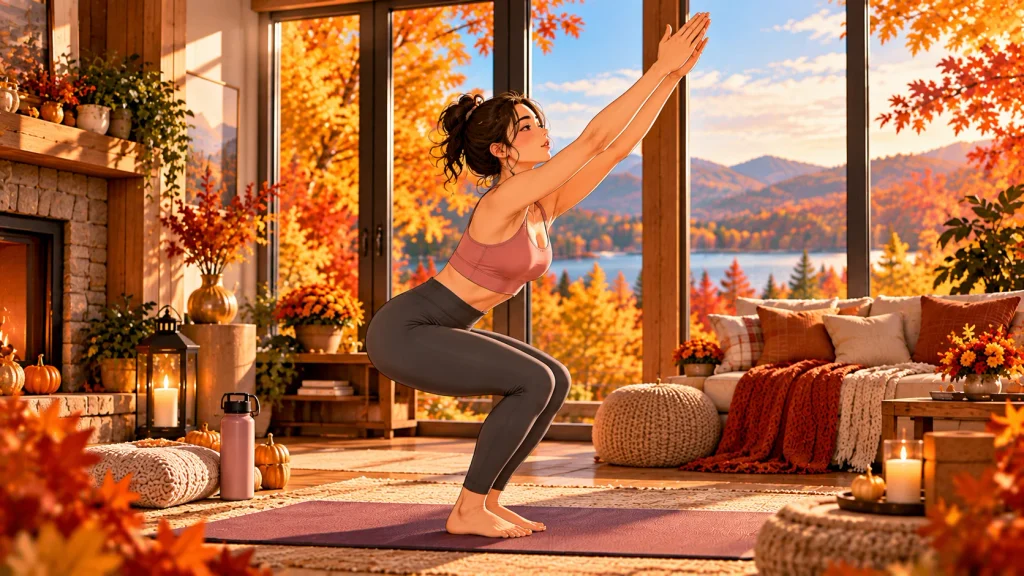
6. Chair Pose
Chair Pose can challenge the legs and core while keeping the movement simple.
How to do it:
- Stand with your feet comfortably positioned.
- Bend your knees as though you’re sitting into a chair.
- Keep your chest lifted.
- Reach your arms upward or forward.
- Hold for a few breaths.
- Return to standing.
If a deep position feels uncomfortable, reduce the bend.
Focus:
Lower-body strength + core engagement
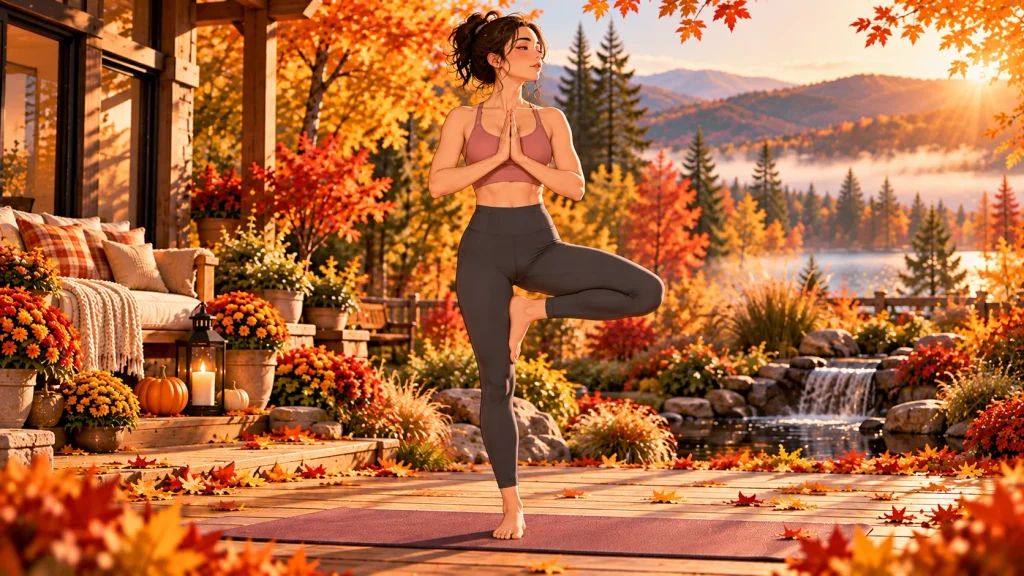
7. Tree Pose
Tree Pose introduces balance and concentration.
How to do it:
- Stand tall.
- Shift your weight onto one foot.
- Place the other foot against the inner calf or thigh if comfortable.
- Avoid placing the foot directly against the knee.
- Keep your hands together or extend your arms.
- Hold while breathing steadily.
- Switch sides.
You can keep your toes on the floor for an easier version.
Focus:
Balance + stability + concentration
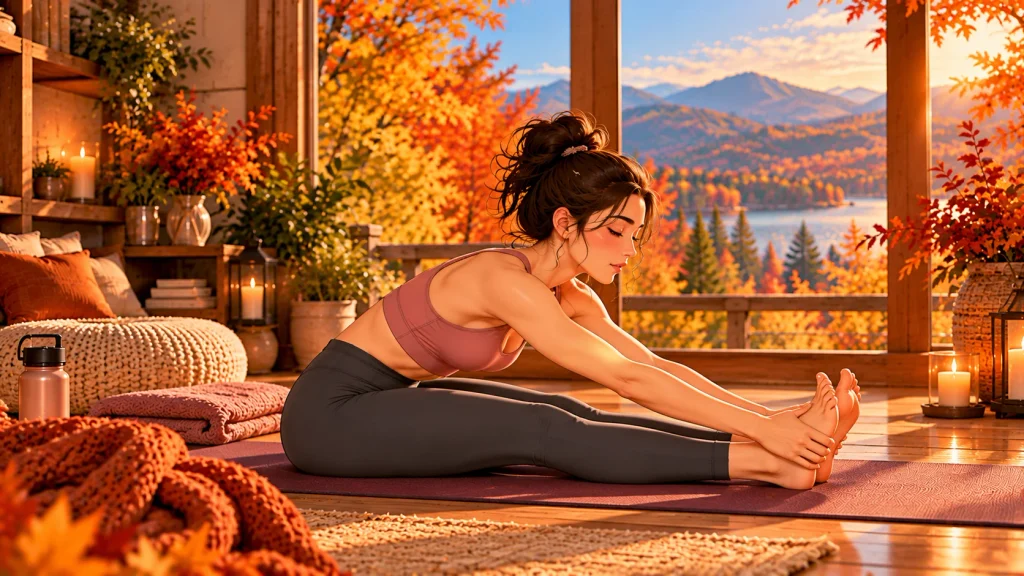
8. Seated Forward Fold
This gentle seated position can provide a slower transition toward the relaxation portion of your practice.
How to do it:
- Sit with your legs extended comfortably.
- Keep your spine long.
- Hinge forward from your hips.
- Reach toward your legs without forcing the stretch.
- Keep your knees slightly bent if needed.
Don’t worry about touching your toes.
Focus:
Gentle posterior-chain stretching + relaxation
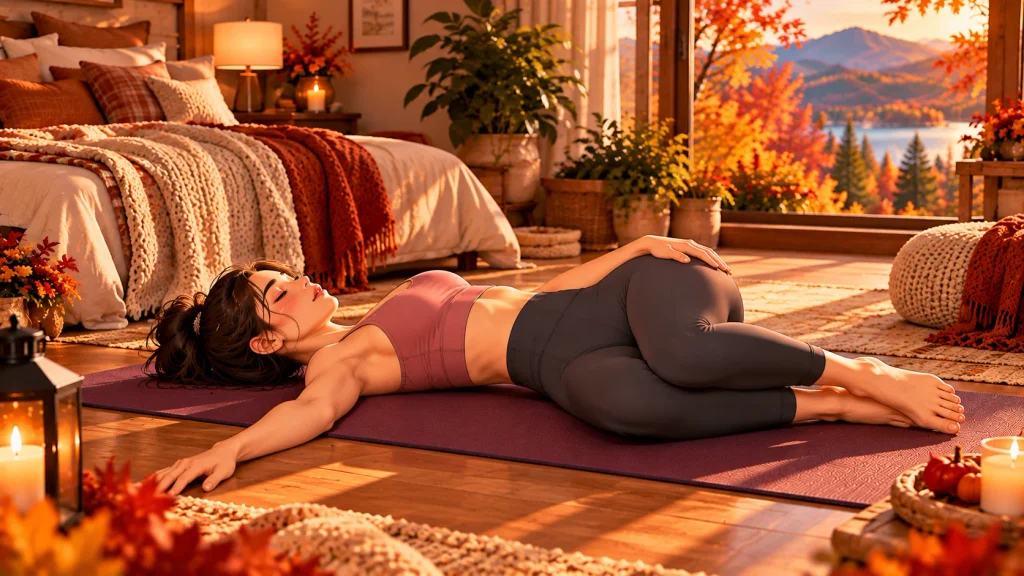
9. Supine Twist
A gentle lying twist can help transition from active movement toward relaxation.
How to do it:
- Lie comfortably on your back.
- Bend your knees.
- Let both knees move gently toward one side.
- Keep your shoulders relaxed.
- Breathe slowly.
- Return to center and switch sides.
Keep the movement comfortable rather than forcing the twist.
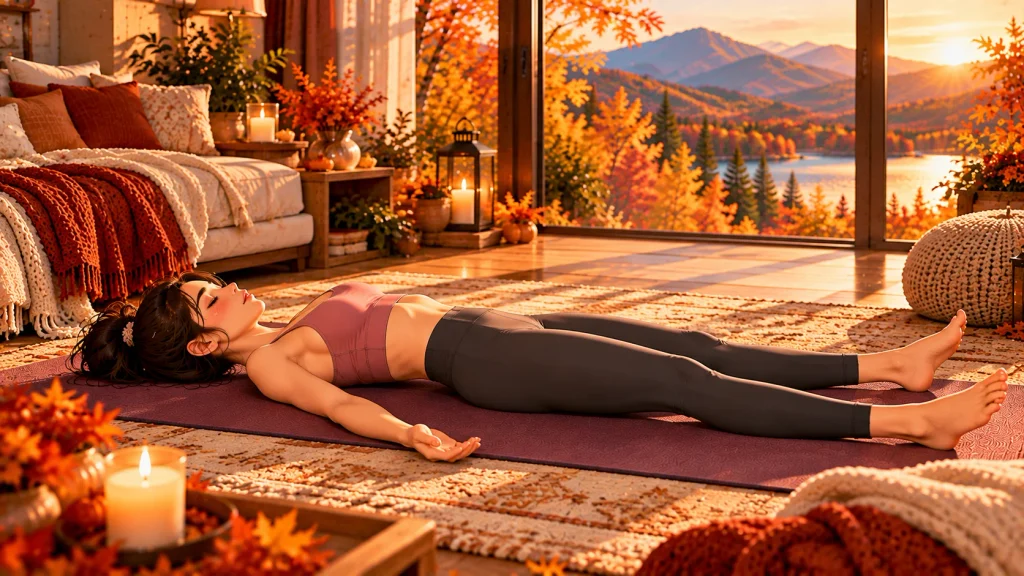
10. Savasana
Finish your routine with a few quiet minutes of relaxation.
How to do it:
- Lie comfortably on your back.
- Let your arms rest naturally.
- Relax your legs.
- Close your eyes if comfortable.
- Take slow, relaxed breaths.
- Stay still for several minutes.
This gives you a calm transition back into your day or evening.
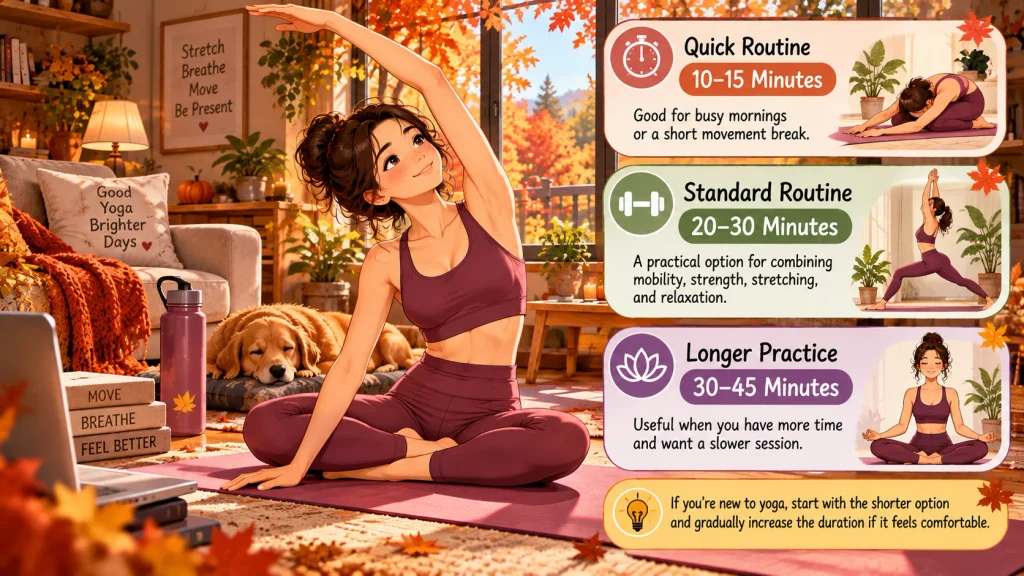
How Long Should a Fall Yoga Routine Be?
You don’t need a long session to make yoga part of your routine.
↪ Quick routine
- 10–15 minutes
- Good for busy mornings or a short movement break.
↪ Standard routine
- 20–30 minutes
- A practical option for combining mobility, strength, stretching, and relaxation.
↪ Longer practice
- 30–45 minutes
- Useful when you have more time and want a slower session.
If you’re new to yoga, start with the shorter option and gradually increase the duration if it feels comfortable.
Simple 20-Minute Fall Yoga Flow
If you want a straightforward routine, try this structure:
| Movement | Approx. Time |
|---|---|
| Mountain Pose + breathing | 1 min |
| Cat-Cow | 2 min |
| Downward-Facing Dog | 2 min |
| Low Lunge | 3 min |
| Warrior II | 3 min |
| Chair Pose | 2 min |
| Tree Pose | 2 min |
| Seated Forward Fold | 2 min |
| Supine Twist | 2 min |
| Savasana | 1–3 min |
Move at a comfortable pace rather than trying to complete the sequence as quickly as possible.

How to Use Yoga With Your Fall Fitness Routine
Yoga doesn’t have to replace your other workouts.
You can use it alongside walking and strength training.
For example:
| Day | Movement |
|---|---|
| Monday | Strength training |
| Tuesday | Walking + short yoga |
| Wednesday | Yoga/mobility |
| Thursday | Strength training |
| Friday | Walking or cardio |
| Saturday | Outdoor activity |
| Sunday | Gentle yoga + recovery |
This creates a more varied weekly routine while giving you dedicated time for mobility and recovery.
Beginner Tips for a Better Yoga Practice
► Start slowly
Learn the basic positions before trying advanced variations.
► Don’t chase flexibility
Your range of motion doesn’t have to look like someone else’s.
► Keep breathing
Avoid holding your breath when a pose becomes challenging.
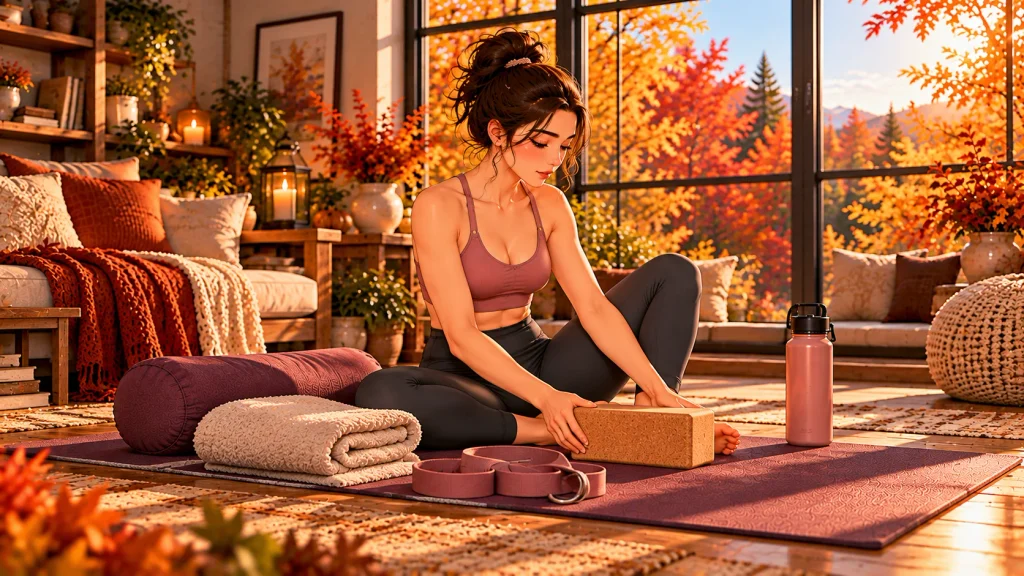
► Use modifications
A block, strap, cushion, or folded towel can make some poses more comfortable.
► Focus on control
Slow, controlled movement is more useful than rushing through the sequence.
► Stop when something hurts
Stretching can feel challenging, but sharp or significant pain is a reason to stop.
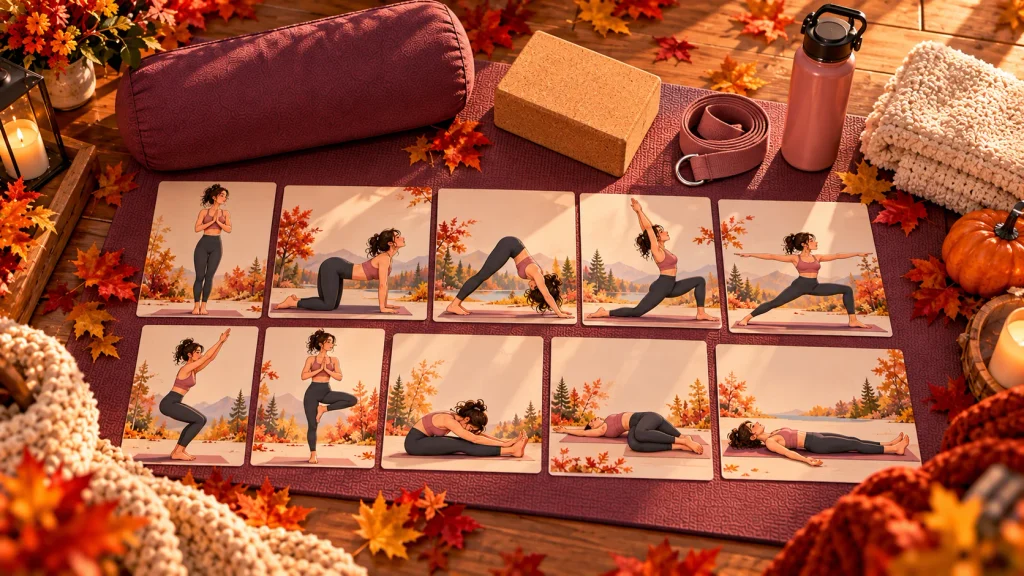
Fall Yoga Routine Checklist
Save this checklist for your next practice:
☐ Mountain Pose
☐ Cat-Cow
☐ Downward-Facing Dog
☐ Low Lunge
☐ Warrior II
☐ Chair Pose
☐ Tree Pose
☐ Seated Forward Fold
☐ Supine Twist
☐ Savasana
Start with 10–15 minutes and build gradually.
Also Read :- https://kheltechie.in/smart-yoga-mats-of-2025/
Make Yoga Part of Your Fall Routine
You don’t need complicated poses or long sessions to make yoga part of your fall fitness routine. Start with a few basic movements. Focus on comfortable range of motion. Use your breathing to slow things down And give yourself enough flexibility to modify the routine when needed.
A consistent 10–20 minute practice may be easier to maintain than an ambitious routine that doesn’t fit your schedule.
Let fall be a season of stronger movement, better mobility, and more intentional recovery.
Frequently Asked Questions
Yoga can be a useful part of a broader fitness routine because it incorporates movement, balance, flexibility, mobility, and mindful breathing. It can complement activities such as walking and strength training.
Yes. The sequence is designed around relatively simple poses, and most positions can be modified to match your current ability.
That depends on your goals, experience, and overall activity routine. Even a short session can be useful when it fits consistently into your schedule.
Yes. You only need enough space to move comfortably. A yoga mat can provide cushioning, but it isn’t essential for every pose.
Either can work depending on the type of practice. Gentle mobility can be useful before activity, while a slower stretching or relaxation-focused practice can fit well after exercise or on a recovery day.