10 Healthy Soup Recipes for Cold Weather, With Nutrition Facts for Every Bowl
For dinner in 30 minutes, make the lemon chicken, red lentil or white bean soup. For a freezer full by Sunday night, make the minestrone or the split pea. If the roads are closed and the fridge is bare, the tomato chickpea and black bean soups run on cans, frozen spinach and a sweet potato.
Every recipe lists calories, protein, fiber and sodium for one bowl, so you know what you’re eating before you start cooking. None of them uses cream. With unsalted broth and no-salt-added cans, all ten stay at or under 460 mg of sodium a bowl, which takes some care: one cup of regular chicken broth can carry 860 mg on its own. The section called “How these soups were checked” shows the math.
Quick answer: A healthy cold-weather soup combines vegetables, beans or lean protein, and unsalted broth, with a fiber-rich starch if you want it to fill you up. These ten follow that pattern, and the nutrition for each bowl is listed so you can compare.
Skip to the picker table if you want dinner tonight, or to the storage rules if you’re cooking ahead.
Pick Tonight’s Soup
Each recipe makes four bowls, except the minestrone and the split pea, which make six. A bowl is one share of the pot, roughly 1½ to 2 cups. Every number is an estimate, and the method is at the bottom of the page.
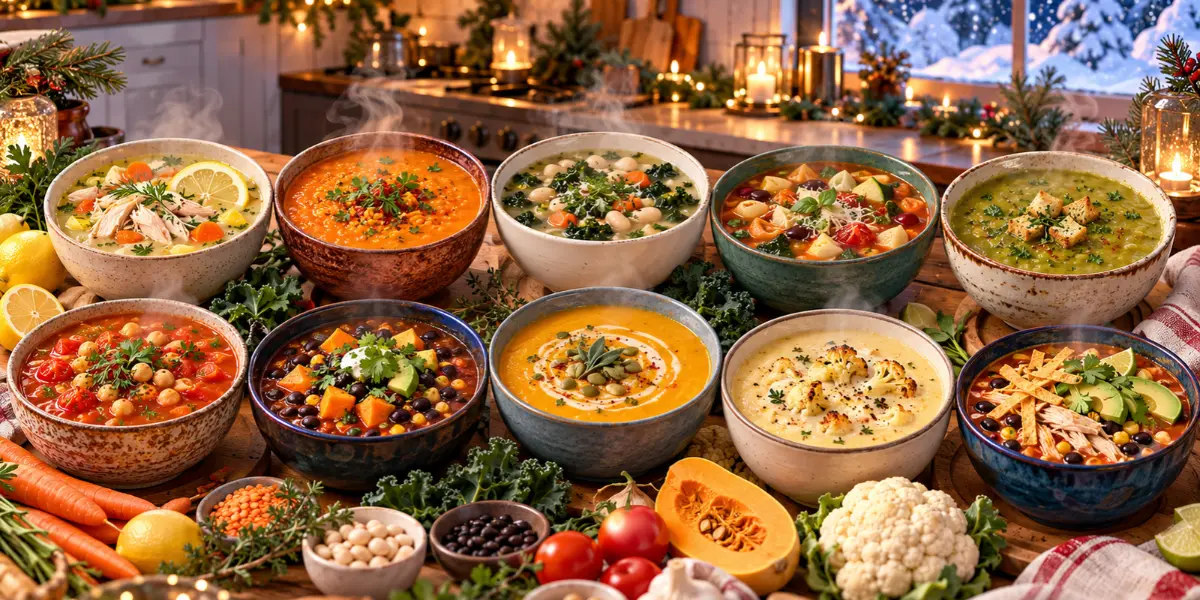
| Soup | Best for | Time | Calories | Protein | Fiber | Sodium |
|---|---|---|---|---|---|---|
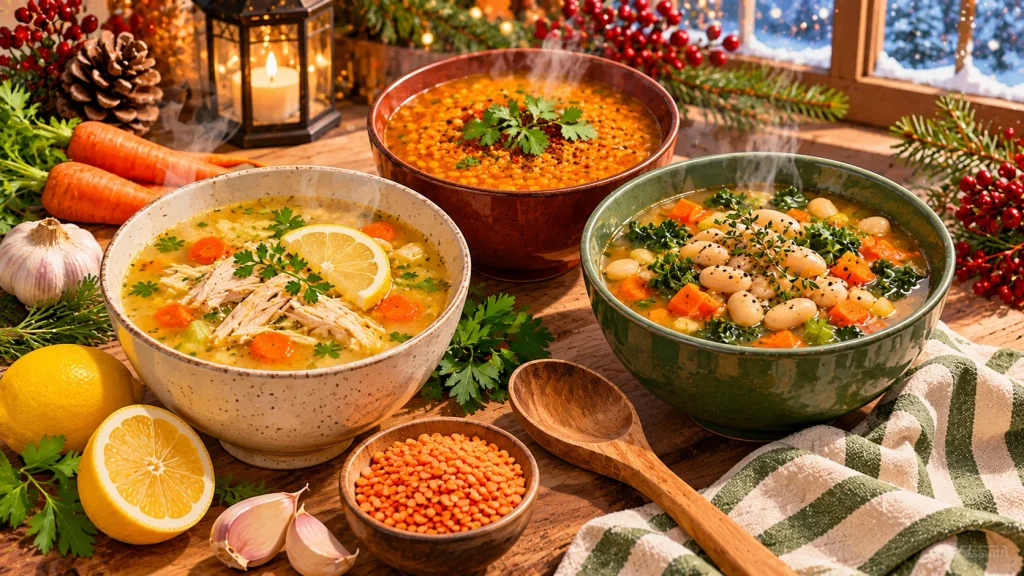
| Lemon chicken and vegetable | Weeknight dinner, lunch for tomorrow | 30 min | 285 | 26 g | 5 g | 390 mg |
| Red lentil and carrot | The cheapest, fastest meatless pot | 30 min | 270 | 15 g | 8 g | 310 mg |
| White bean and kale | Greens with little effort | 30 min | 240 | 13 g | 10 g | 340 mg |
| Vegetable minestrone (makes 6) | Freezer batches | 55 min | 240 | 12 g | 11 g | 370 mg |
| Split pea (makes 6) | A hands-off weekend pot, the most fiber | 80 min | 230 | 14 g | 14 g | 340 mg |
| Tomato and chickpea | A pantry night | 30 min | 285 | 14 g | 13 g | 320 mg |
| Black bean and sweet potato | A filling pantry night | 40 min | 305 | 13 g | 14 g | 360 mg |
| Butternut squash and white bean | Creamy without cream | 60 min | 290 | 13 g | 12 g | 280 mg |
| Roasted cauliflower | A light dinner or starter | 50 min | 170 | 8 g | 5 g | 310 mg |
| Chicken tortilla | The most protein, after a long walk | 40 min | 370 | 35 g | 8 g | 370 mg |
Two soups miss the page’s fiber or protein targets (6 g of fiber and 12 g of protein per bowl). The lemon chicken sits just under 6 g of fiber, and the roasted cauliflower is the lightest of the ten at 8 g of protein and 5 g of fiber, so serve it as a starter or next to a bowl of beans or a couple of eggs. The other eight clear every target.
If you cook one soup this week, make the red lentil and carrot. It takes about 30 minutes, and ShopRite’s website listed a 16-ounce bag of Goya masoor dal (red lentils) at $1.79 on October 24, 2026. At one cup of dry lentils per pot, that’s under 20 cents of lentils per bowl, for 15 g of protein and 8 g of fiber.
Thirty-Minute Healthy Soups for Cold Weeknights
Pot on the stove to bowls on the table in about half an hour, built from pantry and frozen staples. Chop while the first pan heats.
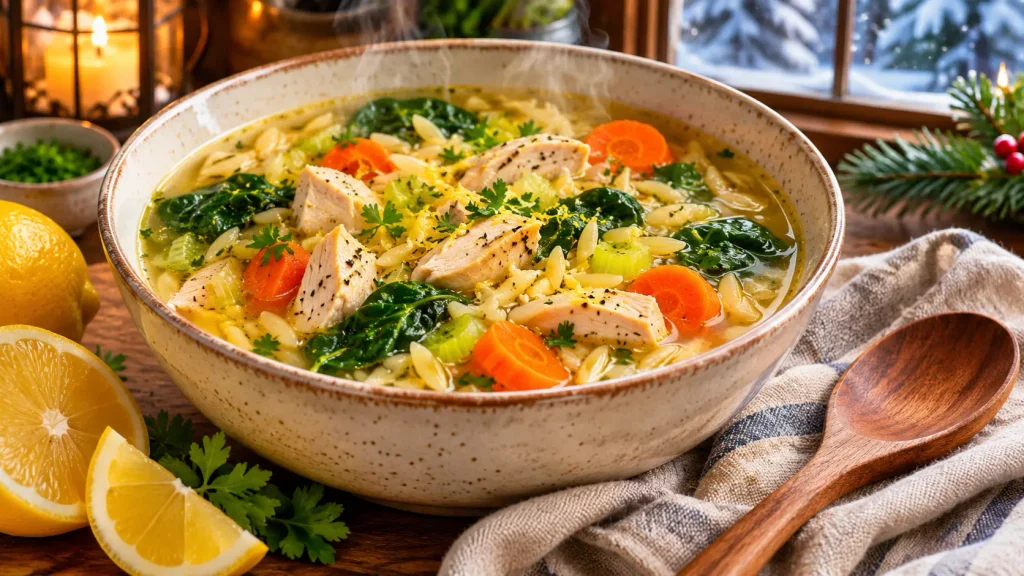
⇝ Lemon chicken and vegetable soup
Makes 4 bowls · about 30 minutes · dairy-free
Per bowl (estimated): 285 calories, 26 g protein, 5 g fiber, 390 mg sodium, 1.5 g saturated fat.
Cubed chicken cooks in the simmering broth in 8 to 10 minutes, so the soup and the meat finish together, and the lemon at the end lets the whole pot get by on ¼ teaspoon of salt.
Ingredients
- 1 tablespoon olive oil
- 1 medium yellow onion, diced
- 2 medium carrots, sliced
- 2 celery stalks, sliced
- 3 garlic cloves, minced
- 1 teaspoon dried thyme
- 6 cups unsalted chicken broth
- 12 ounces boneless, skinless chicken breast with no added solution, cut into 1-inch cubes
- 4 ounces (about ⅔ cup) whole-wheat orzo or other small pasta
- 3 cups baby spinach
- 2 tablespoons lemon juice and 1 teaspoon zest
- ¼ teaspoon salt, black pepper, 2 tablespoons chopped parsley
Method
- Heat the oil in a large pot over medium heat. Cook the onion, carrots and celery for 6 to 7 minutes, until the onion is soft. Stir in the garlic and thyme for 30 seconds.
- Add the broth and bring to a simmer. Add the chicken and orzo and simmer 8 to 10 minutes, until the pasta is tender and the chicken reaches 165°F.
- Stir in the spinach until it wilts, about 1 minute. Off the heat, add the lemon juice, zest, salt, pepper and parsley. Taste before adding more salt.
Storage: Fridge 3 to 4 days. The pasta keeps drinking broth, so add a splash of water when you reheat. For the freezer, make the soup without the orzo and cook fresh pasta when you reheat.
Swap: Store-bought rotisserie chicken saves about 10 minutes, but it is seasoned and often brined. Check the label and expect a higher sodium number than the one above.
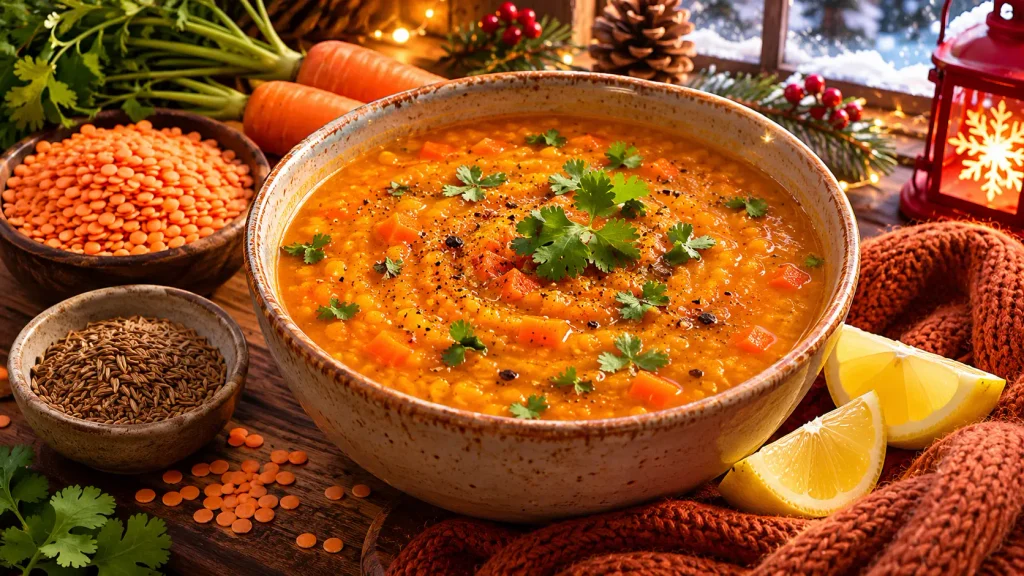
⇝ Red lentil and carrot soup with cumin
Makes 4 bowls · about 30 minutes · vegan, gluten-free (check labels)
Per bowl (estimated): 270 calories, 15 g protein, 8 g fiber, 310 mg sodium, 0.5 g saturated fat.
Red lentils (masoor dal) break down in about 20 minutes, which thickens the pot without cream or a blender.
Ingredients
- 1 tablespoon olive oil
- 1 medium yellow onion, diced
- 3 medium carrots, chopped
- 3 garlic cloves, minced
- 1½ teaspoons ground cumin
- 1 tablespoon no-salt-added tomato paste
- 1 cup dry red lentils, rinsed
- 1 can (14.5 ounces) no-salt-added diced tomatoes
- 4 cups unsalted vegetable broth and 2 cups water
- 2 tablespoons lemon juice
- ¼ teaspoon salt, black pepper
Method
- Heat the oil over medium heat. Cook the onion and carrots for 7 minutes. Add the garlic, cumin and tomato paste and stir for 1 minute, until the paste darkens.
- Add the lentils, tomatoes, broth and water. Bring to a boil, then simmer uncovered for 18 to 22 minutes, stirring now and then, until the lentils are very soft.
- Stir in the lemon juice, salt and pepper. Blend a third of the soup for a smoother texture, or leave it rustic. Thin with water if it’s too thick.
Storage: Fridge 4 days, freezer 3 months. It thickens as it sits, so add water when you reheat.
Swap: Stir in 2 cups of chopped spinach at the end. A spoonful of plain Greek yogurt on top is good too, but it isn’t in the numbers above.
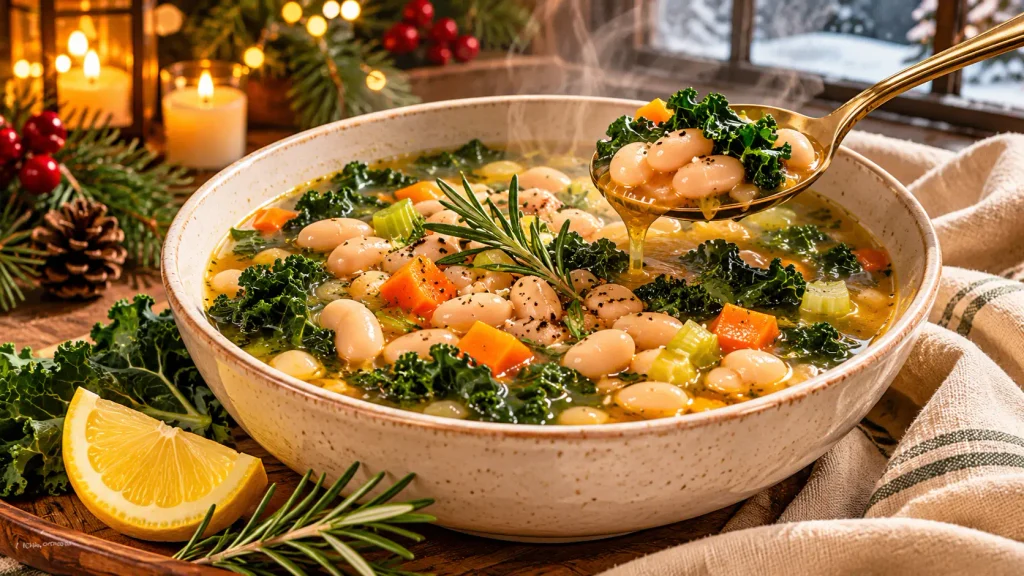
⇝ White bean and kale soup with lemon
Makes 4 bowls · about 30 minutes · vegan with vegetable broth, gluten-free (check labels)
Per bowl (estimated): 240 calories, 13 g protein, 10 g fiber, 340 mg sodium, 0.5 g saturated fat.
Mashing a cup of the beans into the pot thickens the broth, so it tastes creamy without any dairy.
Ingredients
- 1 tablespoon olive oil
- 1 medium yellow onion, diced
- 1 carrot and 2 celery stalks, diced
- 4 garlic cloves, minced
- 1 teaspoon dried rosemary and ¼ teaspoon red pepper flakes (optional)
- 2 cans (15 ounces each) no-salt-added cannellini beans, drained and rinsed
- 5 cups unsalted chicken or vegetable broth
- 4 cups chopped kale (about 5 ounces, stems removed)
- 2 tablespoons lemon juice
- ¼ teaspoon salt, black pepper
Method
- Heat the oil and cook the onion, carrot and celery for 6 to 7 minutes. Add the garlic, rosemary and pepper flakes for 30 seconds.
- Add the beans and broth and simmer 10 minutes. Mash about a cup of the beans against the side of the pot with a spoon.
- Add the kale and simmer 5 to 7 minutes, until tender. Off the heat, stir in the lemon juice, salt and pepper.
Storage: Fridge 4 days, freezer 3 months.
Swap: Spinach needs only 1 to 2 minutes instead of the kale’s 5 to 7. Chard cooks like kale.
Big-Batch Soups that Freeze Well
Both of these make six bowls and are built to survive a freezer: no pasta in the pot, no dairy, nothing that turns grainy. Cool them in shallow containers first. The rules are further down the page.
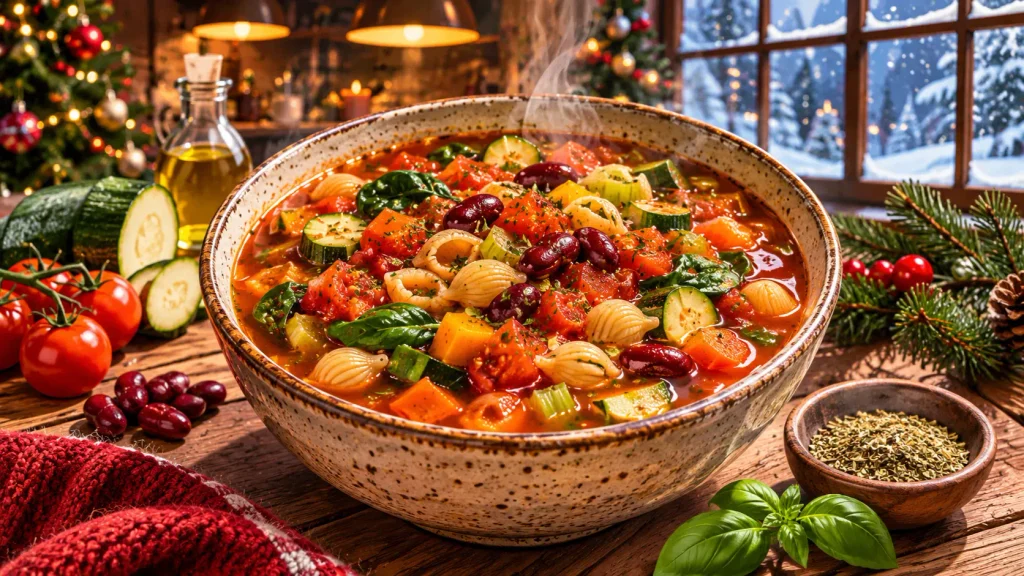
⇝ Vegetable minestrone
Makes 6 bowls · about 55 minutes · vegetarian, vegan as written
Per bowl (estimated): 240 calories, 12 g protein, 11 g fiber, 370 mg sodium, 0.5 g saturated fat.
Cooking the pasta in a separate pot keeps the soup clear and lets the leftovers freeze without turning to mush.
Ingredients
- 1 tablespoon olive oil
- 1 large yellow onion, diced
- 2 carrots and 2 celery stalks, diced
- 1 medium zucchini, diced
- 4 garlic cloves, minced
- 2 teaspoons Italian seasoning
- 2 tablespoons no-salt-added tomato paste
- 1 can (14.5 ounces) no-salt-added diced tomatoes
- 2 cans (15 ounces each) no-salt-added kidney or cannellini beans, drained and rinsed
- 6 cups unsalted vegetable broth
- 4 ounces whole-wheat ditalini or small shells
- 3 cups baby spinach
- ½ teaspoon salt, black pepper
Method
- Heat the oil over medium heat. Cook the onion, carrots and celery for 7 minutes. Add the zucchini, garlic, Italian seasoning and tomato paste and cook 2 minutes more.
- Add the tomatoes, beans and broth. Simmer 20 to 25 minutes.
- While it simmers, cook the pasta in a separate pot of water by the package directions, then drain.
- Stir the spinach into the soup, then the salt and pepper. Put a spoonful of pasta in each bowl and ladle the soup over it.
Storage: Keep the pasta separate. The soup alone keeps 4 days in the fridge and 3 months in the freezer.
Swap: Any canned bean works. For gluten-free, use gluten-free pasta.
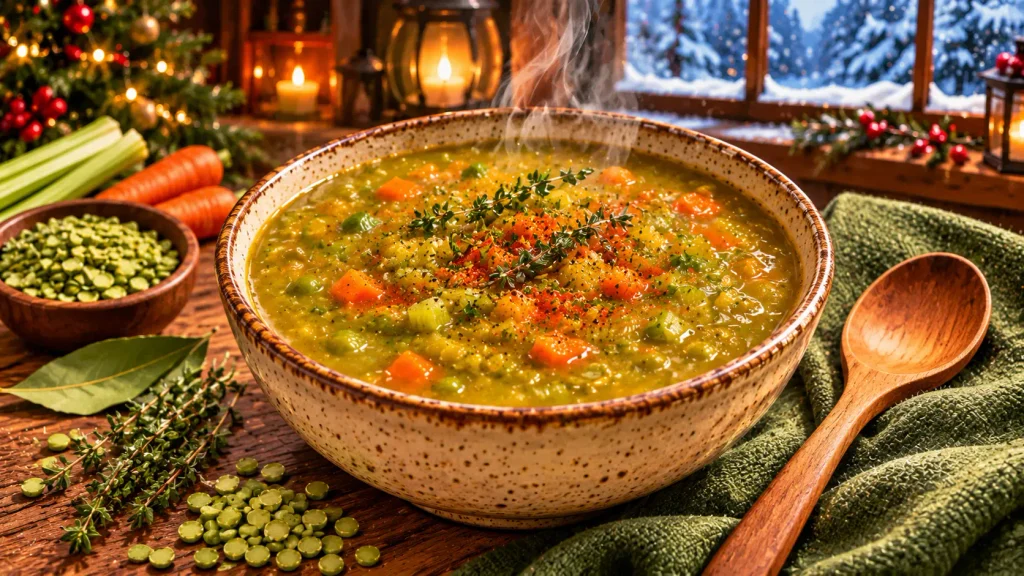
⇝ Split pea soup with smoked paprika
Makes 6 bowls · about 80 minutes, mostly hands-off · vegan, gluten-free (check labels)
Per bowl (estimated): 230 calories, 14 g protein, 14 g fiber, 340 mg sodium, 0.5 g saturated fat.
Classic split pea soup gets its smoke from a ham bone, and cured ham is a salty ingredient. Smoked paprika gets most of the way there with almost no sodium, and green split peas collapse into a thick soup without any soaking.
Ingredients
- 1½ cups (about 10 ounces) dried green split peas, rinsed
- 1 tablespoon olive oil
- 1 large yellow onion, diced
- 3 carrots and 3 celery stalks, diced
- 4 garlic cloves, minced
- 2 teaspoons smoked paprika, 1 teaspoon dried thyme, 2 bay leaves
- 6 cups unsalted vegetable or chicken broth and 2 cups water
- 1 tablespoon apple cider vinegar
- ½ teaspoon salt, black pepper
Method
- Heat the oil over medium heat. Cook the onion, carrots and celery for 8 minutes. Add the garlic, paprika and thyme and stir for 1 minute.
- Add the split peas, bay leaves, broth and water. Bring to a boil, then lower to a gentle simmer and partly cover.
- Cook 60 to 75 minutes, stirring every 15 minutes, until the peas have collapsed. Add water if it gets too thick.
- Remove the bay leaves. Stir in the vinegar, salt and pepper. Blend part of the pot if you want it smoother.
Storage: Fridge 4 days, freezer 3 months. It sets thick when cold, so add water when you reheat.
Swap: Yellow split peas work the same way.
Pantry Soups for Snowed-in Days
When roads are closed or you simply can’t face the store, soup has to come from what keeps. These two use canned and frozen staples plus onion, garlic and, in one, sweet potatoes, all of which last for weeks in a cupboard or freezer. No fresh herbs or greens required.
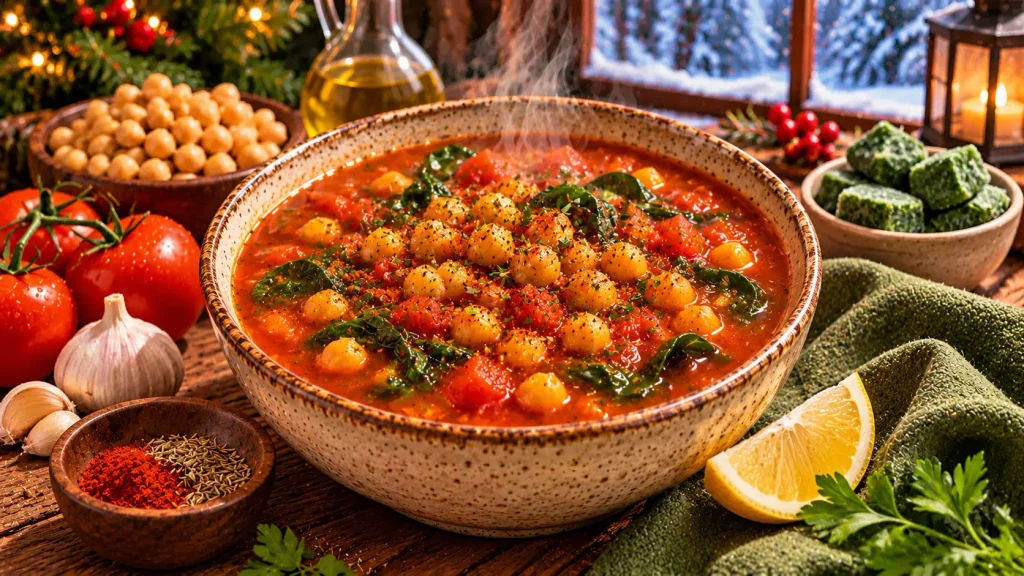
⇝ Tomato and chickpea soup
Makes 4 bowls · about 30 minutes · vegan, gluten-free (check labels)
Per bowl (estimated): 285 calories, 14 g protein, 13 g fiber, 320 mg sodium, 1 g saturated fat.
Nearly everything comes from a can, a carton, the freezer or the spice rack, which is the point on a day you can’t get to a store.
Ingredients
- 1 tablespoon olive oil
- 1 medium yellow onion, diced
- 4 garlic cloves, minced
- 1 teaspoon ground cumin and 1 teaspoon smoked paprika
- 1 can (28 ounces) no-salt-added crushed tomatoes
- 2 cans (15 ounces each) no-salt-added chickpeas, drained and rinsed
- 3 cups unsalted broth or water
- 5 ounces frozen chopped spinach
- 1 tablespoon lemon juice
- ¼ teaspoon salt, black pepper
Method
- Cook the onion in the oil for 5 minutes. Add the garlic, cumin and paprika for 1 minute.
- Add the tomatoes, chickpeas and broth. Simmer 15 minutes.
- Add the frozen spinach and cook 3 to 5 minutes, until hot. Mash a few chickpeas against the side of the pot for body.
- Stir in the lemon juice, salt and pepper.
Storage: Fridge 4 days, freezer 3 months.
Swap: Without canned chickpeas, use 3 cups of home-cooked chickpeas, which is about 1 cup dry, soaked and cooked until tender.
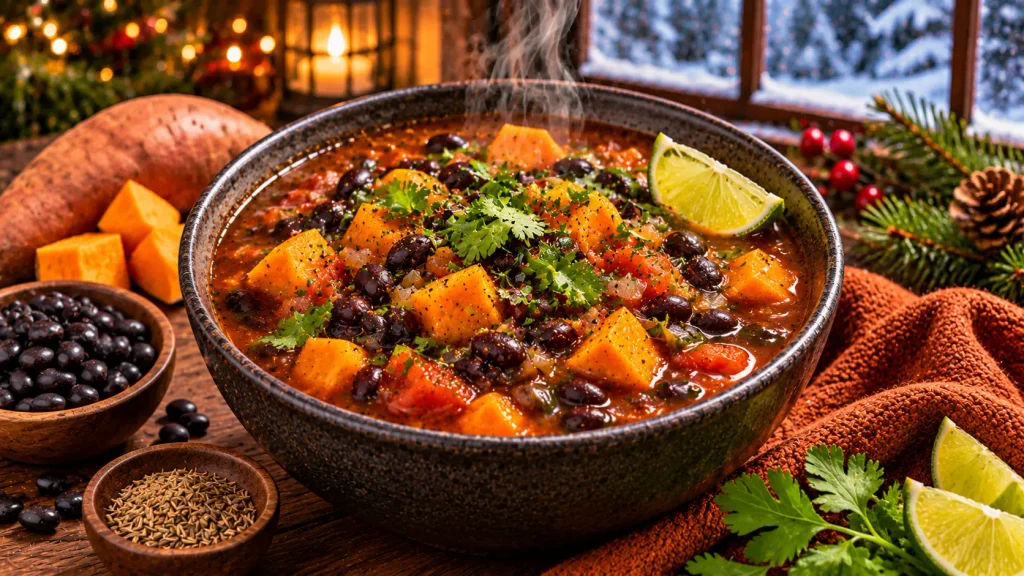
⇝ Black bean and sweet potato soup
Makes 4 bowls · about 40 minutes · vegan, gluten-free (check labels)
Per bowl (estimated): 305 calories, 13 g protein, 14 g fiber, 360 mg sodium, 0.5 g saturated fat.
Sweet potatoes keep for weeks in a cool cupboard, and they break down enough to thicken the soup and sweeten it, so no sugar is needed.
Ingredients
- 1 tablespoon olive oil
- 1 medium yellow onion, diced
- 3 garlic cloves, minced
- 1 teaspoon ground cumin and 1 teaspoon chili powder (check the label for salt)
- 2 medium sweet potatoes (about 14 ounces), peeled and cut into ¾-inch cubes
- 2 cans (15 ounces each) no-salt-added black beans, drained and rinsed
- 1 can (14.5 ounces) no-salt-added diced tomatoes
- 4 cups unsalted broth
- 2 tablespoons lime juice and ¼ cup chopped cilantro (optional)
- ¼ teaspoon salt
Method
- Cook the onion in the oil for 5 minutes. Add the garlic, cumin and chili powder for 1 minute.
- Add the sweet potatoes, beans, tomatoes and broth. Bring to a boil, then simmer 15 to 20 minutes, until the sweet potato is tender.
- Mash some of the sweet potato and beans against the side of the pot, or blend 1½ cups and stir it back in.
- Stir in the lime juice, salt and cilantro.
Storage: Fridge 4 days, freezer 3 months.
Swap: Butternut squash or pumpkin cooks in the same time.
Creamy Soups Without the Cream
Cream soups usually get their body from butter, flour and cream. These two get it from beans and vegetables: blend the pot and the starch does the thickening. In a standard blender, work in batches, fill it no more than halfway and leave the lid vented, because hot soup expands and can push the lid off. An immersion blender skips the problem.
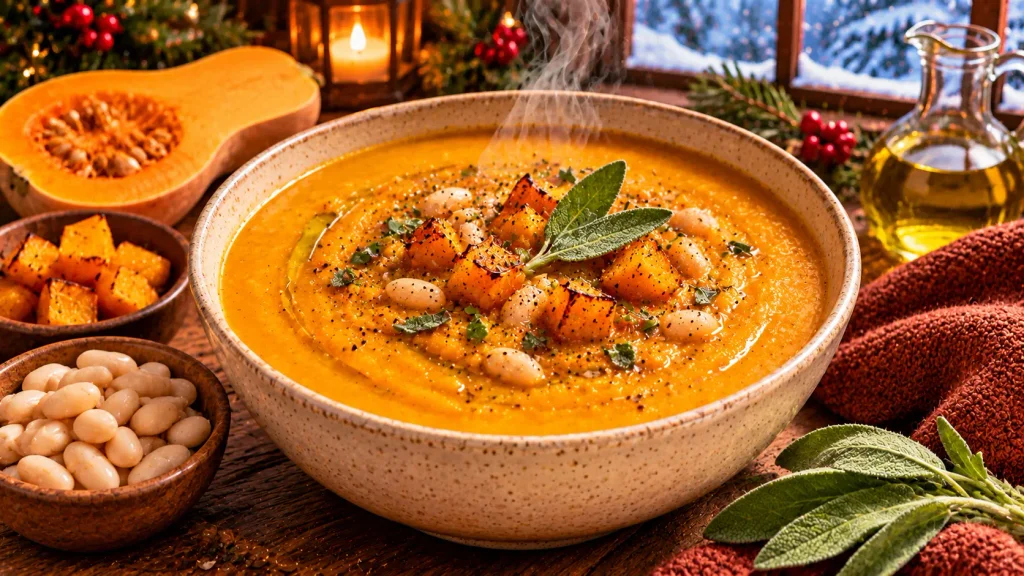
⇝ Butternut squash and white bean soup
Makes 4 bowls · about 1 hour · vegan, gluten-free (check labels)
Per bowl (estimated): 290 calories, 13 g protein, 12 g fiber, 280 mg sodium, 1 g saturated fat.
White beans blend into a silky base and add protein, so the soup gets its body from the beans instead of cream.
Ingredients
- 5 cups peeled, cubed butternut squash (from one 2-pound squash)
- 1 medium yellow onion, cut into wedges
- 1 tablespoon olive oil
- 3 garlic cloves, peeled
- 1 teaspoon dried sage (or 6 fresh leaves)
- 2 cans (15 ounces each) no-salt-added cannellini beans, drained and rinsed
- 4 cups unsalted vegetable broth
- ¼ teaspoon salt, black pepper, a pinch of nutmeg (optional)
Method
- Heat the oven to 425°F. Toss the squash and onion with the oil on a large sheet pan. Roast 25 minutes, add the garlic cloves, then roast 10 minutes more, until browned at the edges.
- Move everything to a pot. Add the beans, broth and sage and simmer 10 minutes.
- Blend until smooth. Season with the salt and pepper, and thin with water if needed.
Storage: Fridge 4 days, freezer 3 months.
Swap: Without an oven, simmer the cubed squash in the broth for about 20 minutes. The flavor is milder without the browning.
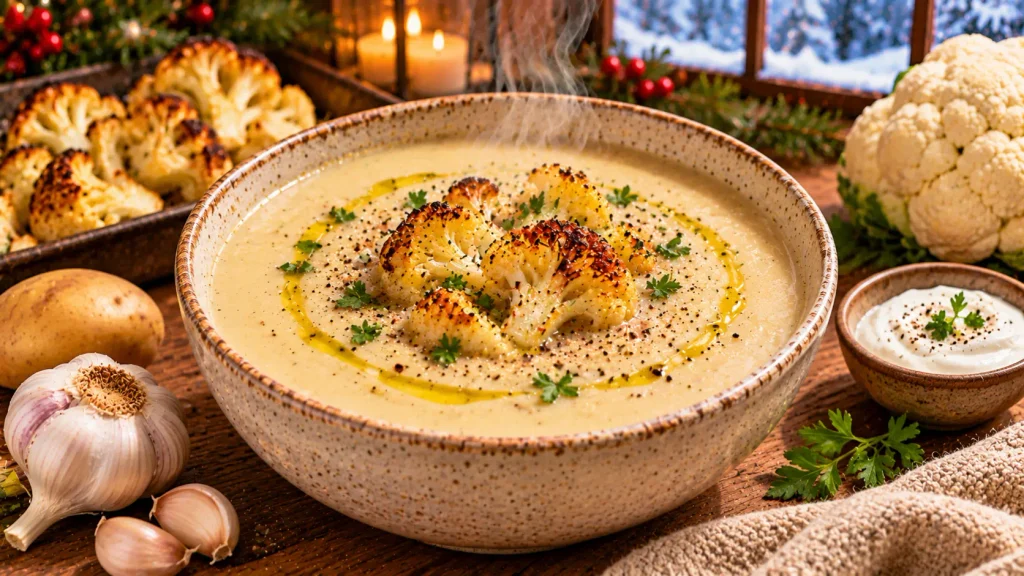
⇝ Roasted cauliflower soup
Makes 4 bowls · about 50 minutes · vegetarian, dairy-free if you use plant milk
Per bowl (estimated): 170 calories, 8 g protein, 5 g fiber, 310 mg sodium, 1 g saturated fat.
Roasting browns the cauliflower, and one small potato adds the starch that makes the blended soup creamy. Greek yogurt stirred in at the end adds tang and a little protein. This is the lightest soup on the page, so pair it with beans, eggs or whole-grain toast.
Ingredients
- 6 cups cauliflower florets (about 1½ pounds)
- 1 medium Yukon Gold potato (about 5 ounces), peeled and cubed
- 1 medium yellow onion, cut into wedges
- 4 garlic cloves, peeled
- 2 tablespoons olive oil
- 4 cups unsalted vegetable broth
- ½ cup plain nonfat Greek yogurt (or ½ cup unsweetened plant milk)
- ¼ teaspoon salt, black pepper
Method
- Heat the oven to 425°F. Toss the cauliflower, potato, onion and garlic with the oil on a large sheet pan, in a single layer. Roast 30 to 35 minutes, stirring once, until browned at the edges.
- Move everything to a pot with the broth and simmer 10 minutes.
- Blend until smooth. Take the pot off the heat and stir in the yogurt. Don’t boil it afterward, since it can curdle. Season with the salt and pepper.
Storage: Fridge 3 to 4 days. To freeze, freeze the soup before adding the yogurt, then stir the yogurt in after you reheat.
Swap: Plant milk in place of the yogurt keeps it dairy-free and lowers the protein by about 3 g a bowl.
A Heartier Bowl for After a Cold Walk or Run
If you’ve been out on a long cold walk or run, this is the soup with the most protein: 35 g a bowl, plus 8 g of fiber. How that fits your training is a question for a dietitian. The numbers are here so you can decide.
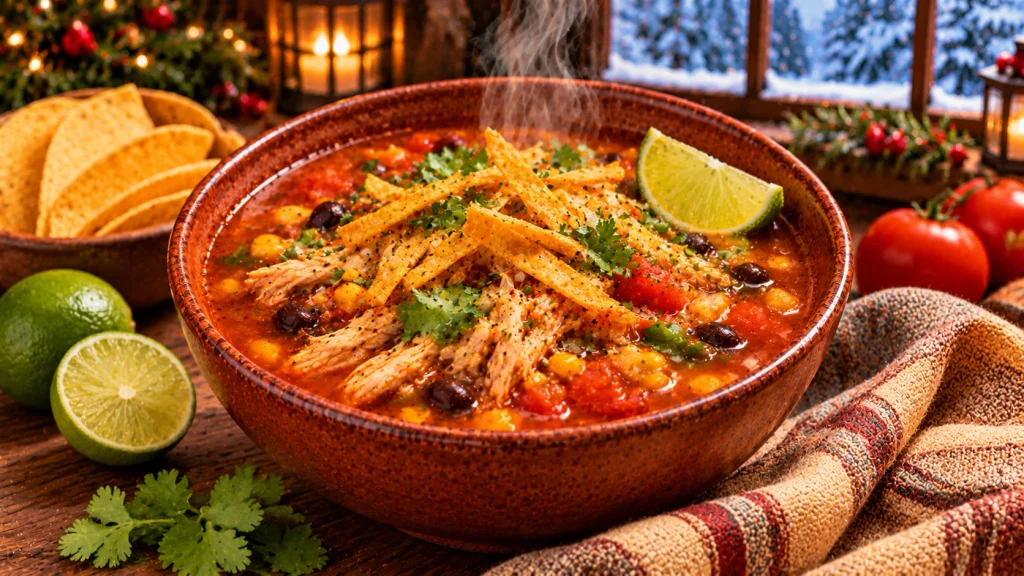
⇝ Chicken tortilla soup
Makes 4 bowls · about 40 minutes · dairy-free, gluten-free with 100% corn tortillas
Per bowl (estimated, without toppings): 370 calories, 35 g protein, 8 g fiber, 370 mg sodium, 1.5 g saturated fat.
Baking the tortilla strips gives the crunch of the restaurant version without frying, and the black beans and corn make it a full meal.
Ingredients
- 3 corn tortillas (6-inch), cut into thin strips and tossed with 1 teaspoon olive oil
- 1 tablespoon olive oil
- 1 medium yellow onion, diced
- 3 garlic cloves, minced
- 1½ teaspoons ground cumin, 1 teaspoon smoked paprika, 1 teaspoon chili powder
- 1 pound boneless, skinless chicken breast with no added solution
- 1 can (14.5 ounces) no-salt-added diced tomatoes
- 1 can (15 ounces) no-salt-added black beans, drained and rinsed
- 1 cup frozen corn
- 5 cups unsalted chicken broth
- 2 tablespoons lime juice, ¼ cup chopped cilantro, ¼ teaspoon salt
Method
- Heat the oven to 400°F. Spread the tortilla strips on a sheet pan and bake 8 to 10 minutes, until crisp. Set aside.
- Meanwhile, cook the onion in the oil for 5 minutes. Add the garlic and spices for 1 minute.
- Add the tomatoes, broth and whole chicken breasts. Simmer 15 to 18 minutes, until the chicken reaches 165°F.
- Lift out the chicken and shred it with two forks. Return it to the pot with the beans and corn and simmer 5 minutes. Stir in the lime juice and salt.
- Top each bowl with tortilla strips and cilantro.
Storage: Fridge 4 days, freezer 3 months. Leave the strips out of anything you freeze, since they go soft.
Toppings: Avocado and cheese add calories and sodium and aren’t in the numbers above.
A Soup Formula You Can Use Without a Recipe
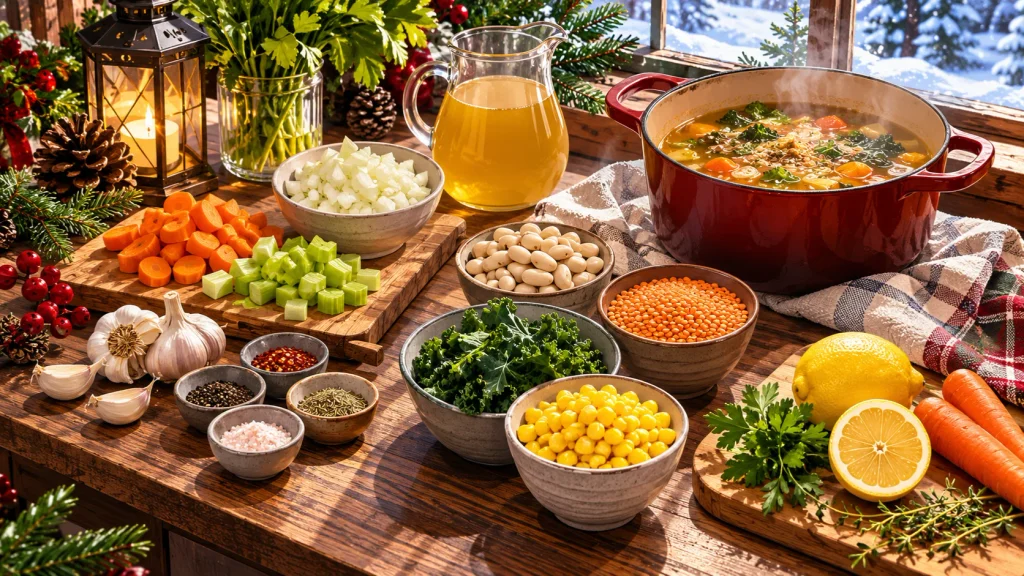
Every soup here follows the same five steps. That’s most of the reason they’re quick, and once the order is in your head you can build a pot from whatever’s in the fridge.
| Step | What goes in | For 4 bowls | Time |
|---|---|---|---|
| 1. Aromatics | Chopped onion, carrot and celery in olive oil | 1 to 1½ cups | 5 to 7 minutes, until soft |
| 2. Spices and paste | Garlic, cumin or dried herbs, no-salt-added tomato paste | 1 tablespoon paste, 1 to 2 teaspoons spice | 30 to 60 seconds |
| 3. Liquid | Unsalted broth, or broth and water | 5 to 6 cups | Bring to a simmer |
| 4. Protein, fiber and vegetables | Beans, lentils or chicken, plus vegetables | 1½ to 3 cups cooked beans, or ½ to 1 cup dry lentils, or 12 ounces chicken, plus 2 to 4 cups vegetables | 10 to 25 minutes, depending on the ingredient |
| 5. Finish | Lemon juice or vinegar, fresh herbs, a pinch of salt | 1 to 2 tablespoons acid, ¼ teaspoon salt | Off the heat |
Two details do most of the work. Cook the spices and tomato paste in the oil for a minute before any liquid goes in, which deepens the flavor without adding salt. And add the acid last, off the heat, because lemon juice and vinegar taste brighter when they haven’t simmered. A lot of “bland” soup needs acid more than salt.
Times worth remembering: red lentils take 15 to 20 minutes, green or brown lentils 25 to 30, split peas 60 to 75, and canned beans only need to heat through. Kale wants 5 to 7 minutes. Spinach wants 1 or 2.
When the Soup is Off
Too thin: simmer it uncovered for 10 minutes, or blend a cup of the soup and stir it back in.
Bland: add lemon juice or vinegar a teaspoon at a time before you reach for the salt.
Too salty: add unsalted broth or water and more vegetables or beans. Prevention is easier, so start with unsalted broth and salt at the end.
Vegetables gone mushy: add them later next time. Zucchini and spinach need only a few minutes.
How to Store, Freeze and Reheat Soup
The USDA’s leftover rules apply to every soup on this page.
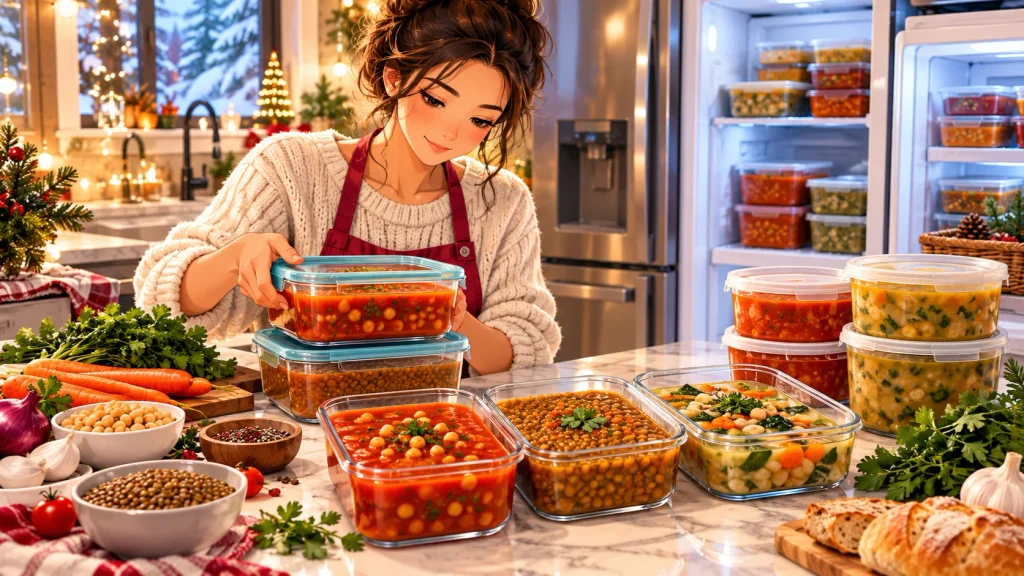
Cool it fast. Get leftovers into the fridge within 2 hours, or within 1 hour if the room is above 90°F. A big pot cools slowly in the middle, so divide it into shallow containers first.
Fridge: 3 to 4 days.
Freezer: 3 to 4 months for best quality.
Reheat: bring soup to a rolling boil and make sure leftovers reach 165°F. A food thermometer beats guessing.
Two things don’t freeze well: cooked pasta, which goes soft, and yogurt or other dairy stirred in at the end, which can separate. That’s why the minestrone keeps its pasta separate and the cauliflower soup takes its yogurt after reheating. Freezing soup flat in zip-top bags saves space and thaws faster, and rigid containers need about an inch of headroom because liquid expands as it freezes.
The full rules are on the USDA FSIS leftovers page.
The Cold-Weather Soup Pantry
Stock these once and none of the soups above needs a special shopping trip.
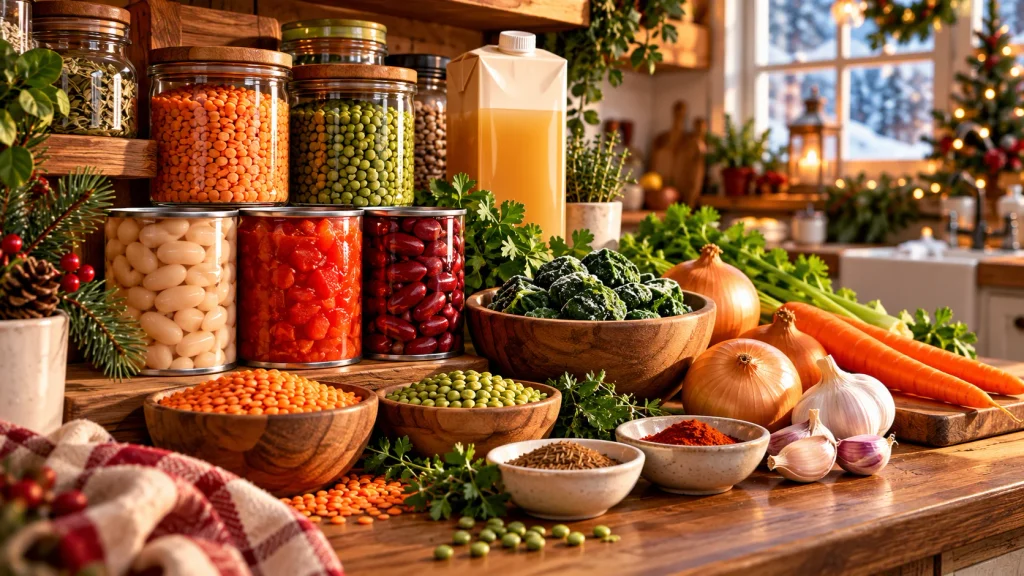
Shelf: unsalted broth cartons, no-salt-added canned beans (white, black, kidney, chickpeas), no-salt-added diced and crushed tomatoes, no-salt-added tomato paste, dried red lentils and green split peas, whole-wheat small pasta, cumin, smoked paprika, dried thyme and rosemary, apple cider vinegar.
Fridge and counter: onions, garlic, carrots, celery, sweet potatoes, lemons or limes.
Freezer: chopped spinach, corn, kale.
On the can, read the sodium line before the front label. “No salt added” is the phrase that matters for beans and tomatoes, and as the unsalted broth shows, even that means very little sodium, not none.
How These Soups Were Checked
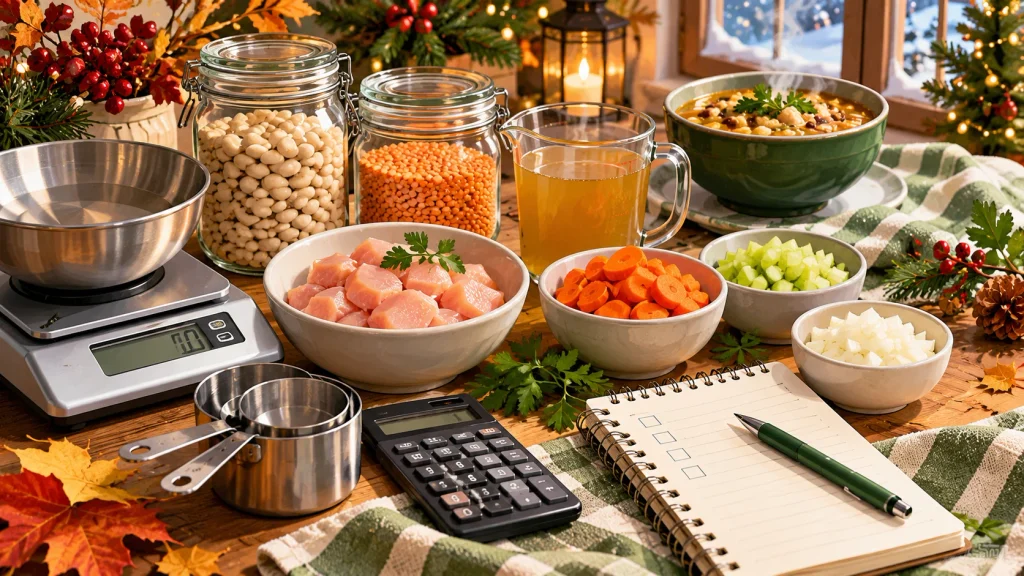
“Healthy” needs a definition, so this page borrows the FDA’s. In a final rule published December 27, 2024, the agency set the terms for when packaged foods can use the word “healthy.” A main dish needs at least two food groups in meaningful amounts, and it has to stay under three limits.
| Measure | Limit per bowl | Where it comes from |
|---|---|---|
| Sodium | 460 mg or less | 20% of the 2,300 mg Daily Value (FDA limit for main dishes) |
| Saturated fat | 3 g or less | 15% of the 20 g Daily Value (FDA limit for main dishes) |
| Added sugars | 7.5 g or less | 15% of the 50 g Daily Value (FDA limit for main dishes). None of these recipes uses added sugar. |
| Food groups | At least two, in real amounts | Vegetables plus beans, poultry or whole grains |
| Fiber | 6 g or more | A target set for this page, not an FDA rule |
| Protein | 12 g or more (20 g for the chicken tortilla soup) | A target set for this page, not an FDA rule |
That’s a labeling rule for packaged foods, so nothing here is “FDA approved.” It just gives the page a public number to measure against.
The Dietary Guidelines for Americans, 2025–2030, released January 7, 2026, keep the general sodium limit at less than 2,300 mg a day for people 14 and older. They also count beans, peas and lentils as protein foods and ask people to prioritize fiber-rich whole grains, which is why most of these soups lean on them.
This is general information, not medical advice. If you have a medical condition, follow a sodium-restricted diet or sweat heavily when you train, use the numbers your doctor or dietitian gave you instead of the general limit.
Getting Flavor Without a Salty Broth
Home cooking isn’t where most of the sodium comes from. CDC’s fact sheet says more than 75 percent of the sodium Americans eat comes from restaurant, packaged and processed foods, and only 5 percent is added during home cooking. That’s an advantage when you season your own pot. The catch is what you pour into it: broth, canned beans, canned tomatoes, spice blends, and sometimes the chicken.
➛ Broth is the big one
Here are four cartons from one brand, taken from supermarket listings on October 24, 2026.
| Swanson broth, 1 cup | Sodium | % Daily Value |
|---|---|---|
| Chicken Broth | 860 mg | 37% |
| Vegetable Broth | 760 mg | 33% |
| 33% Less Sodium Chicken Broth | 570 mg | About 25% |
| Unsalted Chicken Broth | 35 mg | 2% |
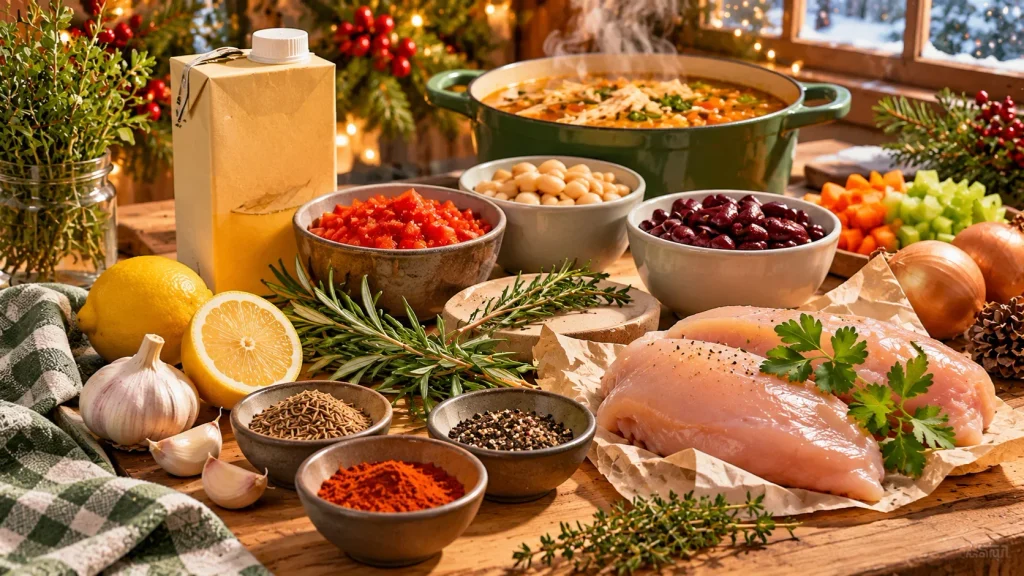
Each bowl of the lemon chicken soup holds about 1½ cups of broth. With regular chicken broth, that’s roughly 1,290 mg of sodium before you add salt, chicken or a single vegetable, almost three times the 460 mg limit. With unsalted broth it’s about 50 mg.
Two label rules help. The FDA treats 5 percent of the Daily Value or less per serving as low and 20 percent or more as high. On a package, “low sodium” means 140 mg or less per serving, while “reduced sodium” only means at least 25 percent less than the regular version.
By that math, the “33% less sodium” carton, at about 25 percent of the Daily Value per cup, is still a high-sodium food. CDC’s fact sheet warns about the same trap with “reduced sodium” foods. Unsalted isn’t sodium-free either: Swanson’s own label calls it “not a sodium free food.” Broth labels list one cup, so do the math for your bowl.
➛ Canned beans and tomatoes
America’s Test Kitchen tested canned chickpeas, cannellini, pinto and black beans. A half cup of canned beans often has more than 400 mg of sodium, and draining and rinsing took off about 100 mg per half cup, or 21 to 27 percent depending on the bean. That still leaves roughly 300 mg a half cup, so a can of regular beans, even rinsed, puts around 900 mg into the pot.
Every bean soup on this page assumes no-salt-added canned beans or beans you cook from dry. With regular rinsed beans, expect roughly 200 to 500 mg more per bowl, which pushes all six bean-based soups past 460.
Tomatoes work the same way. CDC’s comparison: a whole fresh tomato has about 6 mg of sodium, a half cup of regular canned tomatoes about 220 mg, and a half cup of canned tomatoes with no salt added about 20 mg.
➛ Chicken, the surprise
CDC’s fact sheet puts 4 ounces of fresh, boneless, skinless chicken breast anywhere from 40 to 330 mg of sodium, because raw chicken can be sold with sodium and flavor solutions added. Read the package and buy the one without added solution. In the lemon chicken soup, the high end of that range would add roughly 200 mg to every bowl.
➛ What gives flavor instead
Cook the onions a few minutes longer than feels necessary. Fry the tomato paste in the oil until it darkens. Then lean on smoked paprika, cumin, black pepper and fresh herbs, and finish with lemon or vinegar. Dried mushrooms and a Parmesan rind add depth too, though the rind brings salt of its own, so taste before you add any. Check spice blends, since some, such as taco seasoning and certain chili powders, contain salt.
Salt goes in last, in small pinches, with a taste between each. The four-bowl soups here use ¼ teaspoon for the whole pot, which adds about 145 mg per bowl.
Sources and How These Numbers Were Made
Calories, protein, fiber, sodium and saturated fat for each recipe were estimated by adding typical USDA nutrient values for every ingredient, using brand label data for broth, then dividing by the number of bowls and rounding. Unsalted broth is counted at 100 mg of sodium per cup, a cautious figure, since Swanson Unsalted Chicken Broth lists 35 mg. Your pot will land near these numbers, not on them, and sodium moves the most with your broth, beans and chicken.
Recipe method: standard soup techniques, adjusted to the limits above, with nutrition estimated from USDA data and brand labels. How kheltechie.in builds and checks recipes
Sources, all checked October 26, 2026:
- CDC, Get the Facts: Sources of Sodium in Your Diet (June 2012)
- CDC, About Sodium and Health
- FDA, How to Understand and Use the Nutrition Facts Label
- FDA final rule on the “healthy” claim, Federal Register, December 27, 2024
- Dietary Guidelines for Americans, 2025–2030
- USDA FSIS, Leftovers and Food Safety
- America’s Test Kitchen, Does Rinsing Canned Beans Remove Sodium?
- Swanson label values from supermarket listings: Chicken Broth (ShopRite), 33% Less Sodium Chicken Broth (ShopRite), Unsalted Chicken Broth (Stop & Shop), Vegetable Broth (Stop & Shop)
Questions That Come Up
Check the sodium per prepared cup, not per cube, and compare it with the carton numbers above. A cube or paste that makes a cup at 570 to 860 mg will push a bowl past the 460 mg limit the same way a regular carton does.
Most of them, yes. The recipes here are written for a stovetop pot. Slow cookers and pressure cookers lose less liquid, so you will usually need less of it, and dried lentils, split peas and beans need the cook times from your appliance’s manual. If you can, brown the onions and spices on the stove first, since that is where much of the flavor comes from.
The Dietary Guidelines set lower sodium limits for children: under 1,200 mg a day for ages 1 to 3, 1,500 mg for ages 4 to 8 and 1,800 mg for ages 9 to 13. A half-size bowl of any soup here lands between roughly 140 and 200 mg. For specific needs, ask your child’s pediatrician.
Sometimes, if you compare labels. CDC’s fact sheet lists canned chicken noodle soup at 100 to 940 mg a cup and canned tomato soup at 700 to 1,260 mg a cup, so the sodium line tells you more than the brand name. By the FDA’s rule, 20 percent of the Daily Value (460 mg) or more per serving counts as high.
Yes, and it is the lowest-sodium route. A 15-ounce can holds about 1½ cups of drained beans, which is roughly ⅔ cup of dry beans. Soak them overnight, then simmer until tender, which takes about 1 to 2 hours depending on the bean, and season at the end.
Yes. Use a bigger pot, double everything, and double the salt too (½ teaspoon for an eight-bowl pot) so the sodium per bowl stays where the numbers above put it. Cooking times barely change, though a larger pot takes longer to come to a simmer.