
Fall Pilates Routine for Beginners: A Simple Full-Body Flow
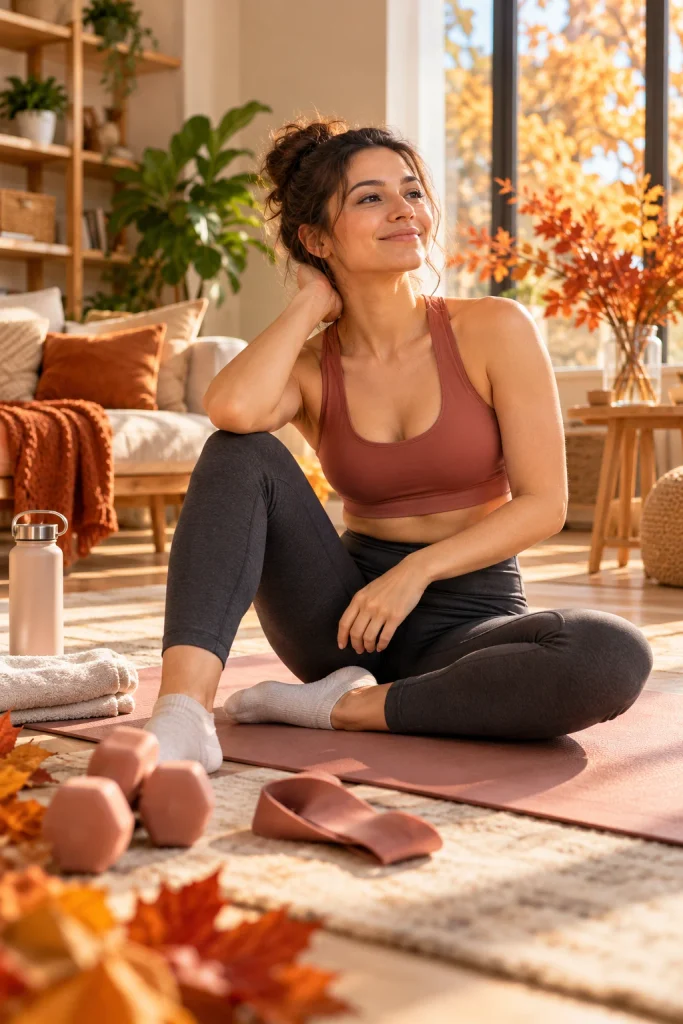
Fall can be a great time to bring more intentional movement into your routine. If you’re looking for something gentler than a high-intensity workout, Pilates can be an approachable option for building strength, body awareness, mobility, and control. You don’t need an advanced class or complicated equipment to get started. This beginner-friendly fall Pilates routine uses simple movements to create a full-body flow that can be done at home with a mat and enough space to move comfortably. If you’re new to exercise, start slowly and focus on controlled movement rather than trying to complete every exercise perfectly.
Also Read :- https://kheltechie.in/sunday-fall-reset/
What Is Pilates?
Pilates is a form of exercise that emphasizes controlled movement, posture, breathing, balance, and core engagement.
A beginner routine can include movements that target the:
- Core
- Glutes
- Legs
- Hips
- Back
- Shoulders
The goal isn’t to rush through the exercises.
Control matters more than speed.
Beginner Fall Pilates Routine
Total time: About 20–25 minutes
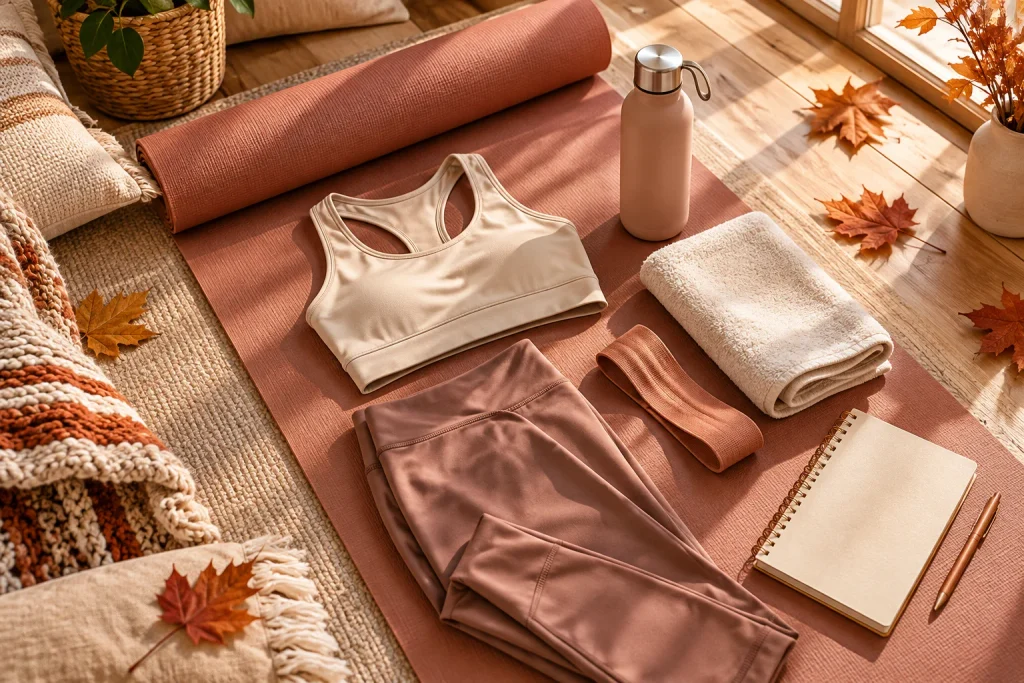
Equipment:
- Exercise mat
- Optional small Pilates ball or light resistance band
Equipment isn’t required for the basic routine.
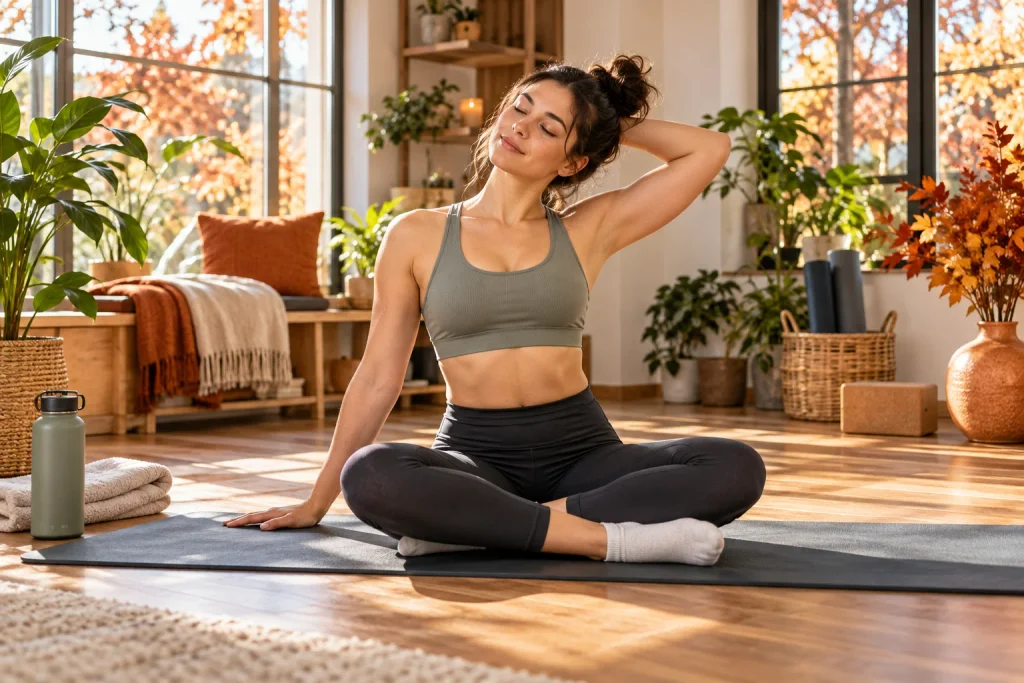
1. Breathing & Gentle Warm-Up
Time: 2–3 minutes
Start by getting comfortable on your mat.
Take slow breaths and focus on relaxing unnecessary tension.
Then gently move through:
- Shoulder rolls
- Neck movements
- Gentle spinal rotation
- Pelvic tilts
The purpose is simply to prepare your body for movement.
2. Pelvic Tilts
8–10 repetitions
Lie on your back with your knees bent and feet resting on the floor.
Gently tilt your pelvis so your lower back moves toward the mat, then return to a neutral position.
Focus on:
- Slow movement
- Comfortable range of motion
- Controlled breathing
This is a simple way to introduce core control.
3. Glute Bridges
10–12 repetitions
Lie on your back with your knees bent.
Press through your feet and gently lift your hips.
Pause briefly at the top, then lower with control.
Focus on:
- Glutes
- Hip control
- Smooth movement
Don’t push into a range that feels uncomfortable.
4. Dead Bug Variation
6–8 repetitions per side
Lie on your back and bring your arms and legs into a comfortable starting position.
Slowly move the opposite arm and leg away from your body, then return. Alternate sides.
Keep in mind:
The movement should be slow and controlled.
If maintaining your position becomes difficult, shorten the range of motion.
5. Side-Lying Leg Lifts
8–12 repetitions per side
Lie on one side with your legs comfortably extended.
Lift the top leg slowly and lower it with control. Switch sides.
Focus on:
- Hip stability
- Outer legs
- Controlled movement
Avoid swinging your leg.
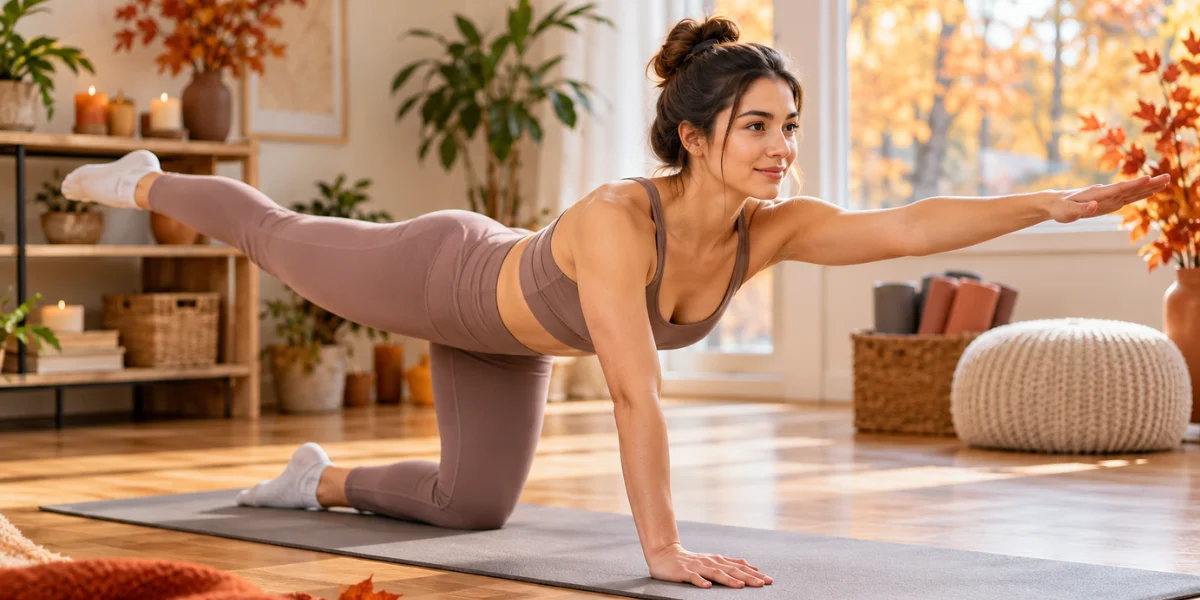
6. Bird Dog
6–8 repetitions per side
Start on your hands and knees.
Extend one arm and the opposite leg while keeping your torso stable.
Return to the starting position and switch sides.
Focus on:
- Balance
- Core stability
- Controlled movement
Move slowly rather than trying to extend as far as possible.
7. Modified Push-Up
6–10 repetitions
You can perform this against a wall, on an elevated surface, or from your knees depending on your current ability.
Keep your body controlled as you lower and push away from the surface.
Beginner tip:
Choose the version that allows you to maintain good form.
You don’t need to start with a floor push-up.
8. Swimming Preparation
6–8 alternating repetitions
Lie face down comfortably.
Lift one arm and the opposite leg slightly, then switch sides.
Keep the movement small and controlled.
This exercise focuses on coordination and posterior-chain control.
If lying face down is uncomfortable, skip this movement.
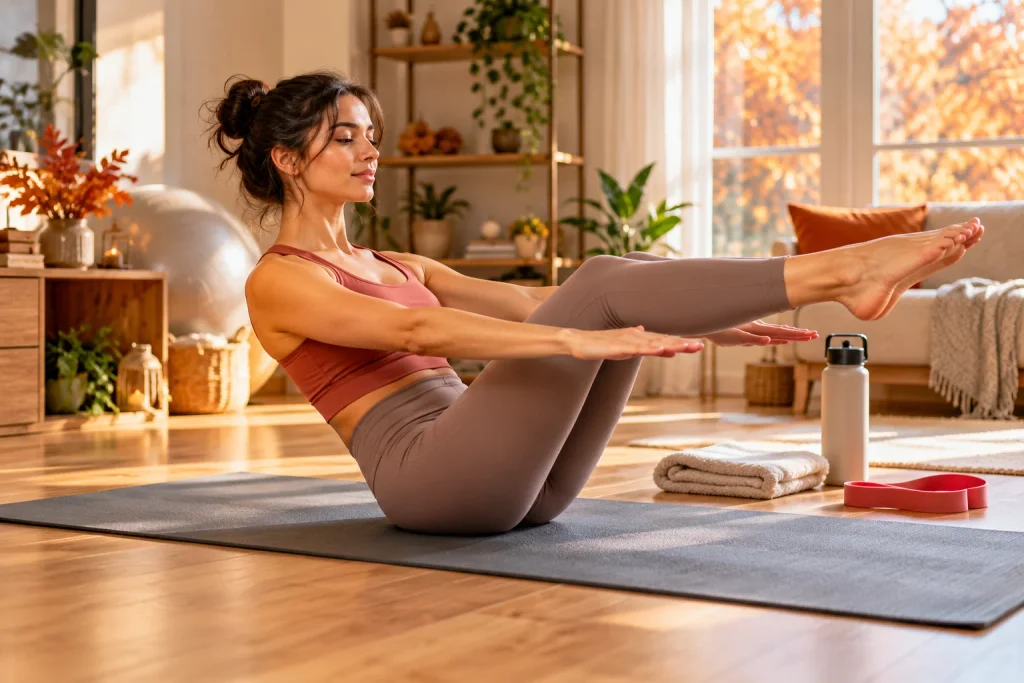
9. Gentle Spine Stretch
5–8 slow repetitions
Sit comfortably with your legs positioned in a way that feels manageable.
Slowly reach forward while keeping the movement controlled.
Return to an upright position.
Don’t force the stretch.
10. Cooldown
2–3 minutes
Finish with comfortable stretches and slow breathing.
You could include:
- Gentle hip stretch
- Hamstring stretch
- Chest opening
- Shoulder stretch
- Easy spinal rotation
The cooldown should feel relaxing rather than intense.
Beginner Fall Pilates Flow at a Glance
| Exercise | Reps/Time |
|---|---|
| Breathing + Warm-Up | 2–3 min |
| Pelvic Tilts | 8–10 |
| Glute Bridges | 10–12 |
| Dead Bug | 6–8/side |
| Side-Lying Leg Lifts | 8–12/side |
| Bird Dog | 6–8/side |
| Modified Push-Ups | 6–10 |
| Swimming Preparation | 6–8 alternating |
| Spine Stretch | 5–8 |
| Cooldown | 2–3 min |
How Often Should Beginners Do Pilates?
Start with 2–3 sessions per week if that fits your current routine.
You can combine Pilates with other forms of movement such as:
- Walking
- Strength training
- Cycling
- Yoga
- Recreational activities
You don’t need to do Pilates every day to benefit from building a consistent movement routine.
5 Beginner Pilates Tips
1. Don’t Rush
Pilates is about controlled movement.
2. Focus on Your Breathing
Use steady breathing instead of holding your breath.
3. Keep the Range Comfortable
A smaller controlled movement is often better than forcing a larger one.
4. Modify When Needed
Beginners don’t need to perform the hardest version of an exercise.
5. Stop if Something Hurts
Normal muscle effort is different from sharp or unusual pain.
If you’re returning to exercise after a long break or have an injury or medical concern, consider getting individualized guidance from a qualified healthcare or fitness professional.
How to Make Pilates Part of Your Fall Routine
The easiest way to make Pilates consistent is to connect it to an existing part of your week.
For example:
Monday
Strength workout
Tuesday
Walk
Wednesday
20-minute Pilates
Thursday
Rest
Friday
Strength workout
Saturday
Outdoor activity
Sunday
Gentle Pilates + stretch
This gives you variety without trying to do everything every day.
Beginner Fall Pilates Checklist
☐ Get a comfortable mat
☐ Choose 2–3 Pilates days
☐ Start with 20–25 minutes
☐ Focus on controlled movement
☐ Practice breathing
☐ Modify difficult exercises
☐ Combine Pilates with walking or other movement
☐ Include recovery days
☐ Increase difficulty gradually
☐ Focus on consistency
Final Takeaway
You don’t need an advanced Pilates routine to start moving. A simple 20–25 minute flow built around controlled movements, core stability, lower-body work, balance, and mobility can give you a structured starting point. Start comfortably, move with control, Modify when needed, And let your routine become more challenging gradually.
Your goal isn’t to master Pilates in one workout. It’s to make movement a consistent part of your fall routine.
FAQ
Pilates can be adapted to different experience levels, and many basic movements can be modified to make them more approachable for beginners.
Yes. The basic routine requires only a comfortable amount of floor space and a mat if you have one.
A 20–25 minute session can be a practical starting point. You can adjust the duration depending on your experience, schedule, and fitness level.
Yes. Pilates and walking can fit well into the same weekly movement routine because they provide different forms of activity.
No. You can start with bodyweight exercises. Optional equipment can be added later if you want more variety.
Pingback: Fall Wellness Reset: 12 Habits For Your Mind & Body
Pingback: Fall Gym Routine: How To Get Back Into A Consistent Workout Schedule