

What to Wear Walking in Cold Weather for Women: A Temperature-by-Temperature Guide
Cold-weather walks go wrong in one of two ways. You freeze for the first ten minutes, or you bundle up so much that you’re damp with sweat by minute twenty and then actually cold. Both come from the same mistake: dressing for the thermometer instead of for how you’ll walk.
This guide gives you a simple system. You’ll get a temperature chart for women, a way to adjust for wind and pace, and outfit examples for the walks most of us really take: the dog walk, the brisk morning loop, the walk to work. Where a detail comes from a source, it’s linked so you can check it yourself.
Quick answer: Wear a thin sweat-wicking top, a fleece or similar middle layer, and a windproof jacket, plus a hat, gloves, and wool socks. Check the “feels like” temperature, not just the number on your phone, and remember that a slow walk needs more clothing than a fast one. The chart below tells you what to put on at 50°F, 40°F, 30°F, 20°F, and 10°F.
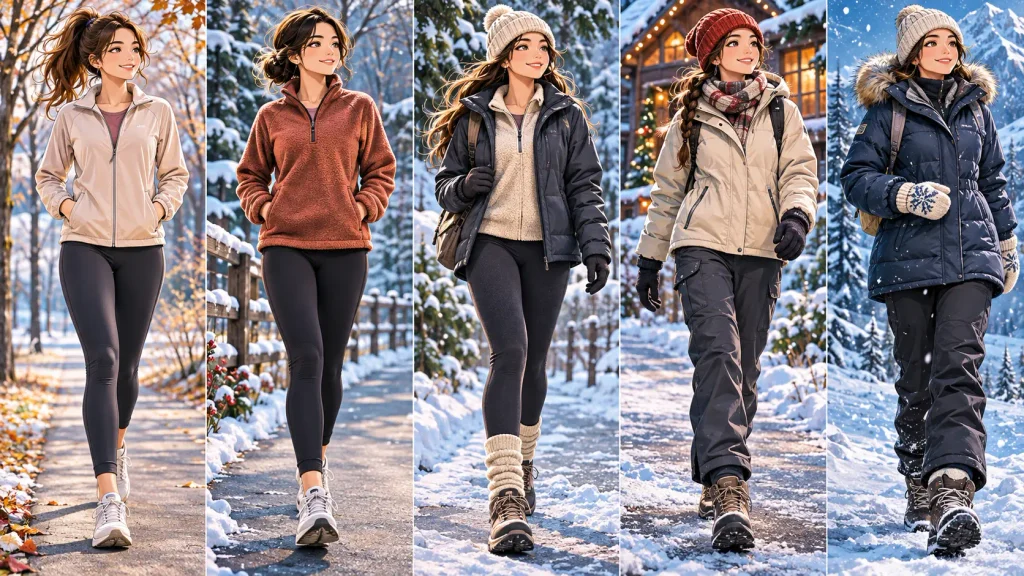
What to Wear Walking in Cold Weather, by Temperature
Open your weather app and find today’s “feels like” temperature (the next section explains why). Pick the matching row below and start there. Treat each row as a starting point: if it’s windy or you plan to stroll, move one row colder. If you walk fast and run warm, move one row warmer.
| Feels like | Top (skin outward) | Bottom | Outer layer | Head, hands, feet |
|---|---|---|---|---|
| 50 to 41°F | Long-sleeve wicking top | Regular leggings or light joggers | Light windbreaker or vest | Thin headband or cap, light gloves in your pocket, regular socks |
| 40 to 31°F | Wicking top + fleece or quarter-zip | Fleece-lined leggings | Windproof jacket | Hat that covers your ears, light gloves, wool-blend socks |
| 30 to 21°F | Thermal base + fleece (add a puffer vest for slow walks) | Thermal or fleece-lined leggings; wind pants on top if it’s breezy | Windproof, water-resistant jacket | Warm hat, mittens, neck gaiter, wool socks |
| 20 to 11°F | Thermal base + fleece + insulated vest or jacket | Leggings under wind pants | Windproof insulated coat | Hat, gaiter pulled up over ears and chin, mittens with hand warmers, thick wool socks in roomy shoes |
| 10°F and below | Same as the row above, plus cover all exposed skin (balaclava or gaiter over your nose and chin, sunglasses or goggles). Keep the walk short, or move it indoors if the wind chill is below zero. | |||
Two notes on reading the table: First, “wicking” means a polyester or merino shirt that moves sweat off your skin, not a cotton tee. Second, the 40°F line isn’t arbitrary: Verywell Fit’s cold-weather walking guide says an insulating layer is what keeps you comfortable on walks below 40°F.
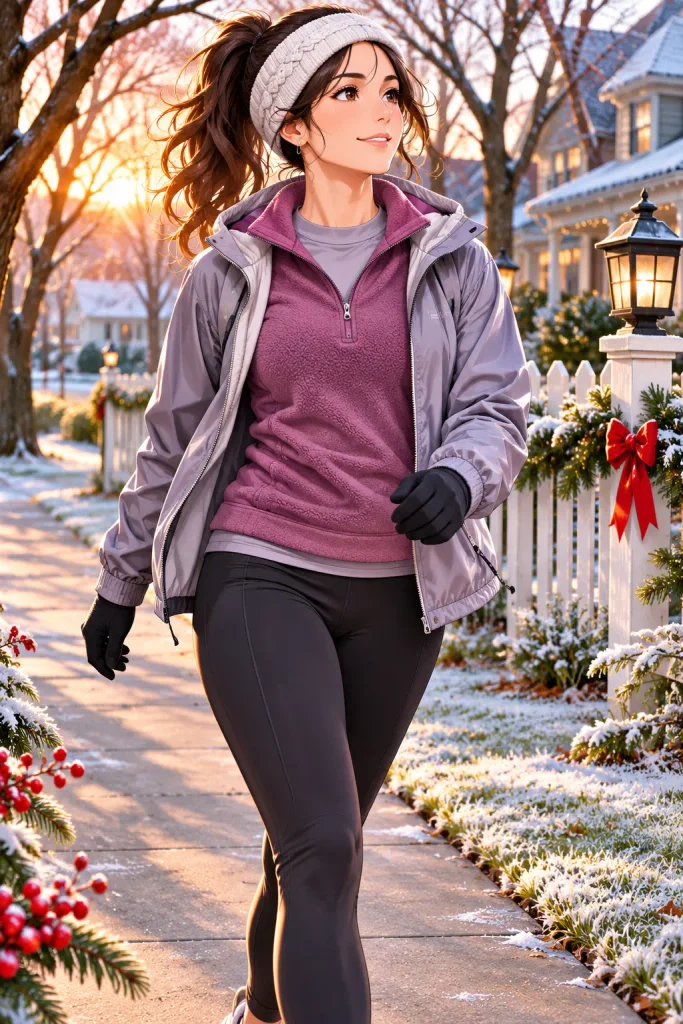
➢ What to wear walking in 40-degree weather
At 40°F with little wind, most women are comfortable in a long-sleeve wicking shirt, a fleece quarter-zip, and leggings. Keep a light windbreaker tied around your waist until you need it. Throw thin gloves in a pocket too. Hands and ears are the first parts to complain, and gloves weigh almost nothing.
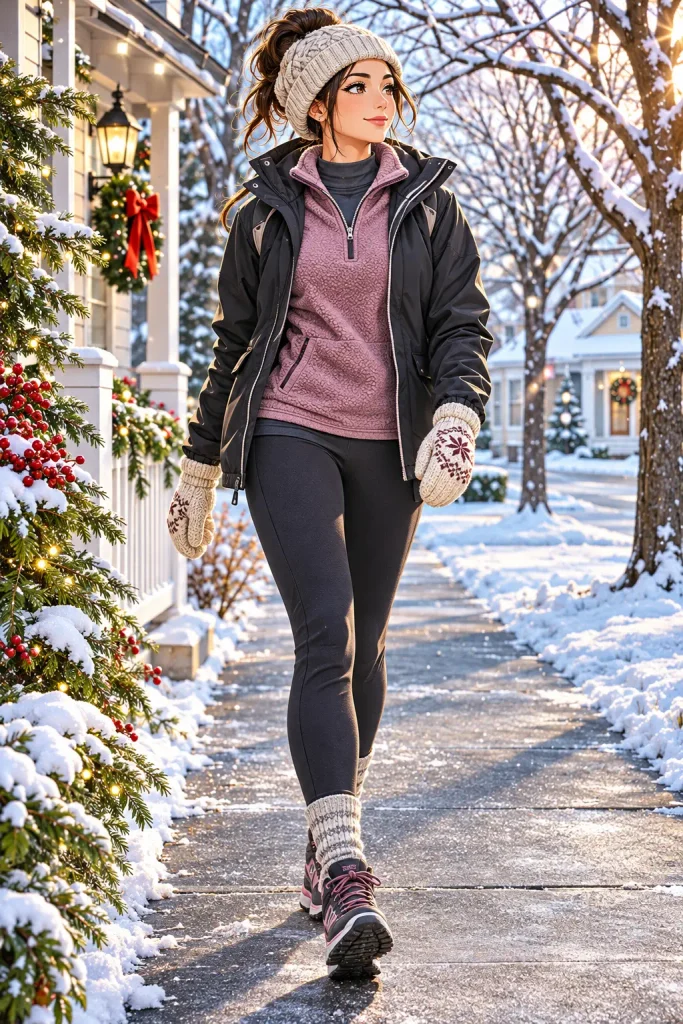
➢ What to wear walking in 30-degree weather
At 30°F, a single light layer stops being enough. Wear a wicking base, a fleece, and a windproof jacket, with fleece-lined leggings underneath. Add a hat that covers your ears, mittens, and wool socks. If you’re strolling instead of striding, swap the bulky coat for a puffer vest over the fleece. You keep your core warm and your arms free, and you can unzip the vest in seconds if the sun comes out.
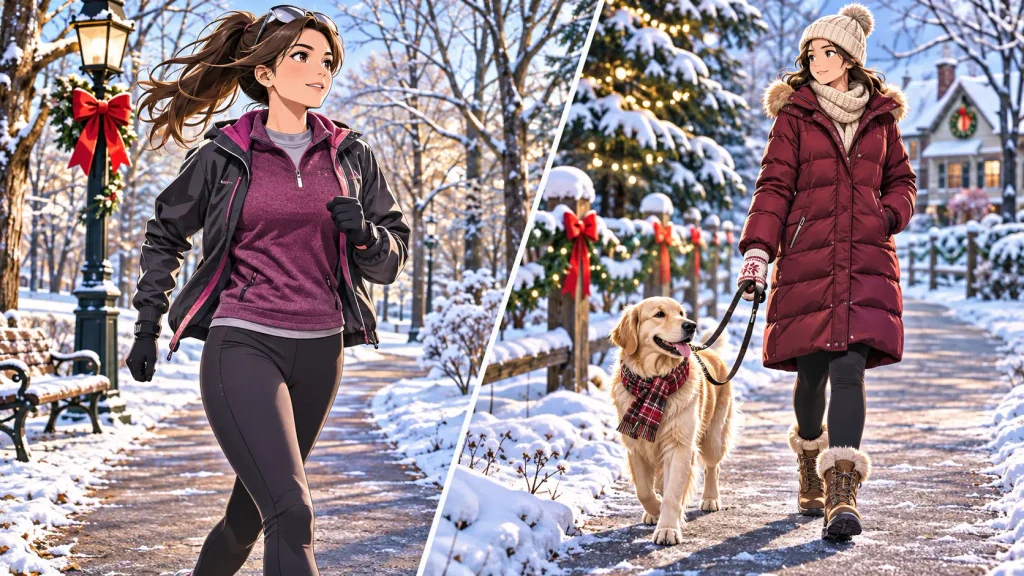
Dress for Your Pace, Not Just the Thermometer
The same 32°F morning calls for two different outfits. Take a brisk 45-minute loop around the neighborhood, then a 45-minute dog walk with a stop at every tree. The brisk walker generates a lot of heat. The dog walker barely generates any.
Walk Magazine’s cold-weather tips put numbers on this: if you’re walking hard, dress for a temperature about 10° warmer than it actually is, and if you’re going for a casual stroll, dress more warmly than that. A commenter in a r/walking thread described the same idea in plain terms: while you walk, you are the heater, so the job of your clothes is to trap that heat and let the extra out.
Here’s a rule you can use at the front door:
- Brisk walk: you should feel slightly cool for the first five to ten minutes. If you’re toasty on the porch, you’re overdressed.
- Slow walk, dog walk, or errands: you should feel comfortable when you step outside, because you won’t warm up much on the way.
That “slightly cool” feeling is the part most beginners resist. It’s also why layers matter. A zipper you can open beats a coat you can’t take off.

Check the “Feels Like” Temperature Before You Pick a Jacket
Wind steals heat from your skin, which is why 30°F on a still day and 30°F with a stiff breeze feel like different weather. The National Weather Service publishes a wind chill chart that shows it. On that chart, a 30°F day with a 15 mph wind feels like 19°F. At the colder end, the NWS gives this example in its cold safety fact sheet: at 0°F with a 20 mph wind, the wind chill is -22°F, and exposed skin can freeze in 30 minutes.
Most weather apps show a “Feels Like” number that already accounts for wind. Use that number for the chart above. A few practical habits help:
- Start your walk into the wind if you can, so the wind is at your back on the way home when you’re sweaty. Walk Magazine suggests this, and it works.
- Cover skin you can’t spare on windy days: ears, cheeks, and fingers.
- One detail from the NWS worth knowing: wind chill describes how fast exposed skin loses heat, and frostbite on exposed skin requires an actual air temperature below freezing. A breezy 40°F day will feel miserable but it won’t freeze your skin.
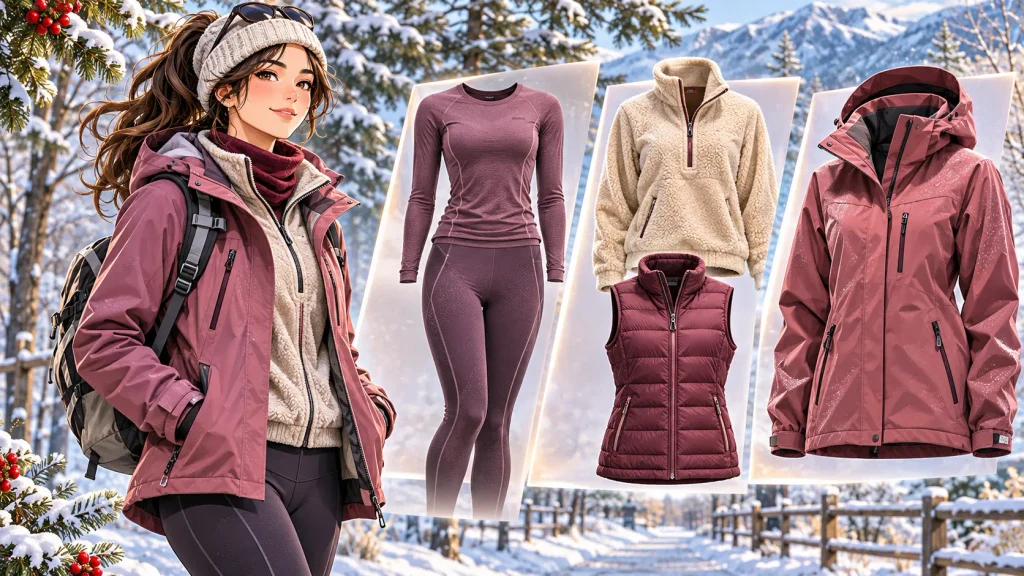
The Three Layers, and the One Fabric to Skip

⇝ Base layer: wicking, never cotton
Whatever touches your skin should move sweat away from it. Polyester and merino wool both do. Cotton does the opposite. It soaks up sweat and stays wet, so when you slow down or stop, you’re damp and cold. Someone in the r/walking thread asked why cotton is such a problem when their whole wardrobe is cotton. That’s the answer: you sweat in the cold too, and cotton holds it against you.
Your sports bra counts as a base layer. Pick one made of polyester or a similar wicking blend, snug enough to stay put but loose enough to take a deep breath. Verywell Fit notes that a wet cotton bra can chafe.

⇝ Middle layer: fleece that comes off easily
This layer holds your warmth. Fleece, a quarter-zip pullover, or a thin insulated vest all work. Pick something you can unzip or take off without removing your jacket. Keeping the middle layer separate from the outer layer is better than one heavy coat, because you can adjust as your body heats up. A hiking blogger writing for iHeartPacificNorthwest describes the mistake well: she used to wear one heavy insulated jacket, was sweating within about a mile, and then had no way to cool down. She switched to lightweight layers and reuses what she already owns.
⇝ Outer layer: windproof first, waterproof if it’s wet
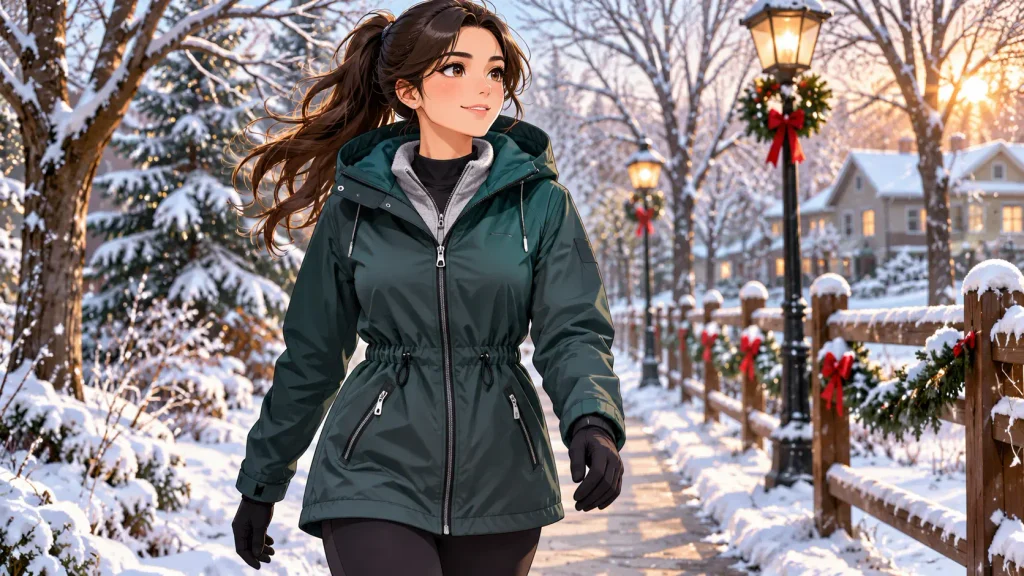
The outer layer blocks wind, and wind is what makes a mild cold feel brutal. On dry days a windproof shell is enough. If it’s snowing or drizzling, choose a water-resistant or waterproof jacket. Verywell Fit’s jacket checklist is a good guide: zippered pockets (your phone lives there), a hood, underarm vents or a two-way zipper so you can open it around your hips. Girl on a Hike adds a tip worth stealing: try the jacket on over all your layers, so you buy the size that really fits.
Length matters more than people expect. One reviewer on the Dick’s Sporting Goods cold-weather page wrote that most puffer jackets are too short at the waist and leave the lower back exposed, and liked a longer cut for that reason. If you notice a cold stripe across your back when you bend or reach, a longer jacket or a long vest fixes it.
Leggings, Pants, and Cold Hips
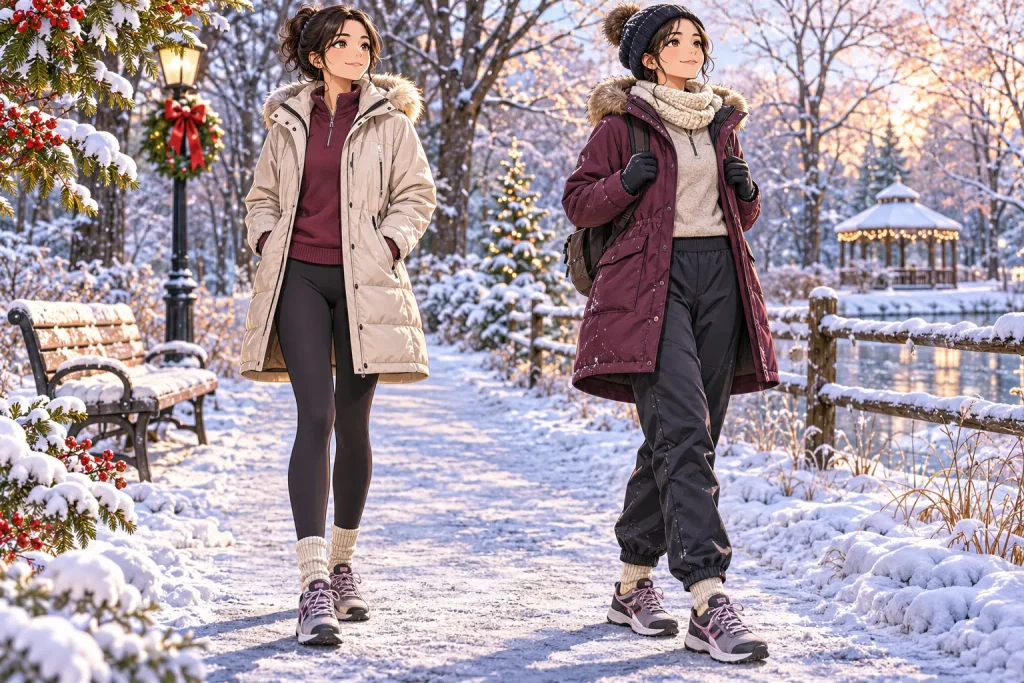
Leggings are the most popular bottoms for winter walks, and the details decide whether you love or hate them:
- Lining: fleece-lined or thermal leggings are warmer than regular ones. Buy them for anything under about 40°F.
- Staying power: they shouldn’t slide down or turn see-through when you bend. Do a quick squat in the fitting room or at home before you cut the tags. A reviewer on the Dick’s page bought a pair the night before a race and praised that they didn’t slip, and that the side pocket held an iPhone.
- Length: “full length” doesn’t always mean full length. A 5’10” reviewer on the same page said a pair sold as full length stopped just above the ankles. If you’re tall, look for tall sizing or check the inseam.
- Wind pants: from about 30°F down, a loose pair of wind pants over leggings blocks the breeze and traps a layer of warm air.
Jeans are the question people ask most. On a short, dry walk around 40°F, jeans will do. Wet denim is another story. It’s heavy, slow to dry, and pulls heat from your legs, so skip jeans on snowy, rainy, or long walks.
If your hips and thighs get cold, the fix is usually length, not more leggings. A long vest, a longer jacket, or a puffer that covers your hips works better than adding a third pair of leggings.
Hat, Neck, Hands, and Ears
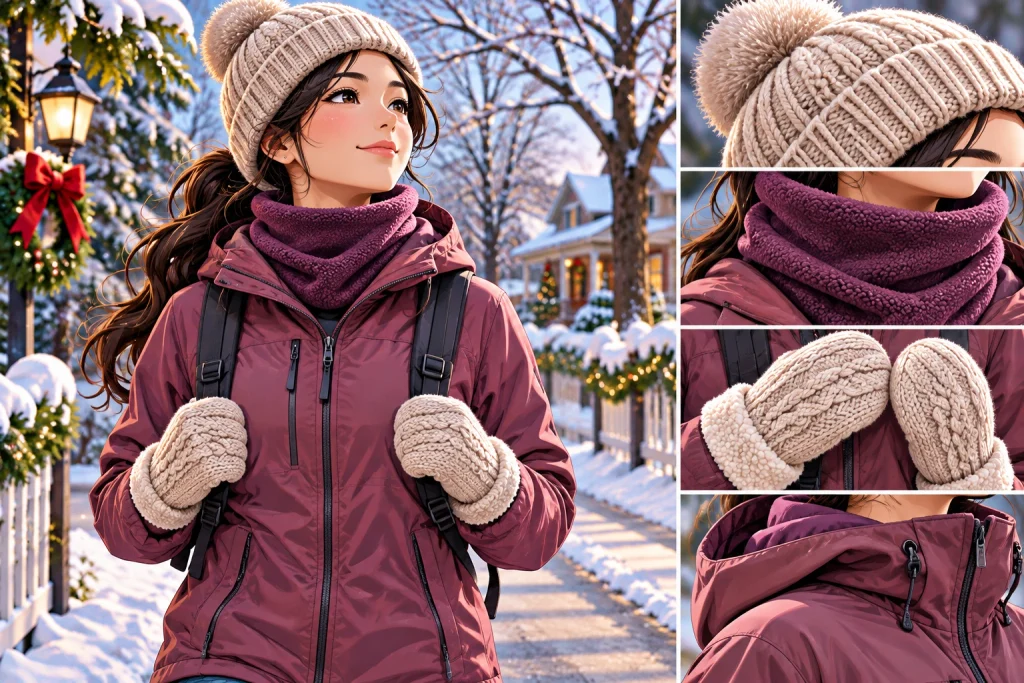
These are small items that make a big difference to how a walk feels.
- Hat or ear band: pick one that covers your ears. If you overheat easily, a headband is enough until the temperature drops into the 20s.
- Neck gaiter: easier to wear than a scarf because it won’t unravel. Don’t pull it over your mouth and breathe through it for long. Walk Magazine points out that your breath makes the fabric wet and uncomfortable.
- Mittens over gloves: several of the sources we checked agree that mittens keep hands warmer, because your fingers share heat. If you need your phone, look for gloves with touchscreen fingertips and a fold-over mitten cover, which Verywell Fit recommends.
- Hand warmers: they cost a few dollars and fit in a mitten. The author of the Walk Magazine guide says her hands get colder than they used to, and on the coldest days she uses rechargeable ones.
Socks, Shoes, and Ice
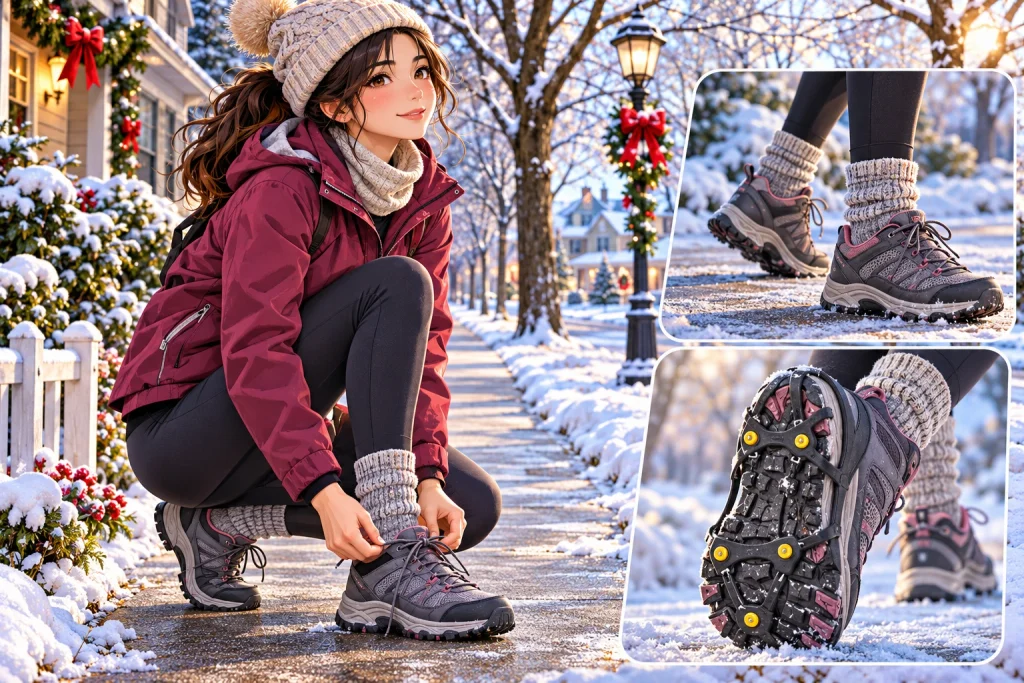
Socks: Wool or a wool blend keeps feet warm even when damp. Thicker isn’t always better: Verywell Fit warns against socks so bulky that they crowd your toes inside the shoe. If you want to wear a thicker pair, go up half a shoe size. That’s what the iHeartPacificNorthwest author does.
Shoes: A water-resistant walking or trail shoe is enough for most cold, dry days. Boots make sense for deep snow or slow walks. Verywell Fit suggests testing any shoe by trying to bend and twist it in your hands. If it won’t flex, your feet will fight it every step.
Ice: Slip-on traction cleats turn a slippery sidewalk into a normal walk. There’s some disagreement about which kind to buy. Walk Magazine recommends Yaktrax-style cleats, while Girl on a Hike says they’re better suited to sidewalks than trails. The two views fit together if you split by surface: light cleats for neighborhood sidewalks, heavier spikes for packed snow on trails.
Five Walks, Five Outfits
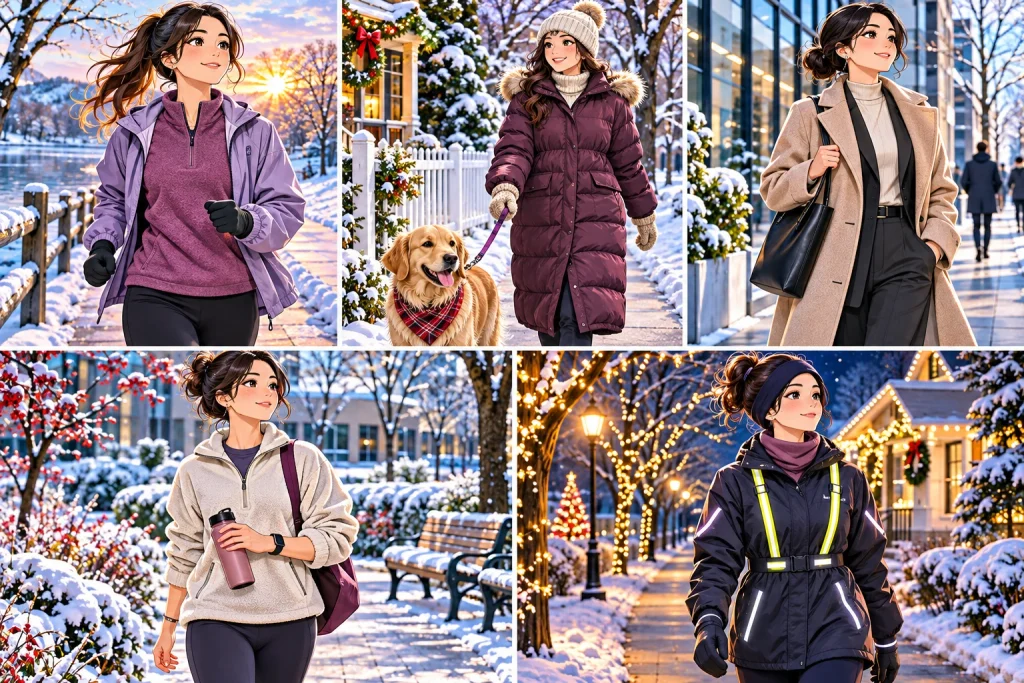
Here’s how the chart turns into real clothes for the walks you’ll take.
⇝ The brisk morning walk (about 35°F)
Wicking long-sleeve top, fleece quarter-zip, windbreaker, fleece-lined leggings, an ear-covering headband, and thin gloves. You’ll start slightly cool and be comfortable by minute ten. If you warm up too much, the quarter-zip opens first.
⇝ The dog walk (about 28°F)
You’re moving slowly, so dress for stillness. Wicking base, fleece, a long puffer vest or insulated jacket, fleece leggings with wind pants if it’s breezy, mittens, a warm hat, and boots or water-resistant shoes. Verywell Fit says boots like Wellingtons or snow boots are fine for shorter, slower walks, even though they aren’t as supportive for fitness walking.
A good example of this kind of outfit comes from another Dick’s reviewer, a special education teacher who walks outside with students every day through Pennsylvania winters. The reviewer chose a long puffer vest with a collar that zips up to the chin, which means no scarf is needed. The same review warns that it runs big, so it suggests sizing down.
⇝ The walk to work (30s, work clothes)
Put a thin thermal or wicking layer under your work clothes. Verywell Fit mentions silk or polypropylene base-layer bottoms, and even winter-weight tights, under pants. Wear a longer coat that covers your hips, wool socks, and a hat and mittens you can stuff in a pocket once you’re inside. Carry your work shoes in your bag so your feet stay in walking shoes on the way.
⇝ The lunch-break walk (40s)
You’re in what you wore to work, so add a fleece or vest over your top, a gaiter or scarf, and gloves from your pocket. The shoes matter most here. Keep a pair you can walk 20 minutes in under your desk.
⇝ The evening walk after dark (20s)
Dress the same as a 20°F row, then add visibility. A bright beanie or reflective strip on your jacket or shoes helps drivers see you. The Texas Heart Institute, as reported by HealthDay, lists reflective gear for exercising outside at night. Winter sunsets arrive before many people finish work, so this isn’t an extra.
Six Mistakes that Make a Winter Walk Miserable
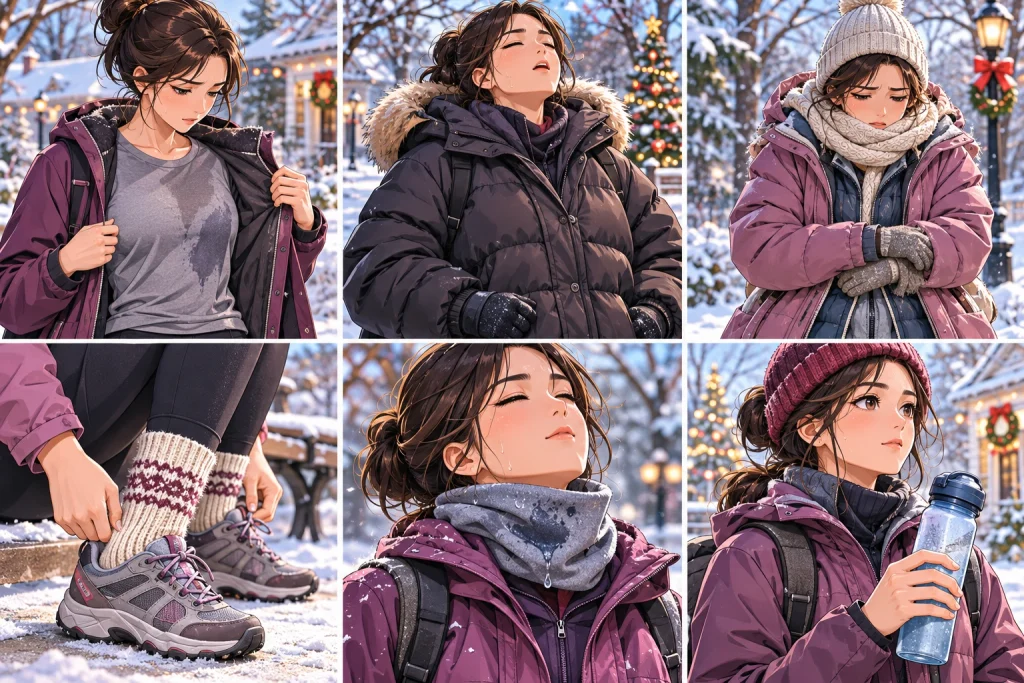
- Wearing cotton next to your skin: A cotton tee under a nice fleece still holds sweat against you.
- Relying on one heavy coat: You can’t adjust it, so you either overheat or freeze.
- Dressing for the porch: If you’re warm at the door on a brisk walk, you’ll be sweaty in ten minutes.
- Wearing thick socks in tight shoes: Your toes get crowded and your feet get colder. Go up half a size or choose a thinner sock.
- Breathing through a gaiter: The fabric gets damp and chills your face.
- Carrying your water bottle in your hand: Verywell Fit points out that a cold bottle makes for cold hands. Put it in a small bag or pack instead. Drinking water matters in winter too, and park fountains are often turned off for the season.
What to Buy First, and What You Probably Already Own
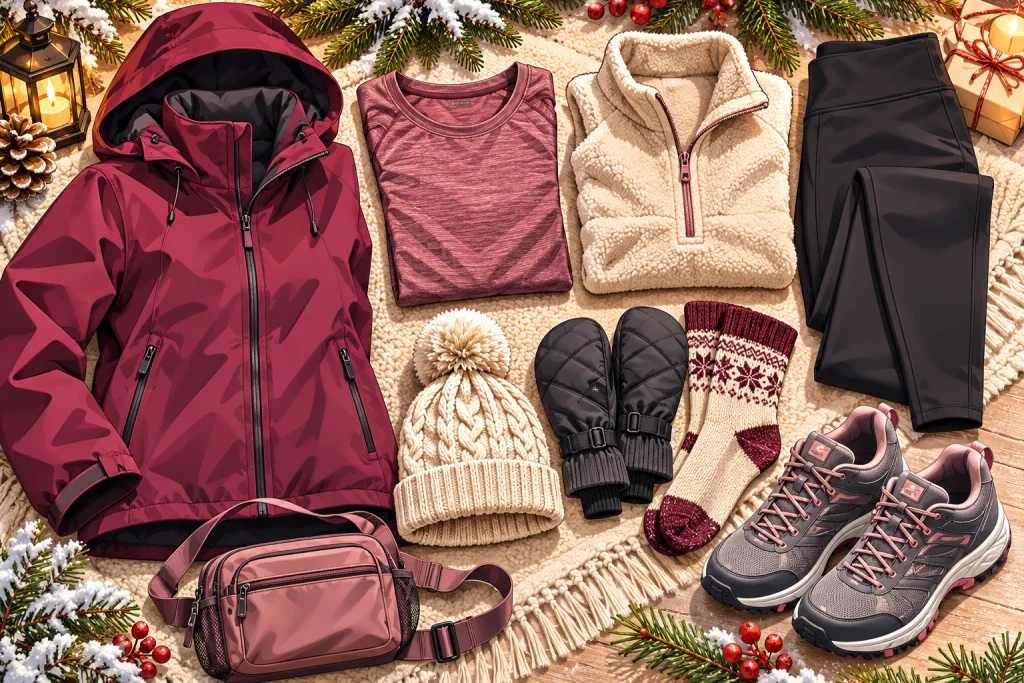
You don’t need a full winter walking wardrobe on day one. Buy in this order, and check your closet before each step:
- A windproof jacket: It’s the piece that changes how a cold walk feels. If you own a running or hiking shell, you’re done.
- Wicking base layers: Gym shirts and running tops you already own count. Skip the cotton ones.
- A fleece: A hoodie works in a pinch over a wicking base, but fleece dries faster.
- Mittens, a hat that covers your ears, and wool socks: This set costs less than a jacket and solves the problems most people notice first.
- Fleece-lined leggings: Buy these last, unless your legs are what get cold first.
For a sense of cost, these were the prices on Dick’s Sporting Goods in November 2026: Nike women’s Therma-FIT One leggings at $65, Under Armour women’s ColdGear leggings at $55, and the DSG women’s cold-weather vest at $45. Prices change, so treat these as ballparks.
On a tighter budget, a commenter in the r/walking thread suggested checking thrift stores first, and wearing thermal underwear under pants you already own. Another mentioned a cheap Costco base layer from the brand 32 Degrees. Neither needs a big purchase.
Do You Need Heated Clothing?
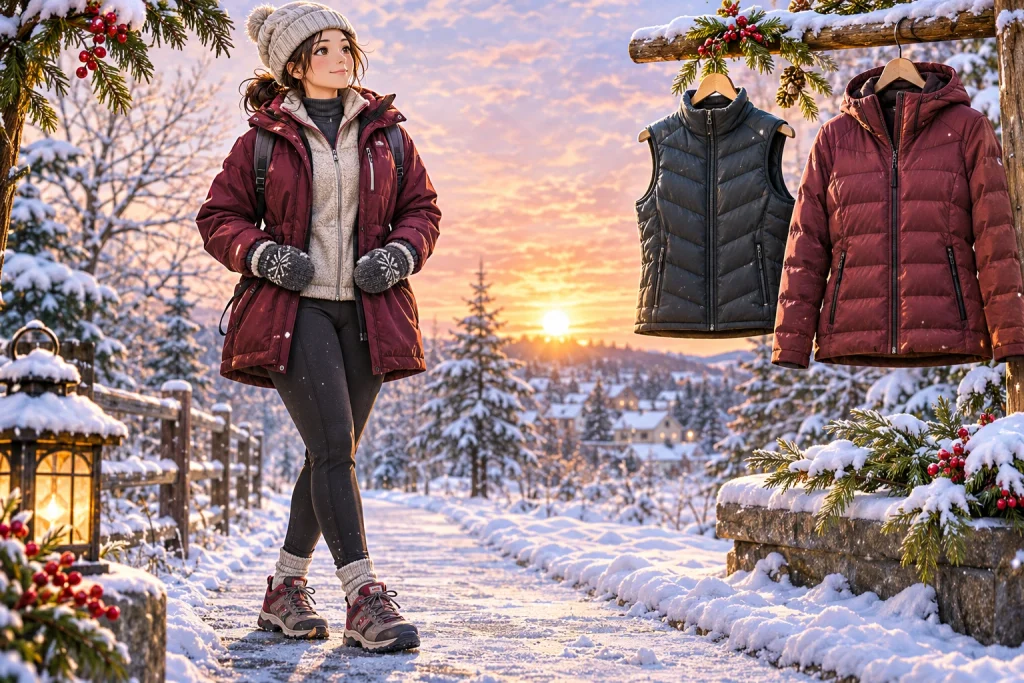
For most walks, no. A heated vest or jacket makes sense if you walk long distances in very cold weather or your hands and core get cold quickly despite good layers. Before you spend that money, try hand warmers tucked into mittens and a good windproof layer. Both cost a fraction of heated gear, and in many cases they’re enough.
When to Shorten the Walk or Skip it
- The temperature, with wind chill, falls below zero: A Baptist Health article on cold-weather exercise suggests that on those days it may be best to work out indoors.
- The sidewalks are icy and you don’t have traction: A slip costs more than a skipped walk.
- Your fingers or toes feel numb: Head inside and warm up gradually.
- You have a heart or breathing condition: Ask your doctor before walking in very cold weather. The American Heart Association has a guide to staying active in cold weather that is worth reading first.
Also Read :- https://kheltechie.in/fall-walking-for-fitness-a-simple-weekly-step-plan/
Start With the Jacket
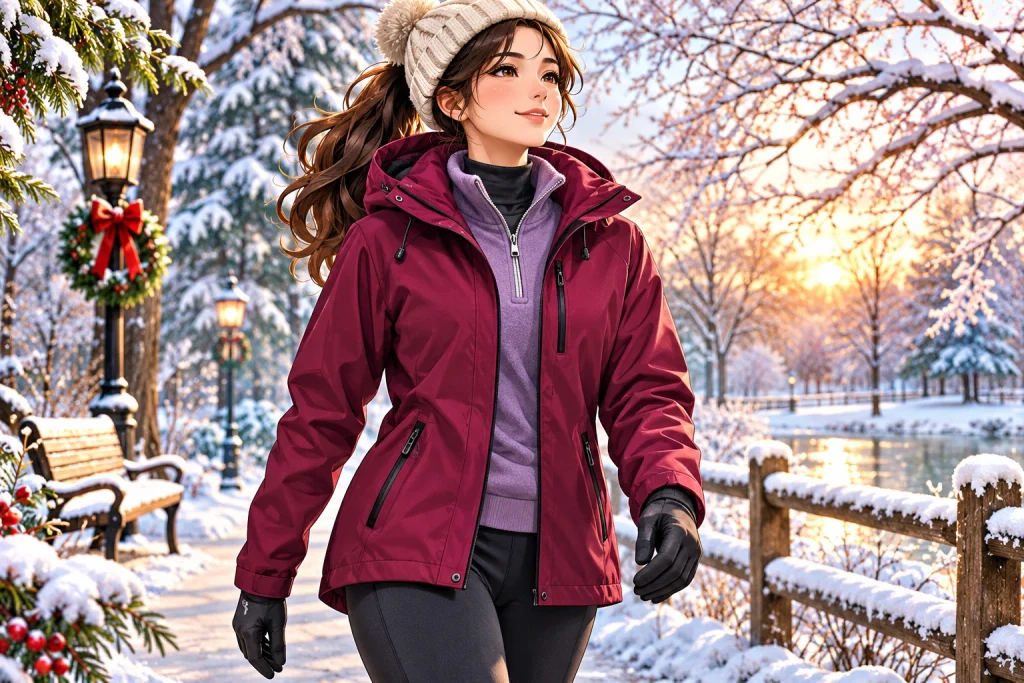
If you only buy one thing this winter, make it a windproof jacket you can zip over a fleece. Then use the chart: check the “feels like” temperature, pick the row, and adjust after ten minutes of walking. The temperature bands here are a starting point built from published guidance. How you feel at minute ten should decide the last adjustment.
How we put this guide together: This guide is based on cold-weather guidance from the National Weather Service and the American Heart Association, advice from walking and hiking publications, and details from real customer reviews of cold-weather clothing. We did not field-test the gear ourselves. The temperature chart is our own summary of that advice and is meant as a starting point, not medical advice.
Frequently Asked Questions
Wear a wicking base layer, a fleece, and a windproof jacket, with fleece-lined leggings underneath. Add a hat that covers your ears, mittens, and wool socks. If you walk slowly, add a puffer vest.
Regular leggings are fine down to about 40°F. Below that, switch to fleece-lined or thermal leggings. When it’s windy or below 30°F, put wind pants over them.
Mittens are warmer, because your fingers share heat. If you need to use your phone, wear touchscreen gloves with a fold-over mitten cover, or wear thin gloves under mittens.
You can on a short, dry walk around 40°F. Skip them in rain or snow, or on long walks, because wet denim is heavy and pulls heat from your legs.
You’re overdressed if your back is damp or you start sweating in the first ten minutes. Unzip your jacket, take off the middle layer, and next time start with one less layer.
Sources
- National Weather Service, Wind chill chart and frostbite times
- National Weather Service, Cold safety fact sheet
- American Heart Association, How to stay active in cold weather
- Verywell Fit, How to dress for cold weather walking (Wendy Bumgardner, reviewed by Michele Stanten, ACE-GFI)
- Walk Magazine, What to wear for cold weather walking
- iHeartPacificNorthwest, What to wear cold weather hiking
- Girl on a Hike, What to wear while hiking in winter
- HealthDay, Gear up for cold-weather exercise
- Baptist Health, Cold weather exercise can lift winter blues and help heart
- Dick’s Sporting Goods, Walking clothes for cold weather (customer reviews and prices, November 2026)
- Reddit r/walking, Outerwear for walking in the winter