
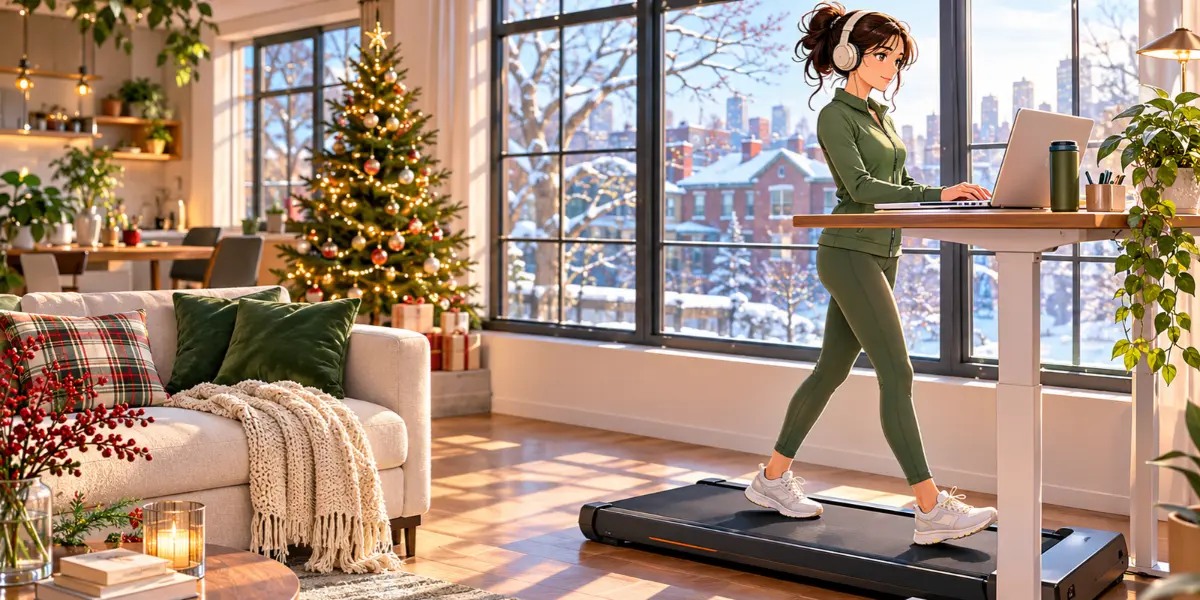
Best Walking Pads For Small Spaces: What Actually Fits
Most walking pads that call themselves compact are only compact when they’re folded and put away. What decides whether one works in your room is how much floor it needs while you’re walking on it, and that is the hardest number to find in a listing.
If you live in a studio, dorm, or shared room and want to slide the pad under a bed, start with stored height. The WalkingPad C2 folds to about 32.5 by 20.4 by 5.4 inches. If the pad stays under a standing desk, start with walking footprint. The Egofit Walker Pro M1 needs roughly 38 by 22 inches. If you want incline in a small room, you’ll give up some storage height or desk clearance, and the incline section below shows how to work out how much.
We compared manufacturer specs, published tests, and federal safety notices for this guide instead of testing every pad ourselves. The full method is at the end.
Which Walking Pad Fits Which Space
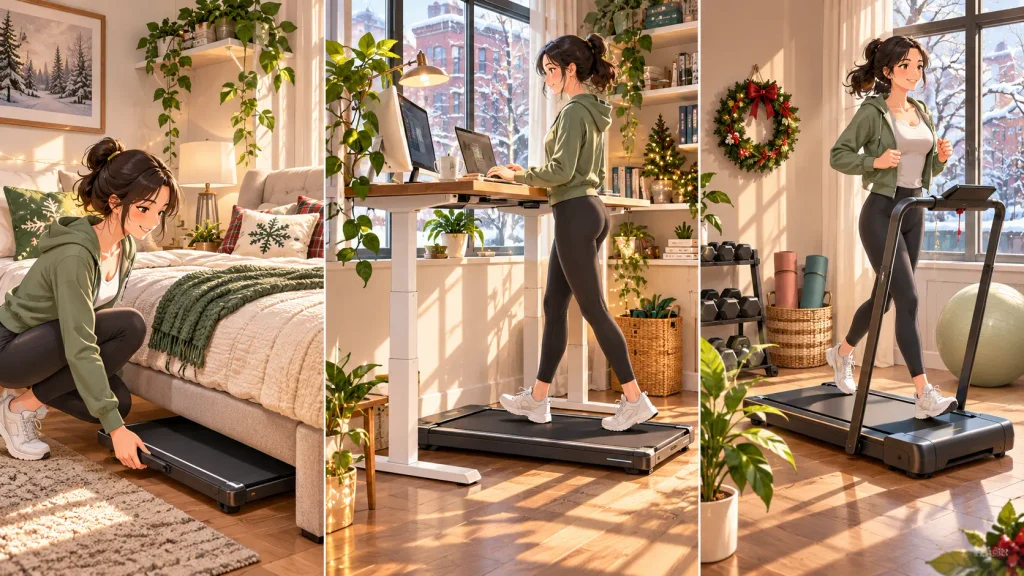
When you’re choosing a walking pad for a small space, where the pad will live matters more than which pad it is. Match the pad to the spot first, then check the numbers.
| Where it will live | What to check first | Pad to start with |
|---|---|---|
| Under a bed (studio, dorm, shared room) | Stored height against the gap under your bed frame | WalkingPad C2 |
| Under a standing desk, left in place | Walking footprint and deck height | Egofit Walker Pro M1 |
| A small room, with incline | Incline type, and height at the steepest setting | Urevo SpaceWalk 3S (lower price) or CyberPad Office (steepest incline) |
| Under a low desk, with a long deck | Belt length (the listing is unclear, so ask the seller) | GOYOUTH 2-in-1 |
Treat those as starting points. Each pad has a catch, covered below, along with how to check a pad that isn’t on this list.
How To Measure Your Space Before You Buy a Walking Pad
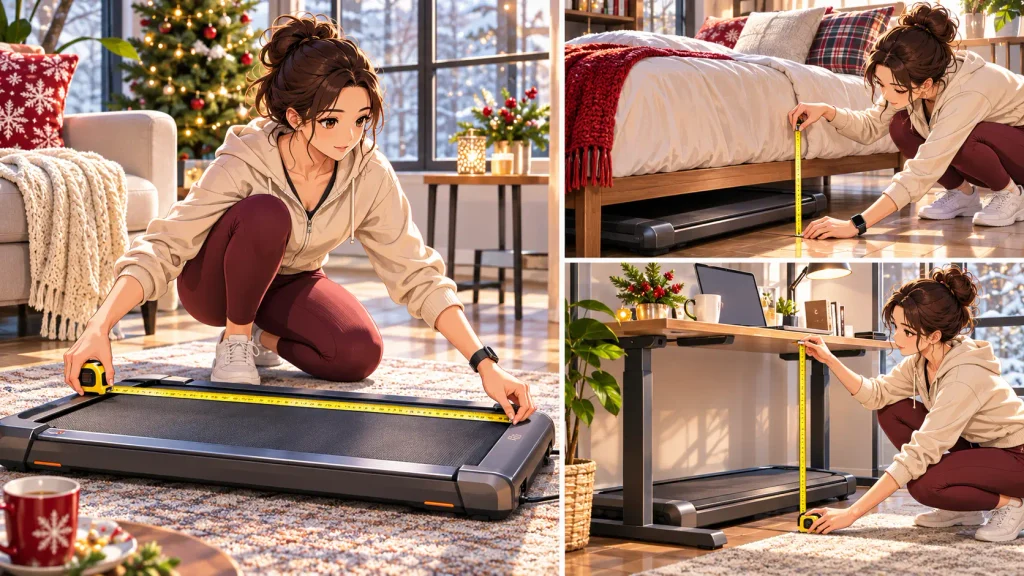
Before you compare walking pads for a small space, take three measurements. They need about ten minutes and a tape measure, and they rule out most of the pads you’d otherwise waste time reading about.
- Walking footprint. The length and width of the pad when it’s open, plus clear floor behind and beside it. The back of the belt is where you step off, so don’t push the pad against a wall. A common safety tip is about 2 feet of clearance on each side, but the maker’s manual gives the real figure for that pad.
- Stored size. Length, width, and height when it’s folded or stood on its end. For under-bed storage, height decides everything. Measure from the floor to the underside of the bed frame or slats, and leave a little slack so you aren’t forcing the pad in every day.
- Desk clearance. This one has two parts. Standing on a pad lifts you by its deck height, so a pad that is 6.9 inches tall means your standing desk has to go almost 7 inches higher than it does today. And if the pad stays under the desk while you sit, the desk at sitting height has to clear it.
Some listings use metric, and the units trip people up. A pad listed at 109 x 50 x 11 cm is about 42.9 x 19.7 x 4.3 inches. A speed of 1 to 6 km/h is roughly 0.6 to 3.7 mph. Convert before you compare a listing with anything else.
Five Walking Pads For Small Spaces, Compared
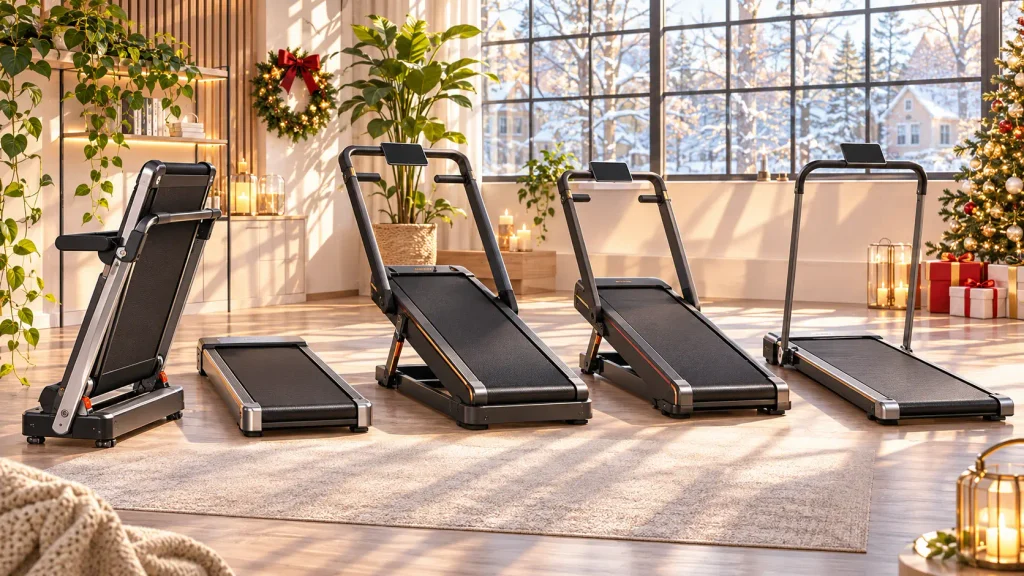
These five cover the situations in the first table. Sizes are length by width by height in inches, taken from manufacturer listings and published tests. “Not listed” means the number wasn’t published where we looked, so ask the seller before you order.
| Pad | Walking size | Stored size | Incline | Top speed (stated) | Weight limit (stated) |
|---|---|---|---|---|---|
| WalkingPad C2 | 56.9 x 20.4 x 4.9 | 32.5 x 20.4 x 5.4 | None | 3.7 mph (6 km/h) | 220 lb |
| Egofit Walker Pro M1 | 38.4 x 21.8 x 6.9 | Does not fold | Fixed 5% | 3.1 mph | 220 lb |
| Urevo CyberPad Office | 42.9 x 22.8 x 6.3 | Not listed | 0 to 14%, motorized | 4 mph | 400 lb (Urevo US page) |
| Urevo SpaceWalk 3S | 51.6 x 22.1 x 6.5 | No fold listed | 0 to 9%, motorized | 4 mph | 265 lb |
| GOYOUTH 2-in-1 | 49 to 50.6 x 21.6 to 22.4 x 5.5 to 5.9 (listing gives both) | Listed “folded size” equals the open size | None | 3.7 mph (6 km/h) | 300 lb |
Prices in early November 2026 listings ran from about $250 to $480 for the pads where we could see a current price, so check today’s price before you decide.
⇝ WalkingPad C2: the under-bed pick
The C2 folds in half to about 32.5 inches long and 5.4 inches high, which is why it suits studios and dorms where the pad has to disappear after a walk. The catch goes the other way. Open, it’s about 57 inches long, the longest pad on this list, so you need a clear stretch of floor when you use it. It tops out at 3.7 mph, holds 220 pounds, weighs about 55 pounds, and has no incline. The belt is about 47 inches long and 16 inches wide. It’s designed to store flat, so check the manual before you stand it on its end.
Price seen in early November 2026: $399 on WalkingPad’s own site, and a little higher at some retailers.
⇝ Egofit Walker Pro M1: smallest while you’re walking
At roughly 38 by 22 inches, this is the smallest walking footprint of the five, and it’s made to sit under a standing desk. It doesn’t fold, it stands 6.9 inches tall, and the incline is fixed at 5%, so you can’t flatten it. It weighs about 48.5 pounds and the belt is 34.25 inches long, so a long stride may feel cramped. Egofit rates its noise at under 70 dB at top speed, which is louder than many pads claim.
Price seen on the brand’s own site in early November 2026: about $399.
⇝ Urevo CyberPad Office: the most incline, and a name to double-check
The CyberPad Office measures 42.9 by 22.8 inches and stands 6.3 inches tall, with a motorized incline from 0 to 14% in 14 levels. The belt is 39.4 by 16.5 inches, the motor is rated 2.5 HP, the pad weighs about 63 pounds, and the top speed is 4 mph. Check the name before you buy, because Urevo also sells a CyberPad Home. That one is taller at the rear (listed at about 8.7 inches), its motor covers 9% of the incline and a manual kickstand adds the rest, and it has a different weight rating. The names are close, so check the model on the page. Urevo’s US page lists a 400-pound limit for the Office model, while its European store page lists 300, so confirm it in the manual. Urevo advertises 35 dB operation from its own lab testing, which is a brand figure, not an independent measurement. Orders placed on Urevo’s own site come with a two-year warranty.
Price seen on Urevo’s site in November 2026: $479.99.
⇝ Urevo SpaceWalk 3S: motorized incline for less money
The SpaceWalk 3S is the lower-cost way to get an incline you can change from a remote. It measures 51.6 by 22.1 inches and stands 6.5 inches tall, with a 42.5 by 16.5 inch belt. The incline runs from 0 to 9% in nine steps, the top speed is 4 mph, the motor is rated 2.5 HP, and Urevo lists a 265-pound limit. Urevo’s page doesn’t describe a fold, only a handle and front wheels for moving it, so plan on the stored size being the in-use size. At 51.6 inches it’s more than a foot longer than the Egofit. Urevo’s own page gives the weight as about 57 pounds, while another listing says 71, so settle that before you decide where it will be stored and who will be lifting it.
Price seen on Urevo’s site: $249.99, marked down from $349.99.
⇝ GOYOUTH 2-in-1: long and low
This is the long, low option: about 5.5 to 5.9 inches tall, with a 15.75-inch-wide belt and a 2.25 HP motor. It holds 300 pounds, tops out at 6 km/h (about 3.7 mph), has no incline, and weighs about 51 pounds. The Amazon listing shows two sets of dimensions, about 49 by 21.6 by 5.9 inches and 50.6 by 22.4 by 5.5, and it lists a 50.59-inch deck, so measure against the larger numbers and ask the seller how long the belt itself is. Its “folded size” is the same length as the open size, so don’t count on it folding. GOYOUTH sells several versions under similar names, and listed top speeds range from 3.7 to 7.5 mph, so match the model number (this listing shows KH-31-9) before you buy.
Price seen: about $290.
Walking Pads With Incline and How Much Room They Need
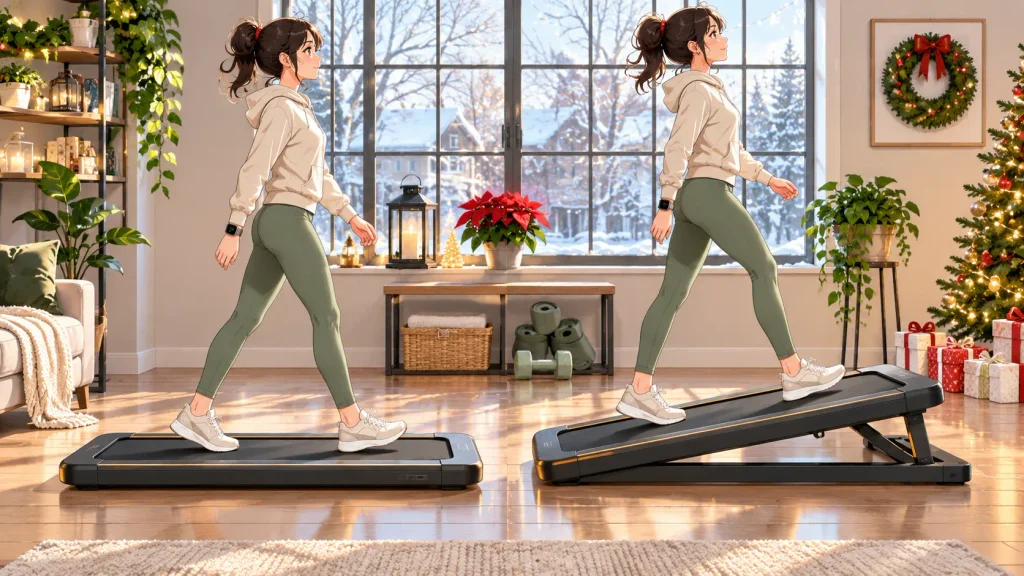
When you add incline to a walking pad for a small space, the percentage isn’t the question. The question is how tall the pad gets at its steepest setting and whether you can still store it. Listings give the percentage and almost never the height.
You can estimate the lift yourself: Multiply the belt length in inches by the incline percentage. The SpaceWalk 3S has a 42.5-inch belt and a 9% incline, so one end rises about 3.8 inches (42.5 x 0.09). The CyberPad Office has a 39.4-inch belt at 14%, which is about 5.5 inches (39.4 x 0.14). If the listed height is the flat height, add the lift to it and compare the total with your desk. It’s a rough number, since it depends on which end rises, so use it to rule pads out, not to confirm them.
Incline comes in three kinds: Fixed incline, like the Egofit’s 5%, never changes, so it adds no steps and no incline motor. Manual incline means you flip out feet or adjust the frame by hand before you start, and you can’t change it mid-walk. Motorized incline changes from a remote while you walk. Ask the seller for the height at the steepest setting, because that’s when one end of the pad is highest.
Handrails make many incline pads feel steadier, but a pad with the rail up often won’t slide under a desk. Folding the rail doesn’t shorten the belt either. On some “folding” pads only the handrail drops, and the belt stays full length. If you need under-bed or under-desk storage, pick a pad without one.
Spec Traps To Check Before You Buy a Walking Pad
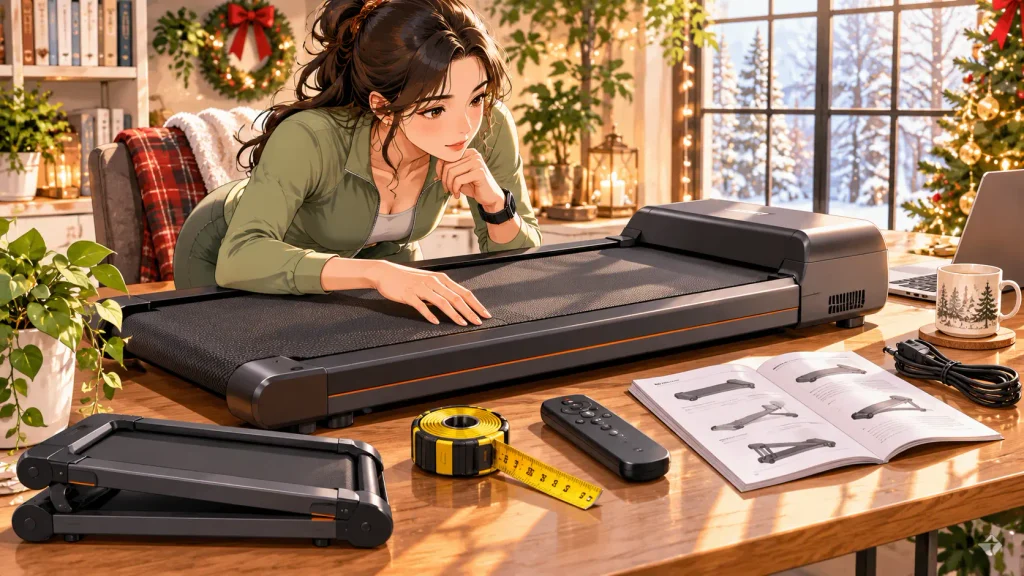
Walking pad listings are written by the seller, and the numbers don’t always agree with each other or with real life. These are the five worth checking.
- Check what “folding” means: On some pads only the handrail folds, so the pad gets thinner but not shorter and the “folded” size is still the full belt length. Compare the stored length, not just the height.
- Top speed: WalkingPad’s own spec page lists the C2’s speed range as 1 to 4 mph and 6 km/h in the same row, and 6 km/h is about 3.7 mph, which is what retailers list. Trust the manual.
- Weight limit: One listing we read gave 350 pounds in the bullets and 450 in the details. Another gave 265 and 220. Weights can differ too: Urevo’s page gives the SpaceWalk 3S as about 57 pounds while another listing says 71. Use the lower weight limit unless the maker confirms the higher one, and leave 20 to 30 pounds of headroom above the heaviest person who’ll use the pad.
- Noise: Claims run from under 30 dB to under 70 dB, and none of the pages we read showed a meter reading. Ask what speed the figure was measured at.
- Dimensions: The bullets, the spec tab, and the photos can each show a different size, and some use centimeters. One GOYOUTH listing gives 49 inches long in one row and a 50.59-inch deck in another. Match them to the manual.
Take a screenshot of the listing the day you order. If the pad arrives different, you’ll have the page the seller wrote.
Noise, Downstairs Neighbors, and Your Floor
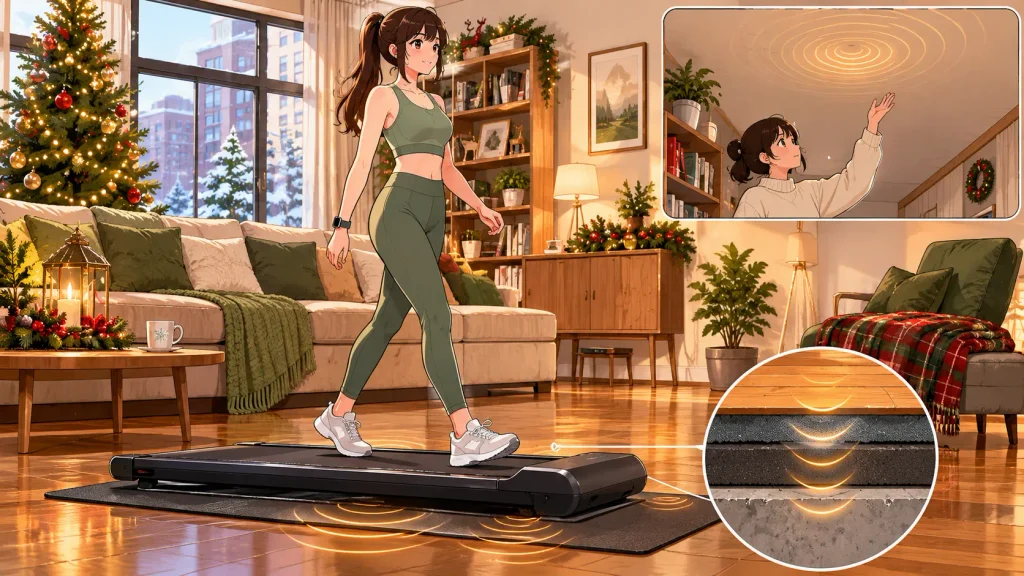
A walking pad makes two kinds of noise: The motor hum is the one you hear. The thump of your steps through the floor is the one your neighbor hears. Listings give a decibel figure for the motor and nothing at all for the footfall.
A mat helps: An anti-slip exercise mat under the pad keeps it from creeping on hardwood or tile and usually takes some of the vibration out. It won’t turn a loud motor into a quiet one. If quiet is your top priority, ask the seller what speed the decibel claim was measured at, because a pad that’s quiet at 1 mph can be louder at 3.
Where you put the pad matters too: A room over a ground floor or a garage is easier on neighbors than one above someone’s bedroom, and early morning and late night are when thumps carry furthest. That part is our suggestion, not a tested result.
Put the pad on a flat, stable surface. Whether your warranty covers use on carpet is in the manual, so check before you roll one onto a rug.

Check For Safety Notices Before You Buy Any Walking Pad
Before you buy a walking pad, search the Consumer Product Safety Commission’s recall and warning pages for the brand and model. It takes two minutes. On April 16, 2026, the CPSC warned consumers to stop using Sperax walking pads and treadmills, models Pro, Q1, RM-01, and RM-02, citing sudden speed changes, abrupt stops, and overheating. We left Sperax off this list for that reason. The importer declined to agree to a recall, so there’s no refund or repair program. If you own one, the CPSC notice says to stop using it and dispose of it, not sell it or give it away.
Check the warranty and the return policy while you’re there: On these five pads, the warranties we found were one year (Egofit, GOYOUTH, and WalkingPad’s own store) and two years (Urevo, on orders from its own site). A clear return window matters most for small spaces, because that’s where a pad that doesn’t fit shows up after it arrives. Start at the slowest speed when you use any new pad.
When a Walking Pad is the Wrong Choice
If you want to run, a walking pad is the wrong tool. Most top out between about 3 and 4 mph. The 2-in-1 models that go faster are bulkier and heavier, so they suit a larger room better than a tight one.
If you’re tall, belt length matters more than the footprint. As a rough rule, belts under about 40 inches suit a shorter stride, and belts over about 45 inches suit a longer one.
If the room doesn’t have 5 feet of free floor and there’s nothing to slide the pad under, skip it. Walking outside costs nothing, and if cold is the problem, here’s what to wear for walking in cold weather.
IF You Can Only Pick One
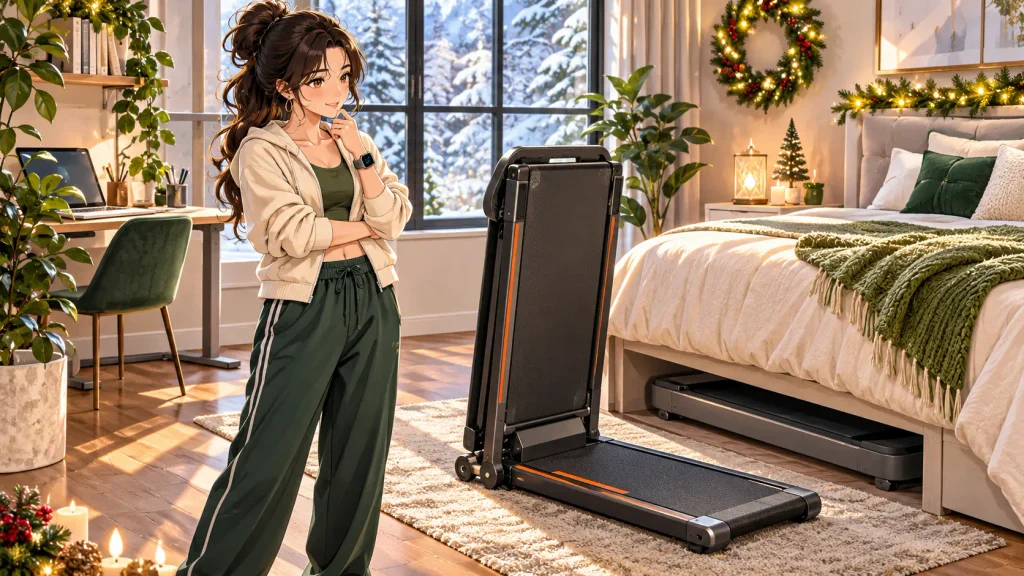
For a studio, get the WalkingPad C2 if your bed leaves about 6 inches of clearance and you have 5 feet of clear floor. If the pad will live under a desk, get the Egofit Walker Pro M1. If incline matters, confirm how the pad’s incline works before you pay, then run the lift math from the incline section against your own desk.
Questions People Ask About Small-Space Walking Pads
It will if its stored height is lower than the gap under your bed frame. The WalkingPad C2 is about 5.4 inches high folded. Pads with incline are taller, and the CyberPad Office is 6.3 inches. Measure from the floor to the slats and leave a little slack. Pads with handrails rarely fit.
They’re more likely to feel it than hear it. Motor noise is claimed at roughly 30 to 70 dB, but the thump of footsteps travels through the floor. An anti-slip mat helps a little, and so does picking your hours.
Yes, with two checks. Standing on the pad lifts you by its deck height, so your desk has to go that much higher. And the desk at sitting height has to clear the pad if you store it underneath.
Check the manual for that pad. A common safety tip is about 2 feet of clear floor on each side, and you also need open floor behind the belt so you can step off.
It depends on the maker. Egofit says its M1 can sit on a carpet or mat to reduce vibration, but pads are generally meant for a flat, stable surface, and some warranties don’t cover carpet use. Read the manual before you try it.
How This Guide Was Put Together
This guide compares manufacturer specifications, published tests, and U.S. federal safety notices. We did not test these pads ourselves, so nothing here describes how a pad feels after months of use. Where sources disagreed, we say so and tell you which number to trust. Specs and prices were last checked on November 10, 2026.