

Fall Running Routine: A Beginner-Friendly Plan to Build Endurance
Fall can be a great season to start running. Cooler mornings, changing leaves, and more comfortable outdoor conditions can make it easier to enjoy time outside. But if you’re new to running or coming back after a long break, you don’t need to start with long distances or fast-paced workouts.
A better approach is to alternate walking and running, build gradually, and give your body enough recovery time.
This beginner-friendly fall running routine gives you a simple framework for building consistency and endurance without making every run feel like a race.
Also read :- https://kheltechie.in/fall-walking-for-fitness-a-simple-weekly-step-plan/
Why Fall Can Be a Good Time to Start Running
One of the biggest advantages of fall is the opportunity to make outdoor exercise part of your routine.
You can use the season to:
- Build a consistent running habit
- Spend more time outdoors
- Improve cardiovascular fitness
- Combine walking and running
- Explore local parks and trails
- Create a weekly exercise schedule
But remember that weather varies significantly by location.
Check the local forecast, dress appropriately, stay hydrated, and adjust your workout if conditions become unsafe or uncomfortable.

How Beginners Should Start Running
If you haven’t been running regularly, don’t make distance or speed your first priority.
Start by getting comfortable with alternating periods of walking and easy running.
For example:
Walk → easy run → walk → easy run
This allows you to practice running while controlling the overall intensity of the session.
The U.S. physical activity guidelines encourage inactive adults to start with smaller amounts of activity and gradually build toward recommended levels.

4-Week Beginner Fall Running Plan
Here’s a simple example of how you could structure your first month.
| Week | Workout | Goal |
|---|---|---|
| Week 1 | Walk + short easy runs | Get comfortable |
| Week 2 | Longer running intervals | Build consistency |
| Week 3 | Increase total running time | Improve endurance |
| Week 4 | Longer easy intervals | Build confidence |
You don’t have to progress every week.
If a week feels difficult, repeat it before moving forward.
Week 1: Get Comfortable
Start with three running sessions during the week, with rest or easy movement between them.
Example:
5-minute easy walk
Then repeat:
- 1 minute easy running
- 2 minutes walking
for several rounds.
Finish with:
5-minute easy walk
The goal isn’t speed.
Focus on relaxed movement and getting comfortable with the running/walking pattern.
Week 2: Extend the Running Intervals
Once Week 1 feels manageable, slightly increase your running time.
Try:
5-minute warm-up walk
Then:
- 2 minutes easy running
- 2 minutes walking
Repeat several times.
Finish with an easy cooldown walk.
Keep the running pace comfortable.
You should not feel like you’re racing.
Week 3: Build More Running Time
Now you can gradually increase the amount of time spent running.
For example:
- 5-minute warm-up
- 3 minutes easy running
- 2 minutes walking
- Repeat several times
- 5-minute cooldown
If this feels too difficult, return to the Week 2 structure.
Week 4: Practice Longer Easy Intervals
By Week 4, you can experiment with longer running intervals if your body feels ready.
For example:
- 5-minute warm-up
- 5 minutes easy running
- 2–3 minutes walking
- Repeat
- 5-minute cooldown
The goal is simply to increase comfortable running time over several weeks.
You don’t need to run continuously to make progress.

Your Weekly Fall Running Schedule
A simple weekly structure could look like this:
| Day | Activity |
|---|---|
| Monday | Run/walk workout |
| Tuesday | Rest or easy walk |
| Wednesday | Run/walk workout |
| Thursday | Recovery or mobility |
| Friday | Run/walk workout |
| Saturday | Optional easy outdoor activity |
| Sunday | Rest |
This gives you running days separated by recovery.
If you’re completely new to exercise, you can start with fewer sessions.
Don’t Skip the Warm-Up
Before running, spend several minutes walking at an easy pace.
This gives you time to gradually transition into your workout.
A simple warm-up:
- Easy walking
- Gradually increase your pace
- Move into your first easy running interval
You don’t need an elaborate warm-up routine.
Keep Your Running Easy at First
Beginners often make one mistake:
Running too fast.
- Your first goal is not to beat your previous pace.
- It’s to build the ability to keep moving comfortably.
- Use the talk test as a practical guide for moderate activity. During moderate-intensity activity, you should generally be able to talk but not sing.
- If you’re struggling to speak comfortably, slow down or switch back to walking.
Add Strength Training
Running doesn’t have to be your only form of exercise.
A balanced weekly routine can also include muscle-strengthening activities.
For example:
- Squats
- Glute bridges
- Lunges
- Rows
- Push-ups
- Core exercises
You don’t need to do strength training immediately before every run.
Place it on separate days or structure it around your overall schedule.

Fall Running Safety Tips
Outdoor running requires some extra awareness as the season changes.
➔ Check the weather
Avoid running during dangerous weather conditions.
➔ Wear appropriate layers
Morning temperatures can feel very different from afternoon temperatures.
➔ Choose visible routes
If you’re running early or late, wear visible clothing and choose well-lit routes.
➔ Watch the surface
Wet leaves, uneven sidewalks, mud, and slippery surfaces can make outdoor running more challenging.
➔ Carry water when appropriate
Your hydration needs depend on the weather, workout duration, and individual factors.
➔ Listen to your body
Pain that feels unusual or significant is a reason to stop and reassess rather than push through it.
How to Build Running Endurance
Endurance doesn’t appear overnight.
The basic process is:
Consistency → gradual progression → recovery → adaptation
Instead of trying to increase everything at once, make small changes.
You might gradually increase:
- Running time
- Total workout time
- Number of comfortable intervals
- Distance
But you don’t need to increase all four simultaneously.
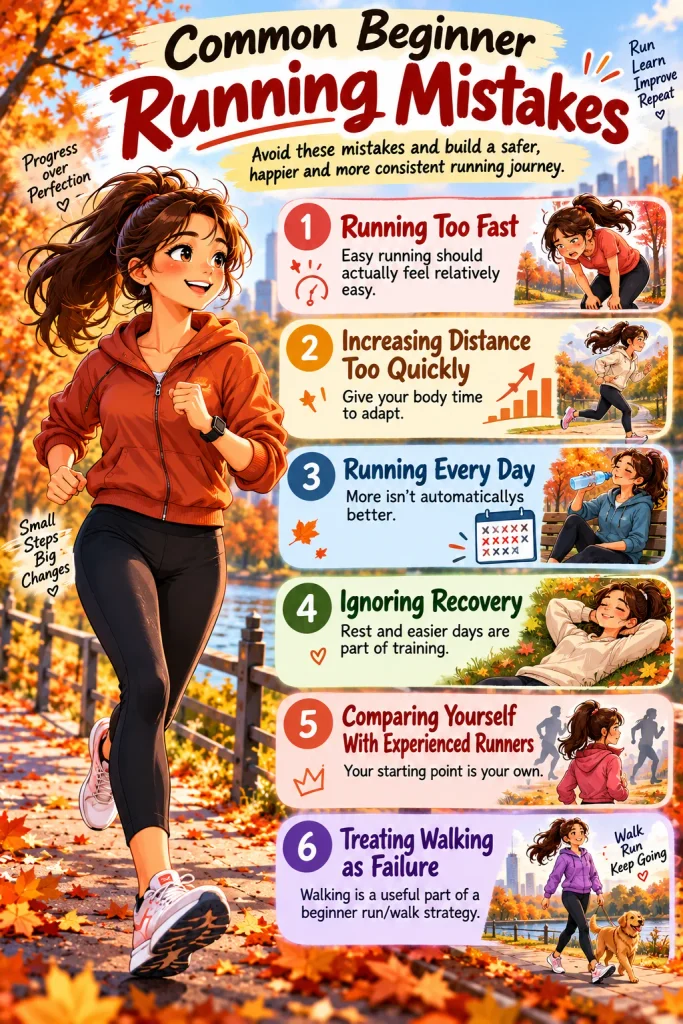
Common Beginner Running Mistakes
↬ Running Too Fast
Easy running should actually feel relatively easy.
↬ Increasing Distance Too Quickly
Give your body time to adapt.
↬ Running Every Day
More isn’t automatically better.
↬ Ignoring Recovery
Rest and easier days are part of training.
↬ Comparing Yourself With Experienced Runners
Your starting point is your own.
↬ Treating Walking as Failure
Walking is a useful part of a beginner run/walk strategy.
Beginner Fall Running Checklist
☐ Choose 2–3 running days
☐ Start with walking + running intervals
☐ Keep the pace comfortable
☐ Warm up before running
☐ Add recovery days
☐ Increase gradually
☐ Wear appropriate shoes
☐ Check outdoor conditions
☐ Stay hydrated
☐ Track consistency instead of speed
Also Read :- https://kheltechie.in/fall-recovery-routine-stretching-walking-rest-day-habits/

Your Fall Running Goal
You don’t need to become a fast runner this fall.
Start by becoming a consistent runner.
Walk when you need to.
Run at a comfortable pace.
Take recovery days.
Then gradually increase your running time as your fitness improves.
The goal is to finish the season with a running routine that feels sustainable—not exhausted.
Frequently Asked Questions
Starting with around two to three run/walk sessions per week can provide a manageable structure for many beginners, with recovery or easy movement between sessions.
A combination of walking and easy running is a practical way to start. Walking intervals allow you to control the overall intensity and gradually build running time.
It varies from person to person. Consistent training over several weeks can help improve endurance, but progression should depend on your starting fitness level and how your body responds.
You don’t need to. Beginners generally benefit from recovery between running sessions rather than trying to run hard every day.
Fall can be a comfortable season for outdoor running in many locations, but conditions vary. Temperature, rain, wind, daylight, and trail or road conditions should all be considered.