

Air Fryer Healthy Dinner Ideas For The Whole Family
A healthy air fryer dinner for a family is a full plate, not just a crispy main: a solid protein (animal or plant-based), a vegetable that covers a good part of the plate, and a sensible side, all cooked until a thermometer says it’s done. The twelve dinners below follow that rule. Half of them are on the table in about 30 minutes or less, and the rest take longer only because a baked potato or a batch of meatballs needs the time.
Most lists of air fryer dinners stop at the recipe name. The hard part of feeding a family isn’t the chicken. It’s getting four plates hot at the same moment, with food that’s actually cooked through, on a night when one person has homework and another won’t touch anything green. So this guide covers the dinners and also the parts that usually get skipped: how to stagger a basket, which temperatures matter, and how to plan five nights without five separate shopping trips.
How this list was built: Every dinner is a complete plate: a protein, at least one vegetable in a real portion, and a side or a way to build one. Times and temperatures for the air fryer are starting points, because every machine runs a little differently and a thick fillet cooks slower than a thin one. The safe internal temperatures are not starting points. They come from the USDA, and they decide when dinner is done.
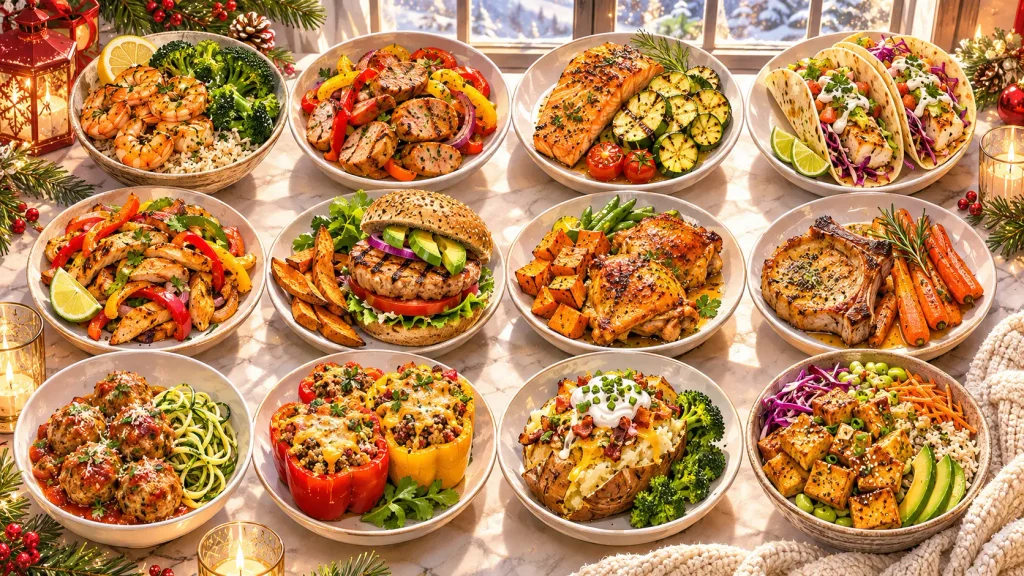
All 12 Dinners At A Glance
Pick by the time you have tonight. The last column is the one to trust over the clock.
| Dinner | Protein | Vegetables | Side | Total time | Done when |
|---|---|---|---|---|---|
| Shrimp and broccoli bowls | Shrimp | Broccoli | Rice | 15–20 min | Opaque, 145°F |
| Chicken sausage and peppers | Fully cooked chicken sausage | Bell pepper, onion, broccoli | Rice or pasta | 15–20 min | Hot through the center |
| Salmon with broccoli, pepper, and zucchini | Salmon | Broccoli, bell pepper, zucchini | Rice or quinoa | 25–30 min | 145°F |
| Fish tacos with cabbage slaw | Cod or tilapia | Cabbage slaw | Corn tortillas | 25–30 min | 145°F |
| Chicken fajita basket | Chicken breast | Bell pepper, onion | Tortillas | 25–30 min | 165°F |
| Turkey burgers and sweet potato fries | Ground turkey | Side salad | Sweet potato fries, buns | 30–35 min | 165°F |
| Chicken thighs, sweet potato wedges, green beans | Boneless chicken thighs | Green beans | Sweet potato | about 40 min | 165°F |
| Pork chops with potatoes and carrots | Pork chops | Carrots | Potatoes | 35–40 min | 145°F, 3-minute rest |
| Meatballs with zucchini and pasta | Ground turkey or beef | Zucchini | Pasta | 35–40 min | 165°F turkey, 160°F beef |
| Stuffed peppers | Black beans or cooked ground turkey | Bell pepper, tomato | Rice or quinoa | 35–40 min | Pepper tender, 165°F if meat |
| Loaded baked potato night | Black beans | Salsa, scallions, corn | Potato | 50–60 min | Center fork-tender |
| Crispy tofu or chickpea bowls | Tofu or chickpeas | Cucumber, carrot | Rice | 40–45 min with pressing | Crisp edges, hot |
What “Healthy” Means At a Family Table
Every air fryer list says the appliance is healthy because it uses less oil. That’s true for the crisping step. It says nothing about what’s on the plate.
A more useful test comes from the current federal Dietary Guidelines for Americans, released in January 2026. They boil down to a few plain ideas: build meals around real protein, eat vegetables and fruits throughout the day, choose whole grains over refined ones, and keep highly processed, salty foods to a minimum. They also tell people to swap deep-fried cooking for baked, roasted, or grilled methods, and an air fryer, which works like a small, fast convection oven, is a reasonable fit for that.
The dinners here are built around those ideas. Each one starts with a protein, gives vegetables real room on the plate, and pairs them with a starch or a way for everyone to build one, so the plate looks balanced before anybody adds anything.
A few habits keep the word honest:
- Start with the protein: fish, poultry, meat, beans, lentils, or tofu.
- Let vegetables take up space on the plate instead of sitting in one corner.
- Read the label on anything that comes in a package, like sausage, seasoning blends, jarred sauce, and canned beans. That’s where the salt hides. The federal guidelines set a daily sodium limit of under 2,300 mg for ages 14 and up, and lower for younger children: under 1,200 mg for ages 1 to 3, 1,500 mg for ages 4 to 8, and 1,800 mg for ages 9 to 13. Rinsing canned beans washes some of it off.
- Toss vegetables with a teaspoon or two of oil (olive oil is a good default) or give them a light spray, instead of pouring.
- Where a dinner uses rice, pasta, tortillas, or buns, whole-grain versions fit the guidelines better, and the swap is easy.
One more point. The air fryer changes how much oil crisp food needs. It doesn’t change what’s inside the food. A breaded, frozen, sauce-covered dinner is still that, just with a better crunch.
Dinners That Are Done in Under 20 Minutes
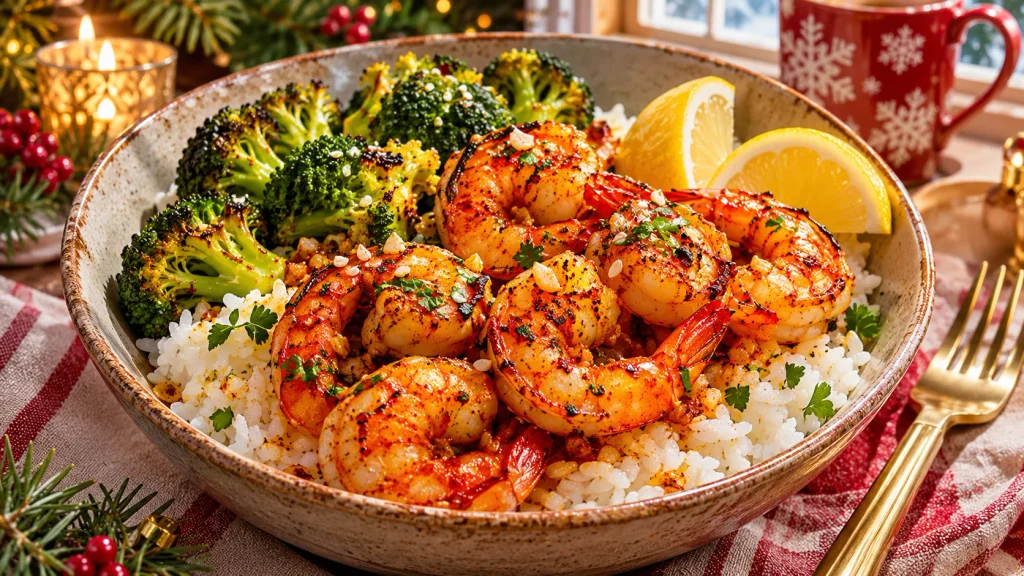
⇝ Shrimp and broccoli bowls
Cut broccoli into florets about the size of a walnut, toss them with a teaspoon or two of oil, salt, and garlic powder, and air fry at 400°F for about 4 minutes. Pat the shrimp dry, because wet shrimp steam instead of browning, then toss them with paprika and lemon juice and add them to the basket for 6 to 7 more minutes, shaking once. Shrimp are done when they turn pink and opaque and curl into a loose C. A tight O means they’ve gone too far. The USDA minimum for shellfish is 145°F if you’d rather check a big one with a thermometer.
Serve over rice from a microwave pouch or last night’s leftovers, which is what keeps this under 20 minutes. Kids tend to like bowls because they can add their own lemon and sauce. If shellfish isn’t an option at your table, cod cut into chunks cooks in a similar window. Leftover shrimp work cold over a salad the next day.
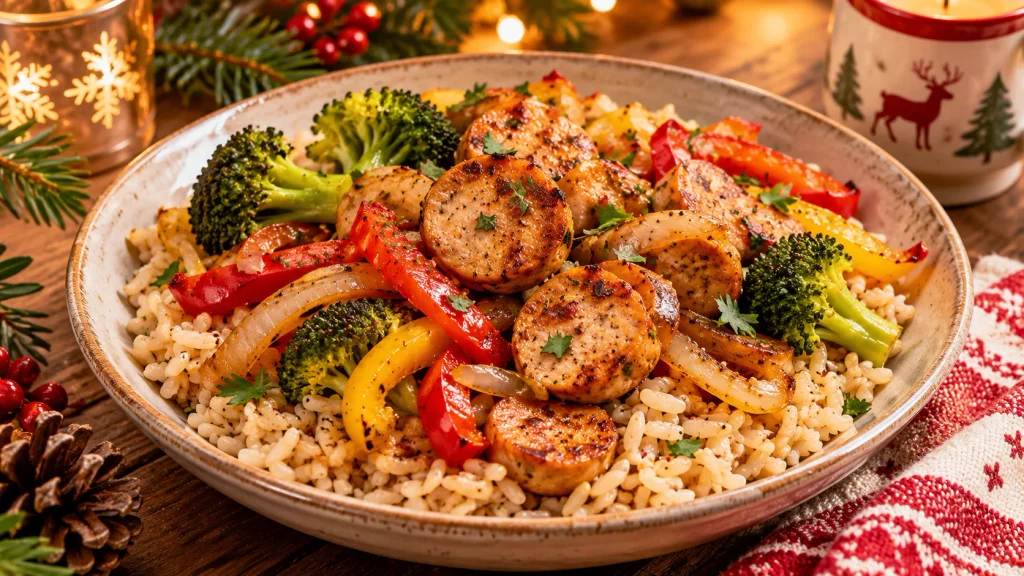
⇝ Chicken sausage and peppers
This is the dinner for the night nobody planned. Buy fully cooked chicken sausage, slice it into coins, and cut a bell pepper and an onion into strips about as thick as the sausage coins so everything browns together. Toss with a light spray of oil and a spoonful of Italian seasoning, add a handful of broccoli florets if you want a second vegetable, and cook at 375°F for 9 to 12 minutes, shaking twice. It’s ready when the vegetable edges brown and the sausage is hot through the center.
Check the package says “fully cooked.” Raw sausage needs a different method and a higher internal temperature. Sodium swings a lot from brand to brand, so compare labels in the store and season the vegetables with herbs instead of extra salt. Spoon it over rice or pasta, or tuck it into hoagie rolls for the kids.
Dinners That Take About 30 Minutes
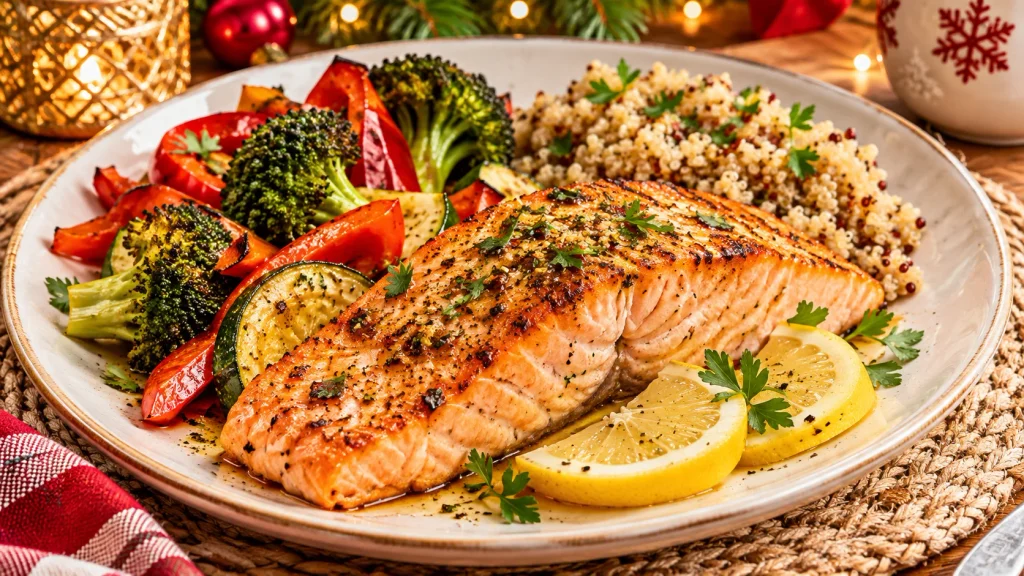
⇝ Salmon with broccoli, bell pepper, and zucchini
This is the cleanest example of the “vegetables first, fish second” method. Cut broccoli, red bell pepper, and zucchini into walnut-sized pieces, toss with oil, salt, and garlic powder, and air fry at 390°F to 400°F for 5 minutes. While they cook, pat 5- to 6-ounce salmon fillets dry and rub them with a little oil, salt, pepper, and lemon juice.
Push the vegetables to the sides, set the salmon in the middle skin side down, and cook 8 to 10 minutes. Pull it when a thermometer in the thickest part reads 145°F. Thin tail pieces finish sooner, so check them around minute 7, and if your fillets vary in thickness, put the thicker ones in first. Serve with rice or quinoa. Salmon is the pricey option on this list, so frozen fillets thawed overnight in the refrigerator are the budget route, and trout works in the same slot.
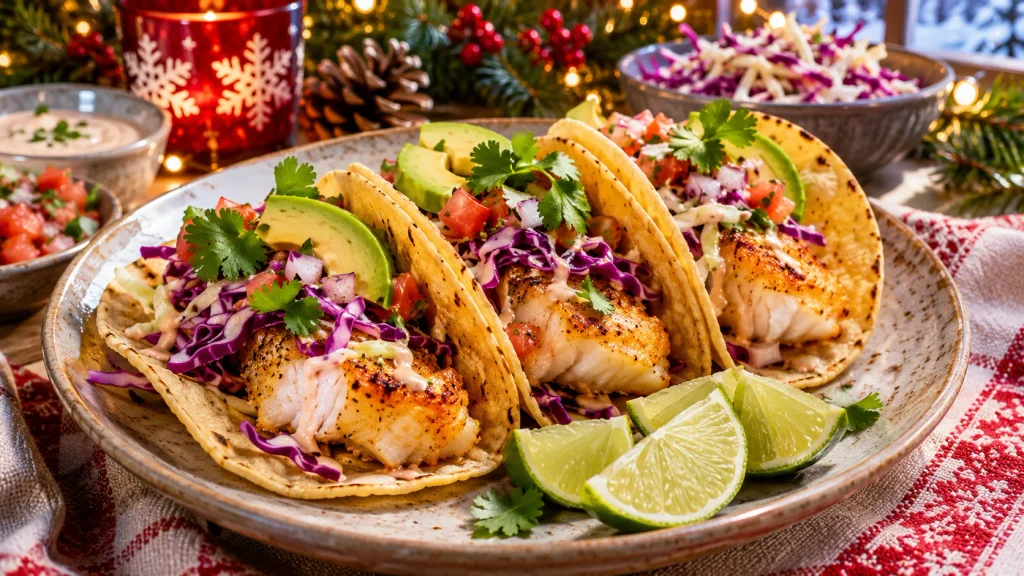
⇝ Fish tacos with cabbage slaw
Season cod or tilapia fillets about an inch thick with chili powder, cumin, salt, and a squeeze of lime. Air fry at 400°F for 8 to 11 minutes depending on thickness. The fish is done when it flakes easily and reads 145°F. Thick fillets don’t need flipping; if your basket browns unevenly, turn them once, gently, because cod breaks apart if you rush.
While the fish cooks, mix shredded cabbage with lime juice, a spoonful of plain yogurt or mayonnaise, and salt for a slaw that takes two minutes. Warm corn tortillas in a dry skillet for 20 to 30 seconds per side and let everyone build their own. Fresh fish has a short refrigerator life, so this is the dinner to cook early in the week or to make from a frozen fillet.
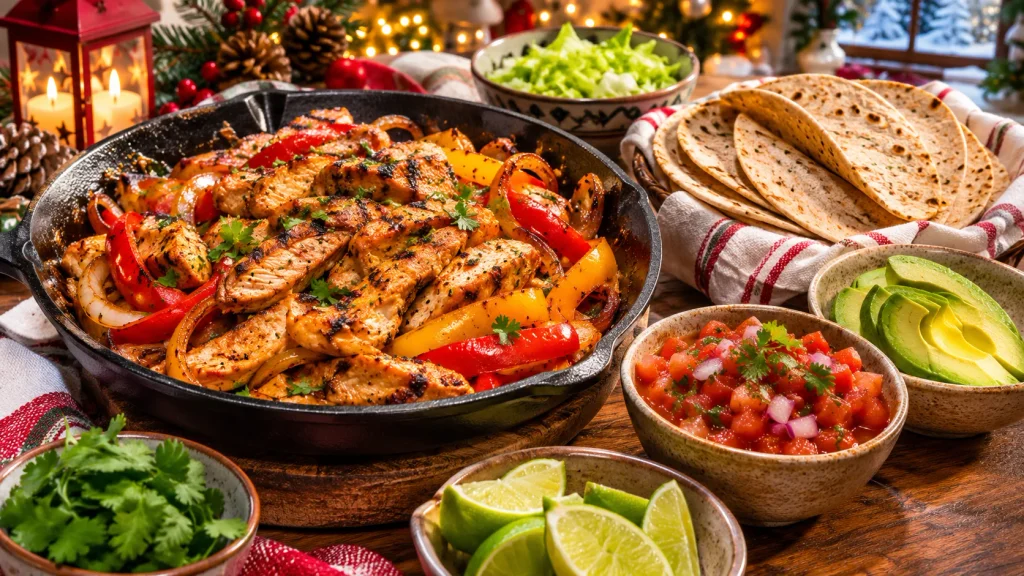
⇝ Chicken fajita basket
Slice about 1¼ pounds of chicken breast into strips roughly half an inch thick, then toss them in a bowl with sliced bell peppers and onion, a light spray of oil, chili powder, cumin, garlic powder, paprika, salt, and lime juice. Cook at 400°F for 10 to 13 minutes, shaking twice. Check the thickest strip with a thermometer. Chicken is done at 165°F, and thin strips finish first, so pull those out and keep going if a few are thick.
The toppings bar does the work for picky eaters: corn or whole-grain tortillas, shredded cheese, salsa, plain yogurt in place of sour cream, avocado, and shredded lettuce. Store-bought fajita seasoning packets are salty, and a mix of your own spices costs less and lets you control that. Leftover strips go into wraps for lunch the next day.
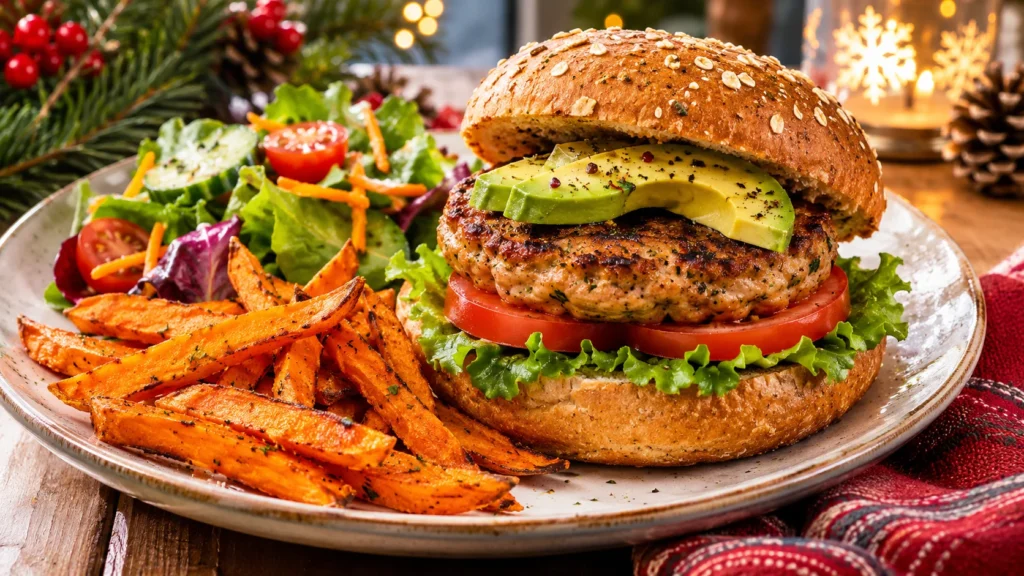
⇝ Turkey burgers and sweet potato fries
Lean ground turkey dries out easily, so handle it gently. Shape a pound into four patties about ¾ inch thick, press a shallow dimple in the center of each so they don’t dome, and work in a few tablespoons of grated zucchini or finely chopped onion to keep them moist. Cook the sweet potato fries first at 400°F for about 15 minutes, shaking two or three times, then cook the burgers at 375°F for 12 to 15 minutes, flipping halfway.
Ground poultry needs to reach 165°F, so check the center of at least two patties. While the burgers rest for a few minutes, put the fries back in for the last 2 minutes to crisp up again. Serve on whole-grain buns with a side salad and whatever toppings your family argues about.
Dinners That Need About 40 Minutes and Mostly Leave You Alone
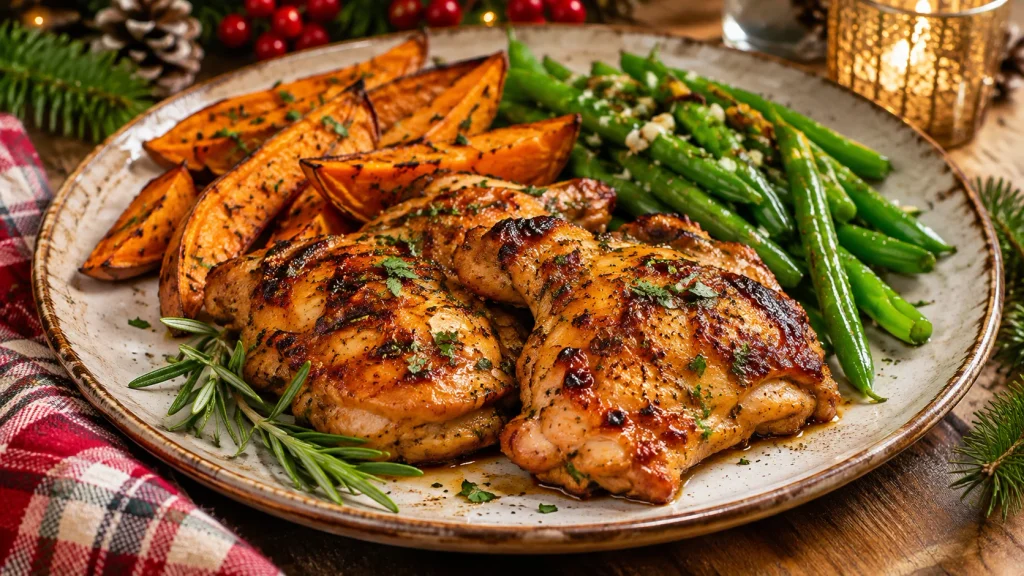
⇝ Chicken thighs, sweet potato wedges, and green beans
Boneless, skinless thighs cost less than breasts and forgive a minute or two of overcooking, which makes them good for a family night. Cut sweet potatoes into wedges about ¾ inch thick, season them, and air fry at 390°F for 8 minutes. Add the seasoned thighs and cook another 16 to 18 minutes, turning the chicken and shaking the wedges halfway. The chicken is done at 165°F in the thickest part.
In a standard basket, this dinner usually needs a second round. Move the chicken to a plate to rest while the green beans take the hot basket for 6 to 8 minutes at 400°F. Raw chicken juices will have dripped onto the wedges, which is fine once everything is cooked through, but wash the board, tongs, and plate that touched raw chicken before they touch anything finished.
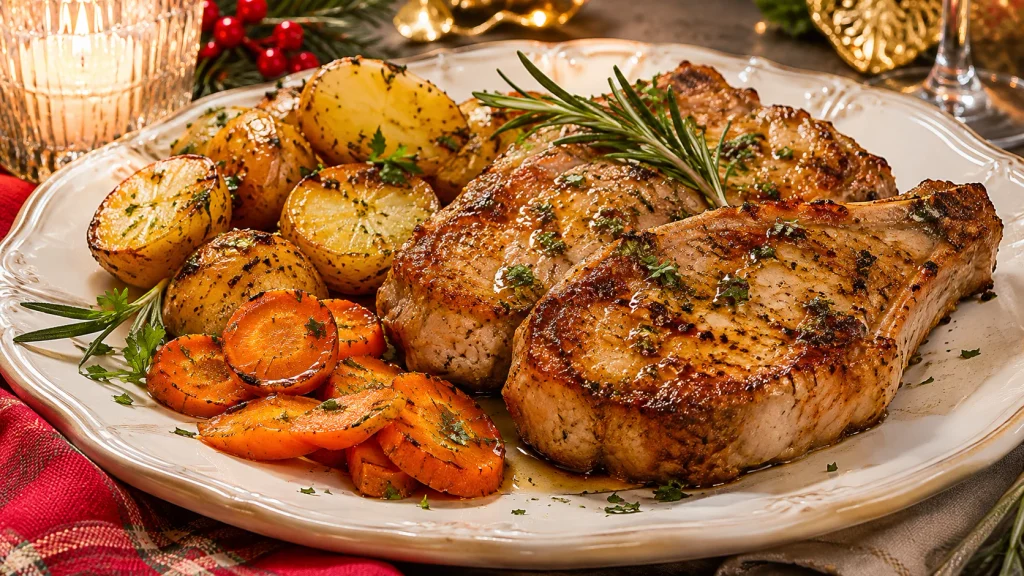
⇝ Pork chops with potatoes and carrots
Quarter small potatoes, cut carrots into coins about ½ inch thick, and air fry them with a little oil and salt at 400°F for 10 to 12 minutes until the edges begin to brown. Rub ¾- to 1-inch pork chops with paprika, garlic powder, and onion powder, lay them on top, and cook another 9 to 12 minutes depending on thickness.
Pull the chops at 145°F, then let them rest 3 minutes, which is the USDA guidance for whole cuts of pork. A chop that’s slightly pink in the middle at that temperature is fine, and an overcooked chop is the usual reason people say they don’t like pork. Thin boneless chops finish sooner, so start checking early. If the potatoes aren’t tender once the chops come out, put them back for 3 to 4 minutes while the meat rests.
Dinners Worth Planning Ahead
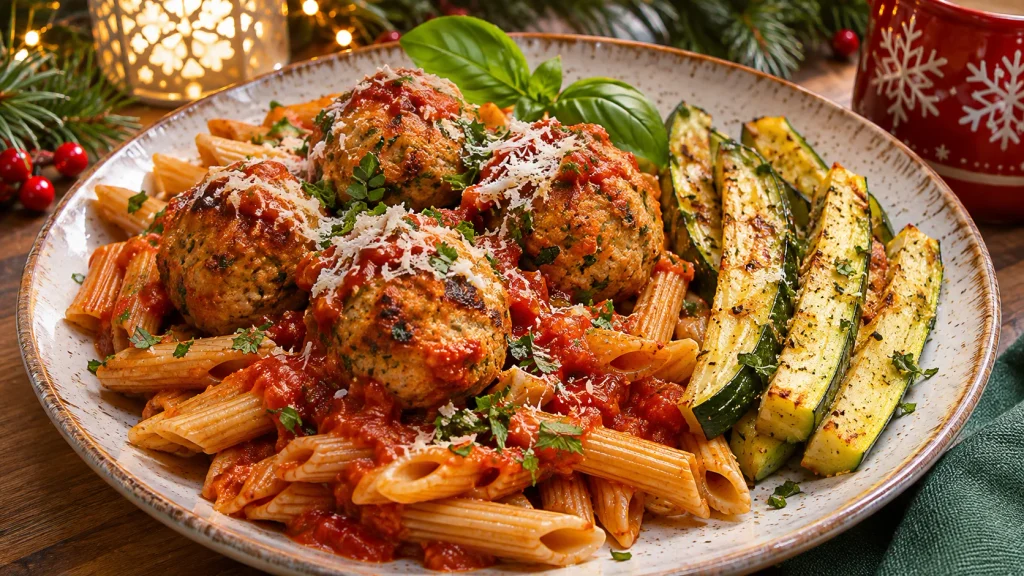
⇝ Meatballs with zucchini and pasta
Mix 1 pound of ground turkey or beef with 1/3 cup breadcrumbs or quick oats, an egg, a quarter cup of grated Parmesan, Italian seasoning, and a little minced garlic. Roll golf-ball-sized meatballs, which gives you roughly 16, and air fry at 390°F to 400°F for 10 to 13 minutes, turning once. Ground turkey, or a mix of turkey and beef, needs to reach 165°F. All beef needs 160°F.
Cut zucchini into sticks and cook them for 8 to 10 minutes while the pasta boils. Check the label on jarred sauce, because sodium varies a lot between jars. The make-ahead part is the real advantage here: roll the meatballs in the morning, or freeze them raw on a tray and bag them once they’re firm, and dinner becomes a 15-minute job.
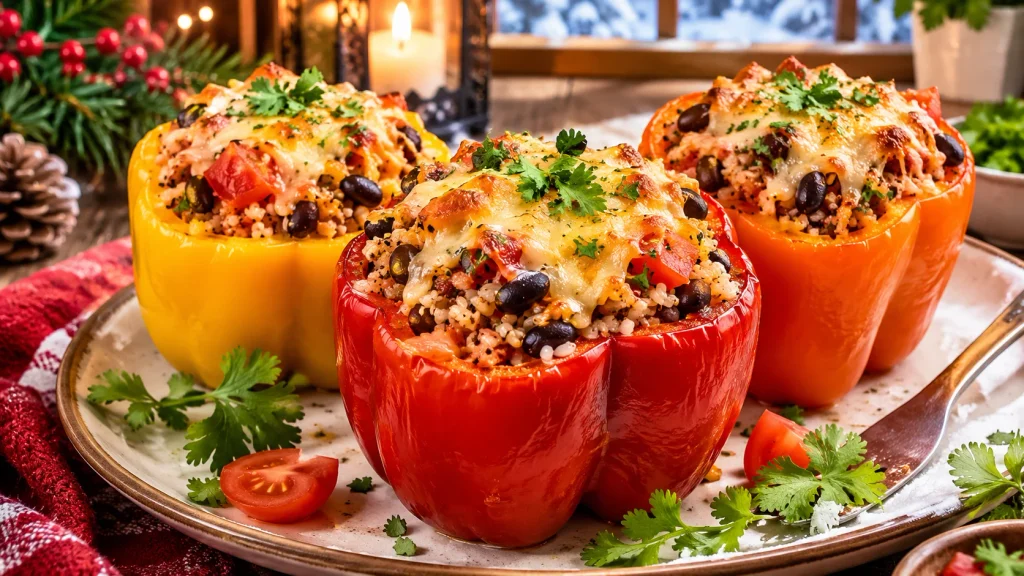
⇝ Stuffed peppers
Halve bell peppers lengthwise and remove the seeds. Fill them with cooked rice or quinoa, black beans or cooked ground turkey, diced tomatoes, cumin, and a little cheese. Cook at 360°F to 370°F for 12 to 15 minutes, adding the cheese for the last 2 minutes. They’re done when the pepper is tender and the filling is hot throughout, which means 165°F if the filling contains meat.
Cook the meat and the grain before they go into the pepper. Raw ground meat packed inside a pepper takes longer to cook than most quick guides admit, and the pepper itself is done long before the center is safe. Pre-cooking also makes this one of the easier dinners to assemble in the morning and cook after work.
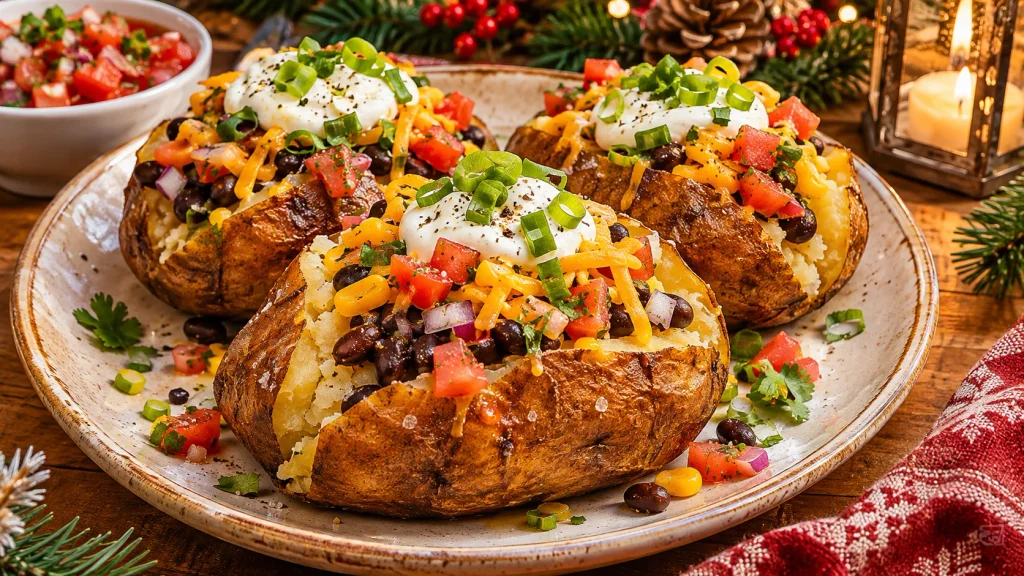
⇝ Loaded baked potato night
Scrub medium potatoes, poke them with a fork, rub them with a little oil and salt, and skip the foil so the skins crisp. Cook at 400°F for 35 to 45 minutes depending on size, turning once. They’re done when a knife slides to the center with no resistance.
Warm a can of black beans, rinsed to wash away some of the salt, with cumin, and set out salsa, plain yogurt, shredded cheese, scallions, and corn. This is one of the cheapest dinners on the list and it’s vegetarian without anyone announcing it. Start the potatoes before homework time and they take care of themselves.
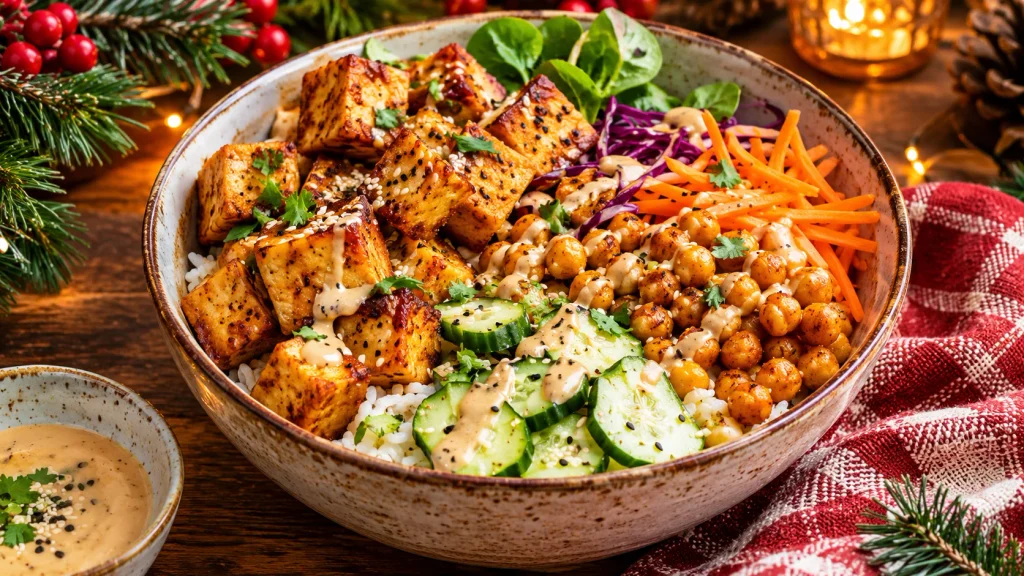
⇝ Crispy tofu or chickpea bowls
For tofu, press extra-firm blocks for about 15 minutes under a pan, cut them into ¾-inch cubes, and toss with a tablespoon of soy sauce, a teaspoon of oil, and a tablespoon of cornstarch. Cook at 400°F for 15 to 18 minutes, shaking three times, until the edges are crisp. For chickpeas, drain, rinse, and dry them thoroughly, then cook at 400°F for 12 to 15 minutes. They get crunchier as they cool.
Build the bowls over rice with cucumber, shredded carrot, and a sauce, such as a peanut sauce or a yogurt sauce with lemon. Soy and peanuts are common allergens, so swap in sunflower seed butter and a different sauce if either is a concern at your table. Both versions are done when they look crisp and feel hot all the way through.

How to Cook for Four Without Cold Food or Soggy Vegetables
Say it’s Tuesday, practice ran late, and four plates need to land on the table together. The basket is the bottleneck, and a few habits get around it.
Keep food in a single layer with small gaps: Crowd the basket and the hot air can’t circulate, so vegetables steam and turn soft instead of browning. If pieces touch or stack, plan two rounds.
Stagger by cooking time: Dense vegetables like potatoes, carrots, and sweet potatoes go in first, with an 8 to 12 minute head start. Broccoli, peppers, and zucchini need about 4 to 5 minutes before the protein joins them. Fish and shrimp go in last. This “vegetables first, protein second” order is behind most of the one-basket dinners above.
Use resting time: Chicken is better for 5 minutes on a plate, and pork needs 3, so a fast vegetable can take the hot basket while the meat rests. A rest that looks like dead time is actually the second round.
Keep round one warm: A 200°F oven works. The USDA’s food safety basics say hot food should be held at 140°F or warmer.
If your air fryer has two drawers, put the protein in one and the vegetables in the other, and use the setting that finishes both at the same time if yours has one. Most of the soggy-vegetable complaints come down to the same three slips: crowding the basket, adding wet food (pat it dry first), and pouring oil instead of spraying it.

The Temperatures that Matter When Kids are at the Table
Color and juices are unreliable for deciding whether meat is safe, and a thin or small piece can look done while the center is not. An instant-read thermometer settles it in seconds. Put the tip in the thickest part of the food, away from bone, and check more than one piece. Wipe the probe between raw and cooked food.
These are the minimums from the USDA’s safe minimum internal temperature chart:
| Food | Minimum internal temperature | Where it shows up in this list |
|---|---|---|
| Chicken, turkey, and ground poultry | 165°F | Fajitas, thighs, turkey burgers, turkey meatballs |
| Ground beef and pork | 160°F | All-beef meatballs |
| Pork chops, steaks, roasts | 145°F, then rest 3 minutes | Pork chops |
| Fish and shellfish | 145°F | Salmon, fish tacos, shrimp |
| Leftovers | 165°F when reheated | Everything, the next day |
If you mix ground turkey and ground beef in meatballs, go by the higher number, 165°F. And if you’re ever unsure about a thick piece, cut it open, check the temperature, and give it two more minutes. Food that has been cooked a little longer is easier to fix than food that hasn’t been cooked enough.

Getting Everyone to the Table Without Cooking a Second Dinner
The easiest way through a picky table is to make the dinner a build-your-own one. Fajitas, tacos, burgers, loaded potatoes, and bowls all work because the cooked parts stay the same and each person decides what goes on top. The child who only wants plain chicken and cheese eats the same dinner as the adult who wants salsa and jalapeños.
A few other approaches cost nothing. Serve the same food in separate piles on the plate instead of mixed together, since many kids who refuse a casserole will eat each ingredient alone. Put one new thing next to one familiar thing instead of replacing the familiar one. Let kids pick the toppings or squeeze the lime, because people eat more of what they helped make.
Keep pressure low. Dinner isn’t a negotiation, and a plate with options is quieter than one with demands. If a child’s eating worries you beyond ordinary pickiness, that’s a conversation for their pediatrician, not a dinner trick.

A Five-Night Plan With One Grocery List
The point of a plan is overlap, so the same peppers, cabbage, and rice show up more than once. Here’s one week that uses the dinners above:
| Night | Dinner | What carries over |
|---|---|---|
| Monday | Fish tacos with cabbage slaw | Extra cabbage for Tuesday’s side salad |
| Tuesday | Turkey burgers and sweet potato fries | Leftover slaw cabbage as the salad |
| Wednesday | Chicken fajita basket | Extra peppers and onion for Thursday |
| Thursday | Chicken sausage and peppers over rice | Extra cheese and salsa for Friday |
| Friday | Loaded baked potato night | Leftover fajita toppings |
The order isn’t random. Fresh fish keeps only a day or two in the refrigerator, according to the USDA’s storage chart, so it goes first. Raw ground poultry lasts about the same, so if you shop on Sunday, shape the turkey patties then and freeze them for Tuesday. The USDA’s storage chart lists both.
On Sunday, 20 minutes of prep carries the week. Slice the peppers and onions and store them in an airtight container, shred the cabbage, cook a pot of rice, and shape and freeze the patties. Cool cooked rice in shallow containers and refrigerate it within two hours.
Leftovers keep for 2 to 3 days in the refrigerator, and the USDA says to reheat them to 165°F. The air fryer does that well, because it re-crisps food that a microwave leaves soft. On a night when the plan falls apart, a pot of soup from our list of healthy soup recipes for cold weather picks up the slack without a new grocery run.

What to Skip, or at Least Rethink
Frozen breaded chicken, fish sticks, and pre-sauced wings don’t become a balanced dinner because they were cooked in an air fryer. They’re fine now and then, just not what this article means by a healthy family dinner. The label tells you most of what you need: look at the sodium, and notice how much of the package is coating.
Sticky sauces such as teriyaki, orange, and sweet chili add sugar fast. The federal guidelines suggest no more than about 10 grams of added sugars in a single meal, so check the label before you pour.
Wet batters don’t work well either. They drip through the basket and come out gummy rather than crisp. Dry coatings like breadcrumbs, crushed cornflakes, or a little cornstarch work better, and dipping in egg first helps them stick.
Large roasts and anything bigger than your basket are better in the oven. And the word “oil-free” on a recipe deserves a second look. Many of them still call for tablespoons of oil, and a spray is not nothing. It’s just a smaller amount than you’d pour.
If you try just one dinner this week, make it a “vegetables first, protein second” basket, like the salmon or the pork chops. That one habit is behind half of this list.
Questions Families Ask About Air Fryer Dinners
A 5 to 6-quart basket handles most of these dinners in one or two rounds. What matters more than the number is space: food should sit in a single layer with small gaps. If pieces touch or stack, cook in two rounds, or use one drawer for protein and one for vegetables if your model has two.
Yes, as long as the meat reaches its safe temperature and you keep raw and cooked food apart afterward. Raw juices can drip onto vegetables below, which is fine once everything is cooked through, but the board, plate, and tongs that touched raw meat should be washed before they touch finished food.
Thawing overnight in the refrigerator gives the most even result. Shrimp and thin fish fillets usually cope with going in frozen if you add a few minutes. Thick chicken pieces often end up dry outside and underdone inside, so thaw those first, and let a thermometer decide either way. For packaged frozen foods, follow the label.
Refrigerate leftovers within two hours of cooking, use them within 3 to 4 days, and reheat them to 165°F. The air fryer at a moderate temperature brings back crispness better than a microwave does.
A light spray, or a teaspoon or so tossed with vegetables, helps browning. Fattier foods like salmon, chicken thighs, and sausage need very little. Some basket coatings don’t tolerate aerosol sprays, so check your manual or use a pump bottle.
Sources
- U.S. Department of Agriculture, Food Safety and Inspection Service. Safe Minimum Internal Temperature Chart: https://www.fsis.usda.gov/food-safety/safe-food-handling-and-preparation/food-safety-basics/safe-temperature-chart
- U.S. Department of Agriculture, Food Safety and Inspection Service. Steps to Keep Food Safe (leftovers, storage times, holding hot food): https://www.fsis.usda.gov/food-safety/safe-food-handling-and-preparation/food-safety-basics/steps-keep-food-safe
- U.S. Department of Health and Human Services and U.S. Department of Agriculture. Dietary Guidelines for Americans, 2025–2030: https://cdn.realfood.gov/DGA.pdf
- U.S. Department of Health and Human Services, ODPHP. Current Dietary Guidelines: https://odphp.health.gov/our-work/nutrition-physical-activity/dietary-guidelines/current-dietary-guidelines
This guide is built from standard air fryer methods and USDA food safety guidance.
This article is general food and lifestyle information, not medical or dietary advice. If anyone at your table has a food allergy or a medical condition, check labels and follow the advice of their healthcare provider.