

Fall Lower-Body Workout: Simple Strength Moves for Beginners
If you’re getting back into fitness this fall, you don’t need a complicated gym program to start building lower-body strength. A simple routine built around basic movement patterns can be enough to establish consistency. This beginner-friendly fall lower-body workout focuses on movements that train major lower-body muscles while keeping the routine straightforward.
You can perform many of these exercises at home with bodyweight or add resistance as your fitness level improves.
Also Read :- https://kheltechie.in/fall-reset-for-busy-people-10-habits-that-fit-your-schedule/

Why Include Lower-Body Strength Training?
Your lower body is involved in everyday movements such as:
- Walking
- Climbing stairs
- Getting up from a chair
- Carrying objects
- Squatting
- Bending
- Recreational activities
Strength training can also be part of a balanced physical activity routine. U.S. guidelines recommend muscle-strengthening activity involving the major muscle groups on at least two days per week for adults.
You don’t need to train your legs every day.
A couple of well-planned strength sessions each week can be a useful starting point.
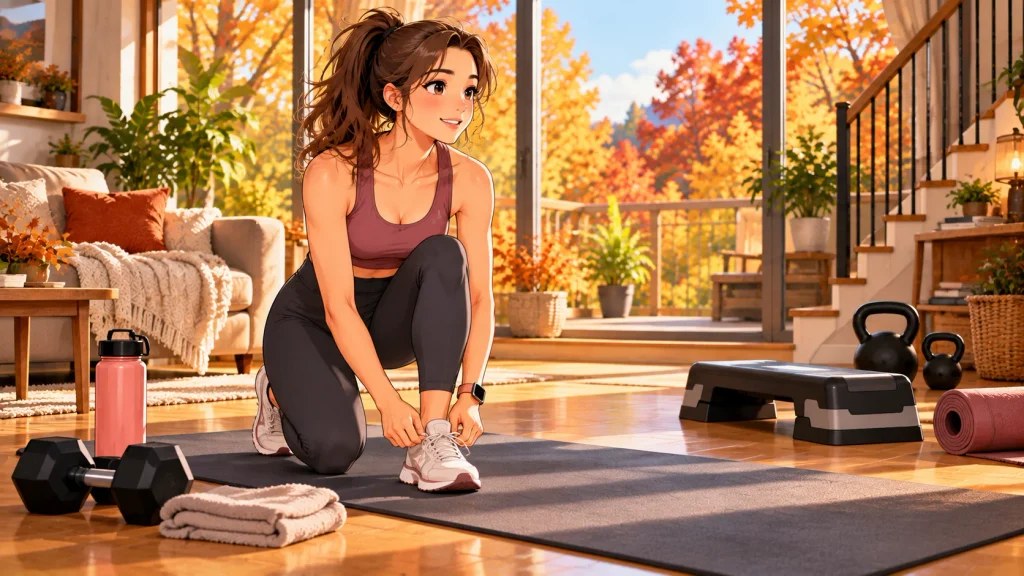
Beginner Fall Lower-Body Workout
Start with a 5–10 minute warm-up.
Then perform:
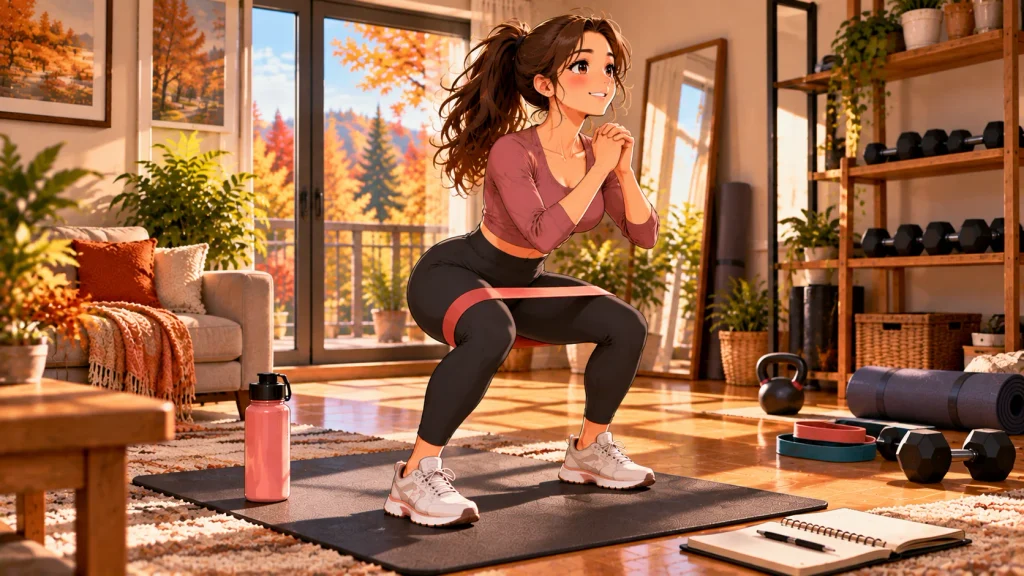
- Bodyweight Squats
- Glute Bridges
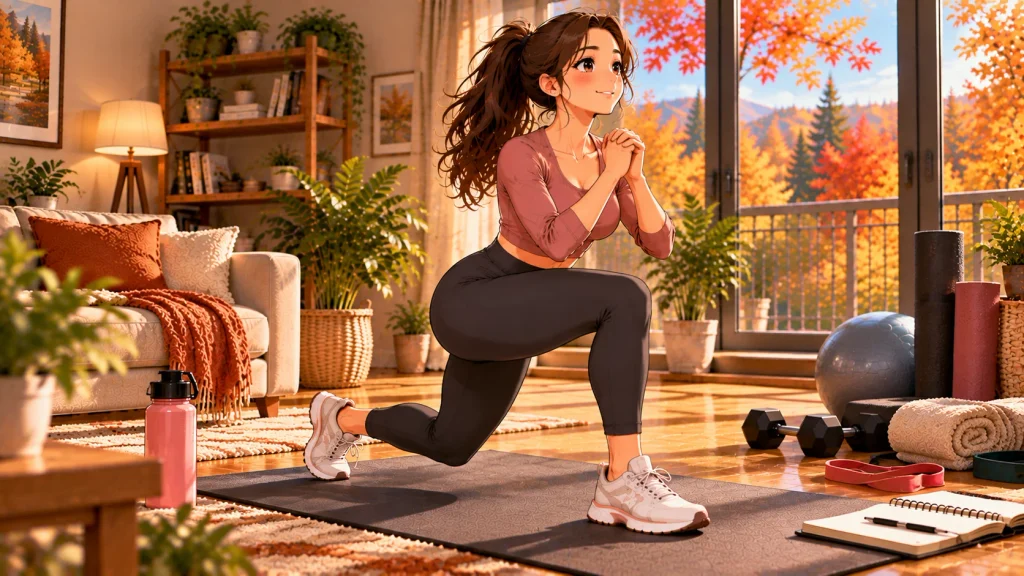
- Reverse Lunges
- Step-Ups
- Hip Hinges
- Calf Raises
Start with a number of repetitions that allows you to maintain good form.
For many beginners, 1–2 rounds is enough to learn the movements.
As the workout becomes more comfortable, you can gradually add repetitions, resistance, or another set.

1. Bodyweight Squats
Squats are a foundational lower-body movement.
How to do them:
- Stand with your feet roughly shoulder-width apart.
- Keep your chest comfortably upright.
- Push your hips back and bend your knees.
- Lower only as far as you can maintain good control.
- Push through your feet to return to standing.
Beginner target
8–12 controlled reps
Don’t worry about reaching a particular depth if you can’t maintain comfortable form.

2. Glute Bridges
Glute bridges are a simple floor-based movement that trains the muscles around your hips and glutes.
How to do them:
- Lie on your back.
- Bend your knees.
- Keep your feet planted.
- Press through your feet.
- Lift your hips in a controlled motion.
- Lower back down.
Beginner target
10–15 reps
Avoid rushing through the movement.
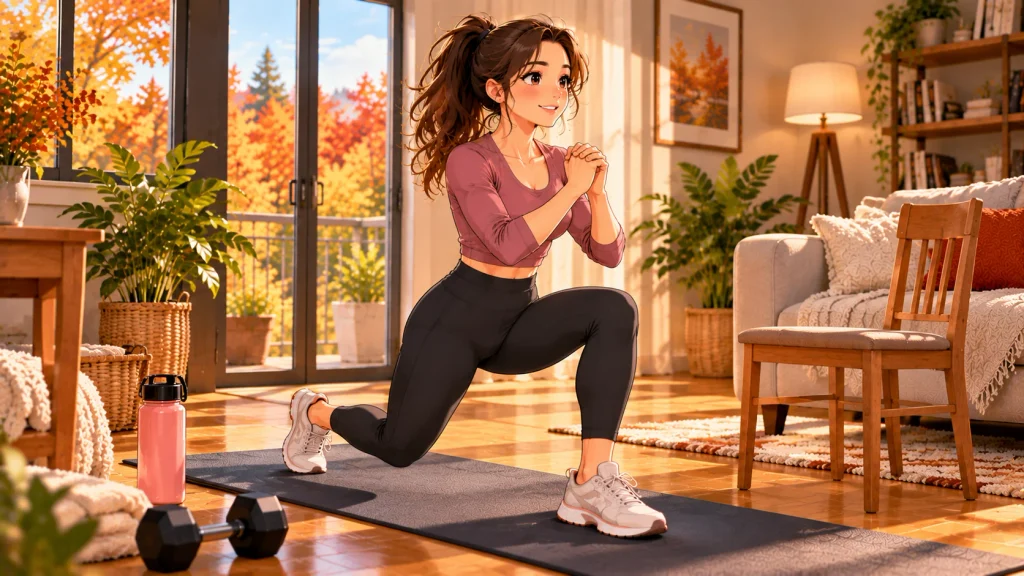
3. Reverse Lunges
Reverse lunges can be a beginner-friendly way to practice a single-leg movement.
How to do them:
- Stand tall.
- Step one foot backward.
- Lower your body under control.
- Push through the front foot.
- Return to standing.
- Repeat on the other side.
If balance is difficult, hold onto a stable support.
Beginner target
6–10 reps per side
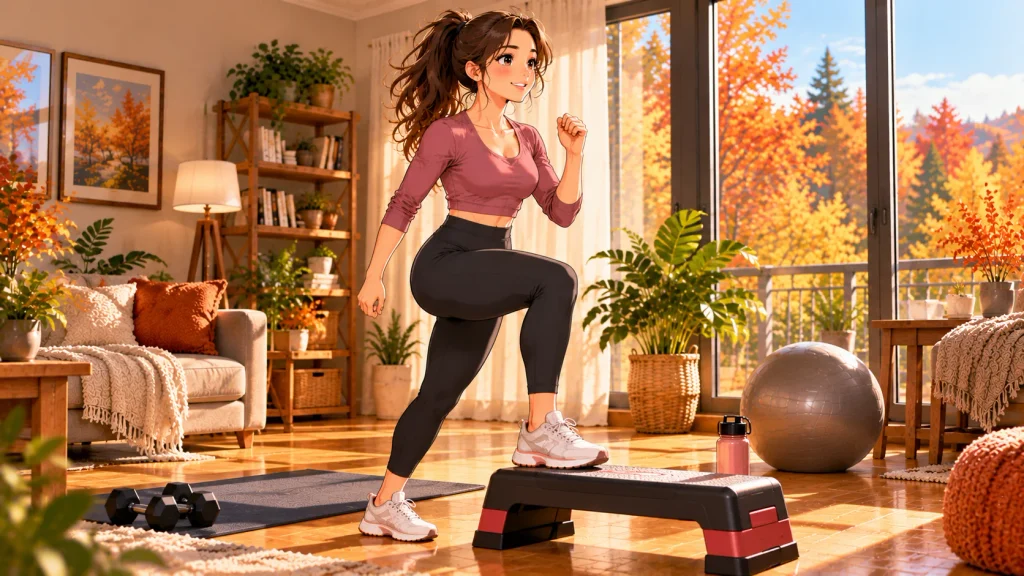
4. Step-Ups
Step-ups use a controlled stepping motion that resembles everyday activities such as climbing stairs.
How to do them:
- Place one foot on a stable, low step.
- Press through that foot.
- Bring the other foot up.
- Step down carefully.
- Switch sides.
Beginner target
8–10 reps per side
Use a stable surface and choose a height that allows you to maintain control.
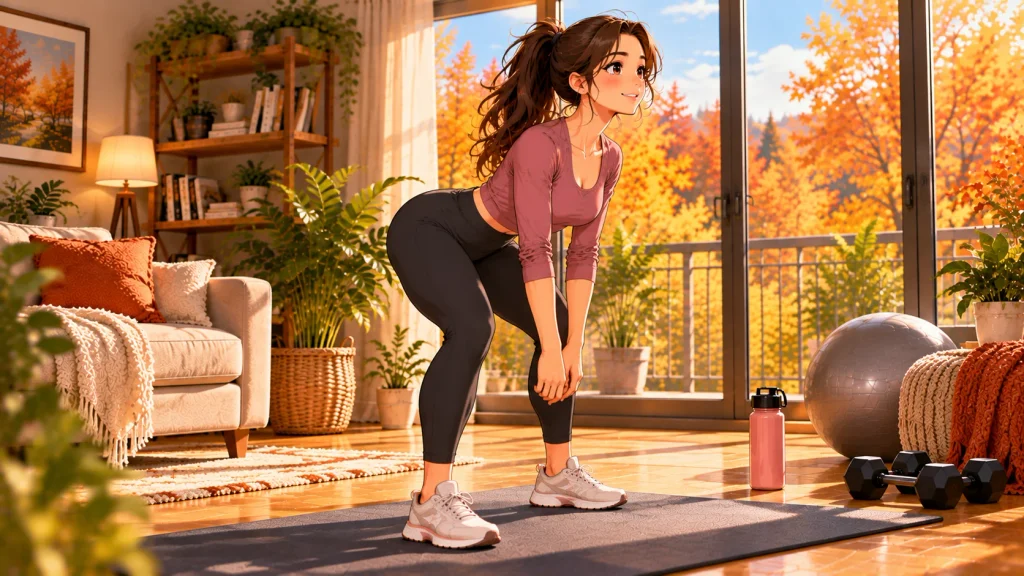
5. Hip Hinges
The hip hinge teaches you how to move through your hips while keeping control of your torso.
How to practice:
- Stand with feet comfortable apart.
- Keep your back in a neutral position.
- Push your hips backward.
- Allow your torso to lean forward naturally.
- Return to standing by driving your hips forward.
Once you understand the movement, you can eventually add an appropriate resistance such as dumbbells.
Beginner target
8–12 reps

6. Calf Raises
Calf raises are simple and require very little equipment.
How to do them:
- Stand tall.
- Hold onto a stable surface if needed.
- Slowly raise your heels.
- Pause briefly.
- Lower with control.
Beginner target
12–15 reps

Beginner Fall Lower-Body Workout Plan
Here’s a simple way to put the movements together.
| Exercise | Beginner Starting Point |
|---|---|
| Bodyweight Squats | 8–12 reps |
| Glute Bridges | 10–15 reps |
| Reverse Lunges | 6–10/side |
| Step-Ups | 8–10/side |
| Hip Hinges | 8–12 reps |
| Calf Raises | 12–15 reps |
Start with:
1–2 rounds
Rest:
Take enough rest between exercises to maintain good form and control.
There’s no need to rush.

How Often Should You Do This Workout?
For a beginner, you don’t need to perform the same lower-body workout every day.
You could start with:
2 days per week
For example:
Monday → Lower Body
Thursday → Lower Body
On other days, you could include walking, cardio, upper-body training, mobility work, or rest depending on your overall routine.
Give your muscles time to recover between strength sessions.
How to Progress Your Workout
Once the exercises become comfortable, change one variable at a time.
You could gradually:
- Add a few repetitions
- Add another set
- Increase resistance
- Improve movement control
- Choose a slightly more challenging variation
You don’t need to increase everything at once.
Example:
- Week 1: 1 round
- Week 2: 2 rounds
- Week 3: 2 rounds + slightly more resistance
- Week 4: Review how the routine feels
Your progression should depend on your current fitness level and ability to maintain good form.
Common Beginner Lower-Body Workout Mistakes
- Going Too Heavy
More weight doesn’t automatically mean better results.
Start with resistance you can control. - Rushing Repetitions
Slow, controlled movements can make it easier to focus on technique. - Skipping the Warm-Up
A few minutes of light movement can help you transition into your workout. - Training Legs Every Day
Strength training requires recovery. - Chasing Soreness
Being extremely sore isn’t the goal of a successful workout.

5 Tips for a Better Fall Fitness Routine
- Keep your workouts simple.
You don’t need 15 exercises. - Schedule your strength days.
Treat them like appointments. - Walk on non-strength days.
Walking can complement your overall activity routine. - Use fall weather as motivation.
When conditions are comfortable, outdoor walks and activities can add variety. - Focus on consistency.
Your routine should still feel manageable several weeks from now.
Beginner Lower-Body Workout Checklist
☐ Warm up for 5–10 minutes
☐ Practice bodyweight squats
☐ Add glute bridges
☐ Practice reverse lunges
☐ Try controlled step-ups
☐ Learn the hip hinge
☐ Add calf raises
☐ Start with 1–2 rounds
☐ Schedule recovery days
☐ Progress gradually
Also Read :- https://kheltechie.in/fall-self-care-day-simple-at-home-reset-routine/

Final Takeaway
You don’t need a complicated lower-body program to make your fall fitness routine more structured.
Start with a few foundational movements:
Squats → Glute Bridges → Lunges → Step-Ups → Hip Hinges → Calf Raises
Learn the movements.
Practice them consistently.
Give yourself time to recover.
Then gradually increase the challenge as your fitness improves.
A simple routine you can repeat is a strong place to start.
Frequently Asked Questions
The exercises are commonly used as basic strength movements, but the appropriate exercise, range of motion, and resistance depend on your individual fitness level and circumstances. Start with manageable variations and prioritize controlled movement.
Many beginners can start with two non-consecutive strength sessions per week, while adjusting the routine according to recovery, experience, and their broader exercise schedule.
Yes. Several of the movements use only bodyweight. For exercises such as step-ups, use a stable surface and appropriate setup.
No. You can learn the movement patterns using bodyweight first. As you become comfortable, appropriate resistance can be added gradually.
A beginner session can be relatively short. The exact duration depends on warm-up, number of rounds, rest periods, and your pace.