

Fall Walking for Fitness: A Simple Weekly Step Plan
Walking can be one of the simplest ways to add more movement to your fall routine.
You don’t need a gym membership, complicated equipment, or an advanced training plan to get started.
Whether you’re returning to exercise after summer or simply want to become more active, a structured walking routine can give your week a simple framework.
This beginner-friendly plan focuses on consistency rather than chasing an arbitrary step count.
You can adjust the duration, pace, and frequency based on your current fitness level.
Also Read :- https://kheltechie.in/fall-evening-routine-10-habits-for-a-calmer-night/
Why Make Walking Part of Your Fall Fitness Routine?
Walking is accessible, easy to adapt, and can fit into many different schedules.
You can walk:
- Before work
- During lunch
- After dinner
- At a local park
- Around your neighborhood
- On a treadmill
- While running errands
For adults, federal physical activity guidelines recommend working toward 150–300 minutes of moderate-intensity aerobic activity each week, along with muscle-strengthening activity on at least two days per week. People who are currently inactive can start with smaller amounts and gradually increase their activity.
Walking can be one practical way to contribute to that weekly activity.

Your Beginner Fall Walking Plan
Instead of immediately targeting 10,000 steps every day, begin with a schedule that fits your current activity level.
Weekly example:
| Day | Walking Plan | Focus |
|---|---|---|
| Monday | 20–25 min | Easy-to-moderate walk |
| Tuesday | 25–30 min | Brisk walk |
| Wednesday | 15–20 min | Easy recovery walk |
| Thursday | 25–30 min | Brisk walk |
| Friday | 20–25 min | Comfortable walk |
| Saturday | 35–45 min | Longer outdoor walk |
| Sunday | Rest or 10–15 min easy walk | Recovery |
This is a sample framework, not a requirement.
If you’re starting from a low activity level, begin with shorter walks and gradually build up.
Monday: Start Easy
Begin the week with a comfortable 20–25 minute walk.
Don’t worry about walking as fast as possible.
Focus on:
- Comfortable posture
- A natural pace
- Relaxed breathing
- Consistent movement
The goal is simply to establish the habit.
Tuesday: Add a Brisk Walk
Increase the intensity slightly.
A brisk walk can feel more challenging than a casual stroll while still allowing you to talk.
The CDC uses the talk test as one practical way to gauge moderate-intensity activity: during moderate activity, you can generally talk but not sing.
You don’t need to make every walk brisk.
Wednesday: Keep It Easy
Use Wednesday as a lighter movement day.
Try:
15–20 minutes of comfortable walking.
This can be particularly useful if you’re still adapting to a new routine.
Thursday: Another Brisk Walk
Repeat a moderate-intensity walk.
You can make this walk more interesting by changing your route or walking somewhere outdoors that you enjoy.
Friday: Keep Your Routine Simple
Friday doesn’t have to be your hardest day.
A 20–25 minute comfortable walk can help you maintain your weekly rhythm without making fitness feel like another demanding obligation.
Saturday: Your Longer Fall Walk
Saturday can be your longest walk of the week.
Try:
35–45 minutes
Choose a pleasant route, park, trail, or neighborhood.
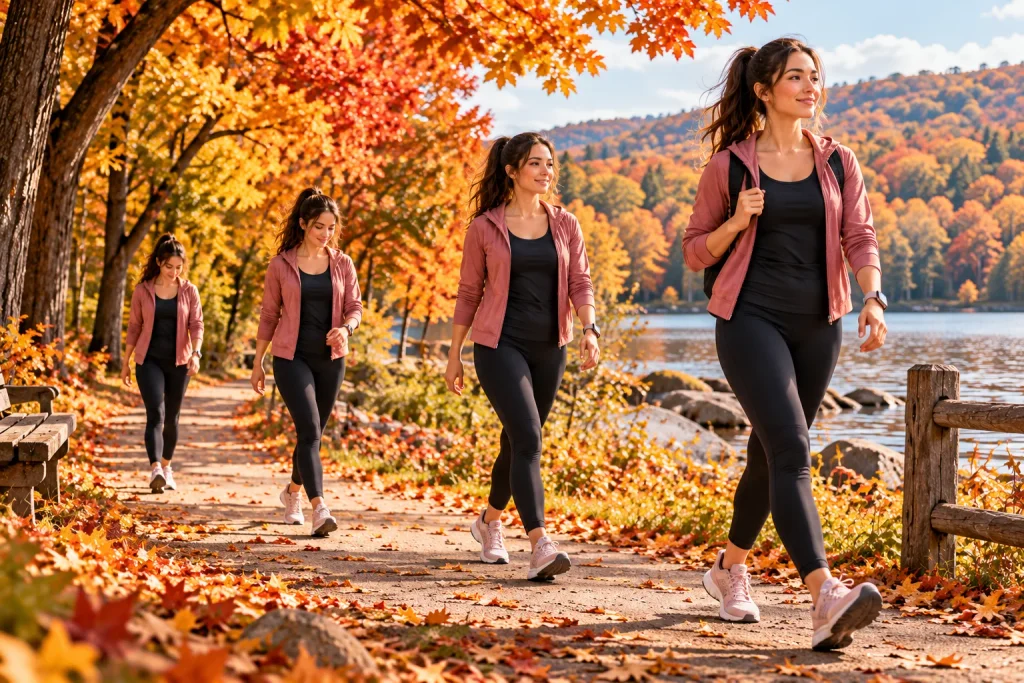
You can make it more enjoyable by:
- Listening to a podcast
- Walking with a friend
- Exploring a new route
- Taking photos
- Enjoying the seasonal scenery
The goal is to associate movement with something enjoyable.
Sunday: Recover
Sunday can be your rest day.
If you want to move, take a short relaxed walk.
You don’t need to force a long walk simply to hit a daily number.
Recovery is part of a sustainable routine.

What About 10,000 Steps?
You don’t have to reach 10,000 steps every day for walking to be useful.
A fixed step target isn’t necessary for everyone.
Instead, consider your current activity level and gradually increase your movement.
For example:
Starting point
If you’re currently averaging 3,000 steps:
→ Work toward a modest increase.
After a few weeks
If you’re comfortably averaging 5,000:
→ Add more walking when it fits your schedule.
The goal is progress from your starting point, not comparison with someone else’s step count.
How to Make Fall Walking More Enjoyable
Walking becomes easier to maintain when it fits naturally into your lifestyle.
Try:
🌅 Morning walks
Start your day with outdoor movement.
☀️ Lunch walks
Use part of your lunch break to get outside.
🌆 Evening walks
Take a relaxed walk after dinner.
🍂 Weekend nature walks
Explore parks, trails, or other suitable outdoor spaces.
👟 Walking with a friend
Social walks can make the habit more enjoyable.
5 Ways to Stay Consistent
1. Put Walks on Your Calendar
Treat walking like any other scheduled activity.
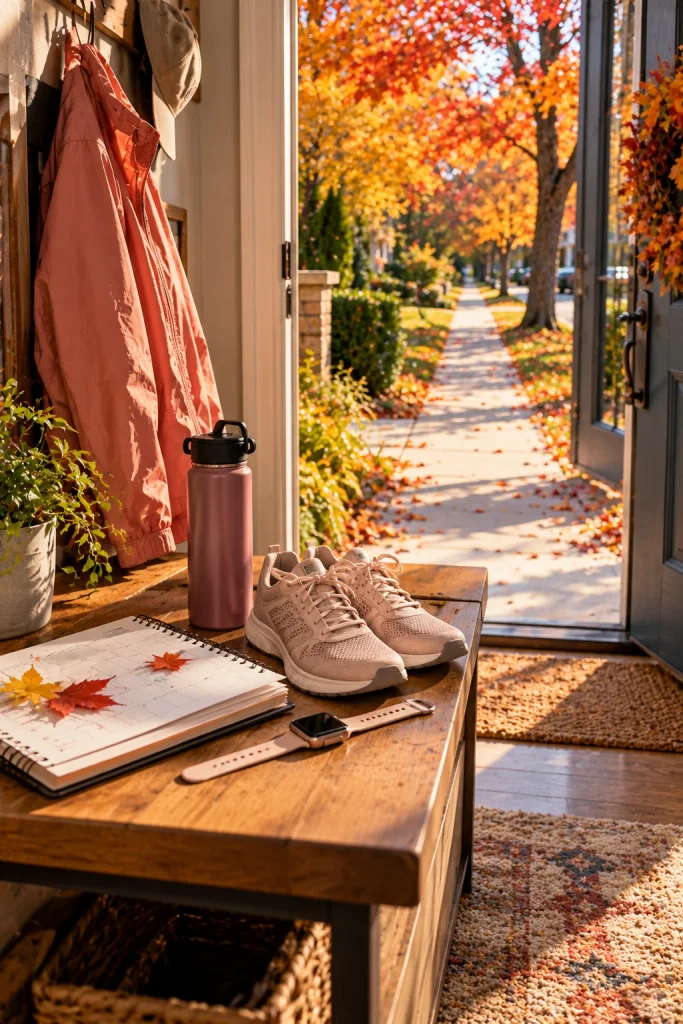
2. Keep Your Shoes Ready
Make it easy to start.
3. Have a Backup Plan
If weather or schedule disrupts an outdoor walk, consider an indoor option such as treadmill walking or another comfortable activity.
4. Don’t Miss Twice
Missing one walk isn’t a problem.
Simply return to your routine at the next opportunity.
5. Track Progress Without Obsessing Over Numbers
You can track:
- Walking days
- Minutes walked
- Distance
- Steps
- How you felt
Choose whichever measure helps you stay consistent.

Fall Walking Checklist
☐ Choose your walking days
☐ Start at a manageable duration
☐ Add one longer walk each week
☐ Include comfortable and brisk walks
☐ Prepare walking shoes and clothes
☐ Explore enjoyable routes
☐ Have an indoor backup option
☐ Track your consistency
☐ Increase gradually
☐ Give yourself recovery days
4-Week Fall Walking Progression
| Week | Goal |
|---|---|
| Week 1 | Establish your walking routine |
| Week 2 | Add a little more walking time |
| Week 3 | Include more brisk walking |
| Week 4 | Maintain the routine and review your progress |
You don’t have to increase every week.
If the current level feels challenging, stay there until you’re comfortable.
Also Read :- https://kheltechie.in/fall-pilates-routine-for-beginners/

Final Takeaway
You don’t need to turn walking into an extreme challenge.
Start with a manageable schedule, make some walks brisk, keep one longer walk in your week, and gradually build your activity as your fitness improves.
Fall gives you a great opportunity to make walking a regular part of your lifestyle.
Start with the amount you can maintain—and let consistency do the work.
FAQs
Start with a comfortable amount of walking and gradually increase your time or pace as your fitness and consistency improve.
Yes. Fall walking can provide moderate physical activity while giving you a simple way to stay active outdoors.
Beginners can start with short walks several days a week and gradually add more minutes, brisk walking, or a longer weekend walk.
There is no single step number that works for everyone. Focus on gradually increasing your daily movement based on your current activity level.
Wear comfortable walking shoes and dress in layers that match the local fall weather, especially when temperatures change during the day.
A 30-minute walk can be a useful part of a fitness routine, especially when combined with regular weekly activity and strength exercises.
Choose specific walking days, keep a simple weekly goal, explore different outdoor routes, and adjust your walks around your local weather.